
First Moves — STA's signal newsletter

First Moves — STA's signal newsletter

A signal-reading newsletter from Sports Tech Atlanta. Every issue reads the real commercial signals moving through sports-tech. If you'd rather not wait for a newsletter to work your actual pipeline: I keep a few one-on-one seats open each quarter. Start with a single session — one live problem, worked in 60 minutes, credited toward your first month if you take a seat.

TeamSportz Partners with Brunel University London to Revolutionize Student Life and Engagement

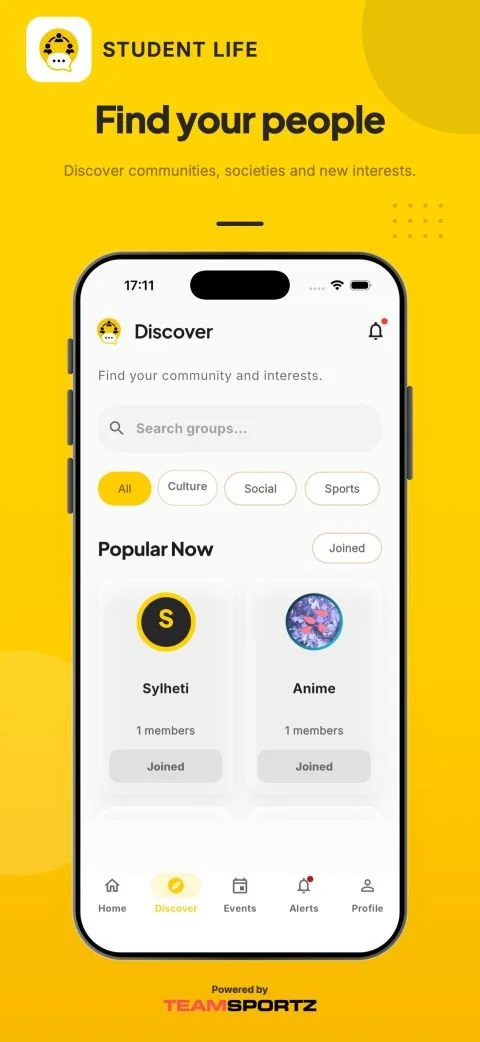
LONDON — TeamSportz is thrilled to announce a landmark collaboration with Brunel University London and the Union of Brunel Students. This exciting partnership brings modern digital infrastructure to over 4,000 students across more than 100 societies and sports clubs.

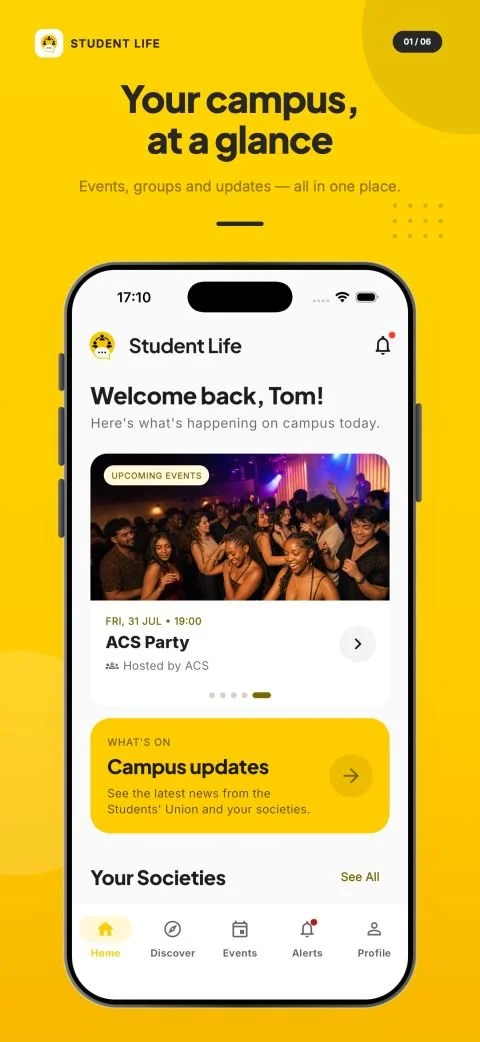
To support this vibrant student community, TeamSportz is launching the Student Life app, fully powered by the flexible TeamSportz Platform and API.

Modernizing Campus Engagement

For years, higher education institutions have struggled with fragmented, clunky, and outdated software systems to manage student life. The launch of the Student Life app highlights the power and flexibility of the TeamSportz platform in helping universities, colleges, and educational organizations smoothly transition into the modern digital age.

The Student Life app acts as a centralized digital hub, consolidating key aspects of the student experience into a single, sleek, and intuitive interface. Features include:

  • Sports & Event Management: Streamlined scheduling, tracking, and participation for university sports clubs and campus events.

  • Centralized Communication: Direct, modern messaging channels connecting students, societies, and administrative teams.

  • Campus Life Tools: Integrated access to student surveys, essential documents, announcements, and university resources.

By replacing disjointed legacy tools with an all-in-one platform, Brunel University London and the Union of Brunel Students are setting a new standard for modern student engagement—making it easier than ever for students to stay connected, active, and involved.

To learn more about the TeamSportz App click here—>TeamSportz

About Sports Tech Atlanta

This initiative and expansion were facilitated with the support of Sports Tech Atlanta, a boutique advisory and marketing firm specializing in connecting innovative sports technology platforms with key market opportunities.

Changing the Game: How Diana Flores is Pioneering Flag Football’s Global Revolution

When people think of American football, they often picture heavy padding, bone-crushing tackles, and iconic NFL stadiums. But over the past few years, a parallel movement has taken the global sports landscape by storm—and at the center of this movement is Diana Flores.

As quarterback and captain of the Mexican Women’s National Flag Football Team, Flores has transformed from a star athlete into a global icon. Her rise mirrors the meteoric growth of flag football, a sport rapidly evolving from a recreational pastime into a premier Olympic-level event.


The Catalyst: From Mexico City to Global Superstardom

Flores’ story is rooted in dedication and breaking boundaries. Starting her flag football journey at just eight years old in Mexico City, she often competed against older players and in all-male leagues due to a lack of dedicated girls' divisions. Her breakout on the international stage came when she led Mexico to a gold medal at the 2022 World Games, delivering a brilliant performance to defeat the United States in the final.

Her impact quickly expanded beyond the field:

  • NFL Super Bowl Stardom: Flores gained worldwide mainstream recognition starring in the NFL’s Emmy Award–winning 2023 Super Bowl commercial, “Run With It,” which highlighted female athletes dodging defenders across Los Angeles.

  • Pro Football Hall of Fame: She became the first flag football player to have personal artifacts displayed in the Pro Football Hall of Fame in Canton, Ohio.

  • NFL & IFAF Global Ambassador: Working alongside the NFL and the International Federation of American Football (IFAF), Flores regularly promotes youth participation and international competition.

What Diana Flores’ Leadership Means for the Future of Flag Football

Flores is not just benefiting from the growth of flag football—she is actively driving it. Her leadership signifies key trends in the sport's rapid development:

1. Breaking Gender and Regional Barriers

Historically, gridiron football was dominated by male athletes in North America. Flores’ prominence as a Mexican woman on global broadcasts proves that the future of football is both international and inclusive. Her presence inspires millions of young girls across Latin America, the U.S., and Europe to pick up a football.

2. Paving the Way for LA28 Olympic Debut

With flag football officially included in the 2028 Los Angeles Olympic Games, Flores stands as the face of this pivotal transition. The sport’s non-contact, high-speed, dynamic nature makes it an ideal fit for international Olympic audiences, offering high athletic performance with low barrier-to-entry infrastructure.

3. Exploding Collegiate and High School Pathways

Flores’ visibility has accelerated varsity recognition for high school flag football across the United States and internationally, as well as expanded collegiate scholarship opportunities through organizations like the NAIA. Girls now have direct athletic and academic pathways through flag football that did not exist a decade ago.

The Road Ahead

As flag football approaches its Olympic debut, Diana Flores continues to serve as quarterback, ambassador, and pioneer. Her journey demonstrates how passion and representation can elevate a grassroots sport into a global spectacle, reshaping how the world views football forever.

For a closer look at her historic achievements, check out this video on Diana Flores' Pro Football Hall of Fame induction.

This video highlights the historic moment when Diana Flores became the first flag football player to be enshrined with artifacts in Canton, showcasing her groundbreaking impact on the sport.


Who Actually Builds the Ref Cam? Mapping the Companies Behind Sport's Newest Camera Angle

At the 2026 World Cup, the breakout star of the broadcast wasn't a player. It was a 14-gram camera clipped to a referee's headset.

FIFA deployed referee body cameras across all 104 matches — the first time in tournament history — after a trial run at the 2025 Club World Cup that Pierluigi Collina described as exceeding expectations. Fans finally saw the game from inside the storm: the speed of a challenge, the chaos in the box, the split-second read that gets a man vilified on Twitter for a week.

Here's the thing most of the coverage got wrong: "ref cam" is not one product. It's a category — and there are at least three distinct businesses hiding inside it, with different buyers, different economics, and very different exit paths.

Let's map them.

Lane 1: Broadcast POV — selling a camera angle to rights holders

This is the lane everyone sees. The buyer is a league, federation, or host broadcaster. The product is a new piece of broadcast inventory.

Riedel Communications (Germany)

The quiet giant. Riedel is a broadcast comms company — intercoms, fiber networks, private 5G — that built RefCam as an extension of the headset it was already selling to referees. The camera weighs about 14 grams, shoots 1080p, uses electronic image stabilization, and transmits over Riedel's own Easy5G private network. Crucially, it mounts onto the same earpiece as Riedel's existing referee comms: one kit, camera plus communications.

Riedel developed it through a joint venture called In-YS ("In Your Shoes") with working Bundesliga referees — which is why it doesn't feel like an engineer's guess at what an official needs. It debuted in the Bundesliga in 2024, went into handball with the IHF and at the Men's EHF EURO 2026, and the FIFA World Cup unit was spun out of Riedel technology.

Why it wins: Riedel wasn't selling a camera into a cold market. It was upselling a camera to a customer already wearing its headset. That's the whole strategy in one sentence.

MindFly (Tel Aviv)

The startup with the best highlight reel. MindFly builds AI-powered chest-mounted bodycams worn by both players and officials, integrated into a vest that looks and feels like the GPS vests athletes already wear. The AI does the heavy lifting: stabilization, auto-cropping, and auto-direction that mimics a human camera operator and director, then pushes clips straight to social or live broadcast.

The logo slide is legitimately impressive for a company that has raised roughly $1M: ESPN, CBS, NBC on the broadcast side; NBA, MLB, NHL, UFL, Premier League, EuroLeague on the league side; Manchester City, Juventus, Red Bull Salzburg on the club side. Referees wore MindFly bodycams at NBA All-Star. MLS put a MindFly vest on the referee at the 2022 All-Star Game. In the UFL, MindFly is a formal partner under the league's FAST innovation program, with body cameras on up to four players a week.

Why it matters: MindFly went where the incumbents didn't — player POV — and used the referee as the beachhead. Officials are the easiest body on the field to get a camera onto, because they're not being tackled and they're employed by the league.

Movicom (Europe)

The hardware pragmatist. Movicom's Refcam is a mini-camera plus mount plus COFDM wireless transmitter that clips to whatever helmet the official already owns. The ice hockey kit runs about 190g. It also makes an "Earcam" variant (~97g) for field hockey umpires, where there's no helmet to bolt to. Movicom has been active in hockey — Champions Hockey League, Tipsport Liga — often alongside Vislink on transmission.

Why it matters: Movicom competes on adaptability, not glamour. It'll fit your helmet. That's a real value proposition in sports where headgear is non-negotiable.

Gravity Media (UK/Australia)

The service play. Gravity Media isn't primarily a device company — it's a global broadcast production services firm that happens to own a RefCam product line, offered in both headgear-mounted (with mechanical stabilization, umbilical to a body-worn antenna vest) and chest-mounted configurations, at roughly 1.1kg fully rigged.

Why it matters: Gravity sells the camera as part of a production package. Different revenue model entirely — you're not buying a device, you're buying a crew that shows up with one.

Camera Innovations

Small, specialist, and worth watching. It built the referee camera used at the 2026 World Snooker Championship final — a miniature lapel-mounted unit on referee Rob Spencer, RF back to the truck, converted into a live broadcast-ready feed.

Why it matters: Snooker. That's the point. The next wave of ref cam adoption isn't football — it's every sport with an official standing close to the action and a broadcaster desperate for a fresh angle.

JockeyCam

Named in the same breath as the others in most surveys of the category, primarily in racing and rugby contexts. Smaller footprint, but it belongs on the map.

Lane 2: The AI layer — where Lenovo actually lives

Lenovo is the name in every World Cup headline, and it's worth being precise about what Lenovo does and doesn't do here. Lenovo did not build the camera. As FIFA's Official Technology Partner, Lenovo provides the AI-based real-time stabilization software that reduces motion blur by up to 50%, running on servers Lenovo installed at the International Broadcast Centre in Dallas. Lenovo is also behind the 3D player avatars feeding the tournament's semi-automated offside system.

That distinction is the most commercially interesting thing in this entire category.

The camera is a commodity. It weighs 14 grams and it's going to get cheaper. The moat is the processing layer — the thing that turns a nauseating, jittery, unwatchable POV feed into something a broadcaster will actually air. Raw bodycam footage from a sprinting human is unusable. Every serious player in this space (Riedel with EIS, MindFly with AI auto-direction, Lenovo with server-side stabilization) has independently concluded that the value sits in software, not glass.

If you're an investor looking at this category: buy the stabilization, not the sensor.

Lane 3: Referee safety — a completely different business

This is the segment nobody in sports-tech media covers, and it may be the larger market.

Reveal Media (UK)

Reveal is a body-worn camera company from the law-enforcement and security world — 40+ countries, police, healthcare, transport — that built a sports-specific "Referee Safety Cam." The English FA selected Reveal as its technology partner for the world's first grassroots referee bodycam trial, distributing cameras to roughly 100 referees across leagues in Middlesbrough, Liverpool, Worcester and Essex. Ontario Soccer ran a parallel pilot with Reveal and Brock University as part of its #NoRefNoGame campaign, deploying chest-mounted cameras at U8–U11 small-sided games.

The product logic is fundamentally different from broadcast. There's a front-facing screen: when an aggressor sees themselves on camera, incidents de-escalate. Pre-record captures the two minutes before the referee hits the button. It's a deterrent device that happens to also be an evidence device.

The market driver is brutal and simple: a BBC Radio 5 Live survey of over 900 grassroots officials found the overwhelming majority had experienced verbal abuse, with a substantial share reporting physical abuse. Referee retention is collapsing. No refs, no game.

Why this lane is underrated: the broadcast market has maybe a few hundred elite matches a week worth outfitting. The safety market has millions of grassroots games, funded by national federations with participation mandates and legal exposure. It's less sexy and far more recurring.

What this means commercially

Three takeaways for anyone building, buying, or selling in this space.

1. The rule change is the unlock. In February 2026, IFAB amended Law 5 to sanction referee cameras — chest- or head-mounted — as a competition option, with the organizer providing the cameras and controlling the footage. That last clause is the money clause. The competition organizer controls the footage. Ref cam isn't a broadcast toy; it's a new inventory class owned by the rights holder. Bundesliga ref cam clips reportedly drew around 2 million views a weekend. That's a sponsorable, sellable asset — and nobody has priced it properly yet.

2. The device is not the business. Riedel wins by bundling with comms. MindFly wins with AI auto-direction and social-native output. Lenovo wins by owning the processing layer at the IBC. Gravity wins by wrapping it in a production service. The camera itself is table stakes.

3. Two markets, two buyers, one word. "Ref cam" in the broadcast lane is a content product sold to a league's media department. "Ref cam" in the safety lane is a risk and retention product sold to a federation's participation department. Anyone pitching both with one deck is going to lose both.

The 14-gram camera on Wilton Sampaio's head in Mexico City was the visible part. The businesses underneath it are just getting started.

Sports Tech Atlanta advises sports properties, technology providers, and brands on commercial partnerships, investor relations, and go-to-market strategy. sportstechatlanta.com

Sources: FIFA, SVG Europe, Sports Video Group, Riedel Communications, MindFly, Movicom, Gravity Media, Reveal Media, Ontario Soccer, IHF, EHF, Digital Camera World, RedShark News.