
Google Goes All-In on Health: Fitbit Air Launches with a Stephen Curry Edition as the App Gets a New Name

Google kicked off May with a pair of major announcements that signal the company is getting serious about owning your health data — and your wrist. The new Fitbit Air is a sleek, screen-less fitness tracker priced at $99, and the Fitbit app is getting a major rebrand to "Google Health." Together, the two moves represent the most significant evolution of Google's fitness and wellness platform since it acquired Fitbit in 2021.

Instant Startup Deal Memo Service
$399.00

Instantly elevate your startup's investor appeal with a tailored deal memo crafted by professionals.

  • Create a professional deal memo effortlessly, enhancing your startup's appeal to investors.

  • Get insights into your product-market fit with tailored analysis from seasoned experts.

  • Streamline the investor connection process with clear, concise deal memos.

Unlock potential investment opportunities and set your startup on a path to success with ease and confidence. This service empowers you to focus on growth while we handle the heavy lifting of investor engagement.

What you get: 45 days from day of purchase of connection to Sports Tech Atlanta. After the deal memo is created, Sports Tech Atlanta will begin to direct communication to potential partners. This memo service does not guarantee an investment, deal, or partnership. Throughout the 45 days STA will send weekly check ins to update on outreach targets and communications. Upon completion of the 45 days. STA will deliver a report displaying performance, targets, outreach, and any additional information gathered throughout the process.

Meet the Fitbit Air — and the Stephen Curry Special Edition

Google's new Fitbit Air is a minimalist fitness tracker built around a small pebble-shaped module that slots into a band of your choosing. Weighing just 12 grams with the strap attached (5 grams without), it's designed to be worn all day and night without the bulk or distraction of a full smartwatch. Battery life stretches to seven days, and a five-minute fast charge delivers enough power to last a full day.

Despite its minimal footprint, the Air packs in a robust sensor suite: 24/7 heart rate monitoring, blood oxygen (SpO2), skin temperature, resting heart rate, heart rate variability, sleep stage tracking, and automatic activity detection. It carries an IP68 water and dust resistance rating — more rugged than you might expect at this price point. The one notable omission compared to pricier Fitbit devices is an onboard screen, meaning all your data lives in the companion app rather than on your wrist.
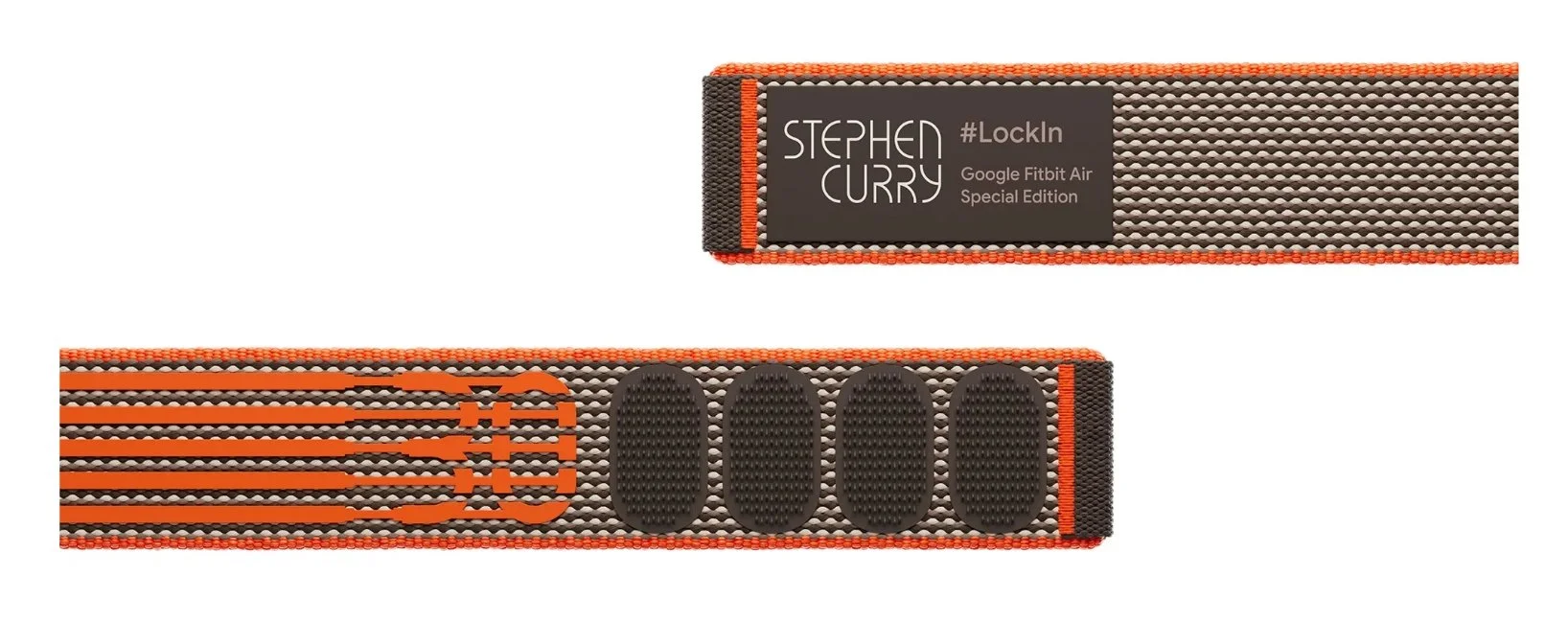
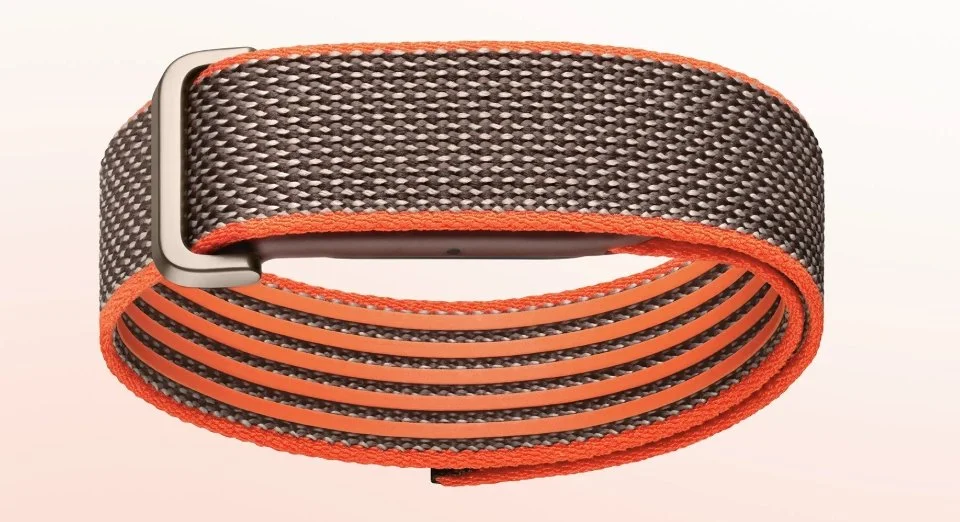
The Fitbit Air starts at $99, but the version that's turning the most heads is the Stephen Curry Special Edition at $129. NBA champion and four-time title winner Stephen Curry serves as a Performance Advisor for Google's Fitbit brand, and this collaboration goes well beyond a logo stamp. The Curry edition features a fabric performance band with a raised interior liner that promotes airflow and a water-resistant finish that dries quickly after intense workouts. The color palette — a striking orange and grey — stands apart from the more muted standard options, and the inside of the band includes Curry's wordmark and signature motivational phrase, "#LockIn." Whether or not you're a basketball fan, if you're planning to put the Fitbit Air through serious workouts, this is the version built for it.


The Fitbit App Is Now Google Health

Alongside the hardware launch, Google officially confirmed that the Fitbit app is being rebranded to Google Health. After months of quiet testing in a public preview since October 2025, the full rollout begins May 19 and will be complete before the Fitbit Air hits store shelves on May 26. Existing users will simply receive an app update; the transition is designed to be seamless.

The rebrand is more than cosmetic. Google Health is a genuinely redesigned experience, organized around four core tabs: Today (a customizable metrics dashboard), Fitness (activity tracking and weekly plans), Sleep (detailed data and an updated sleep score), and a Health tab for broader wellness data. One of the most notable additions is support for Apple Health data, making the Fitbit Air — and the Google Health platform — a rare cross-platform play from Google. Users on iOS can sync their Apple Health data alongside data from Android wearables, and in the US, the app can also integrate medical records including lab results, vitals, and medications for a holistic picture of your health.

The Fitbit brand isn't disappearing — Google has been clear that the name lives on for hardware. But all software and services now fall under the Google Health umbrella, reflecting a deliberate push to position health and fitness as a core Google product rather than an acquired side project.
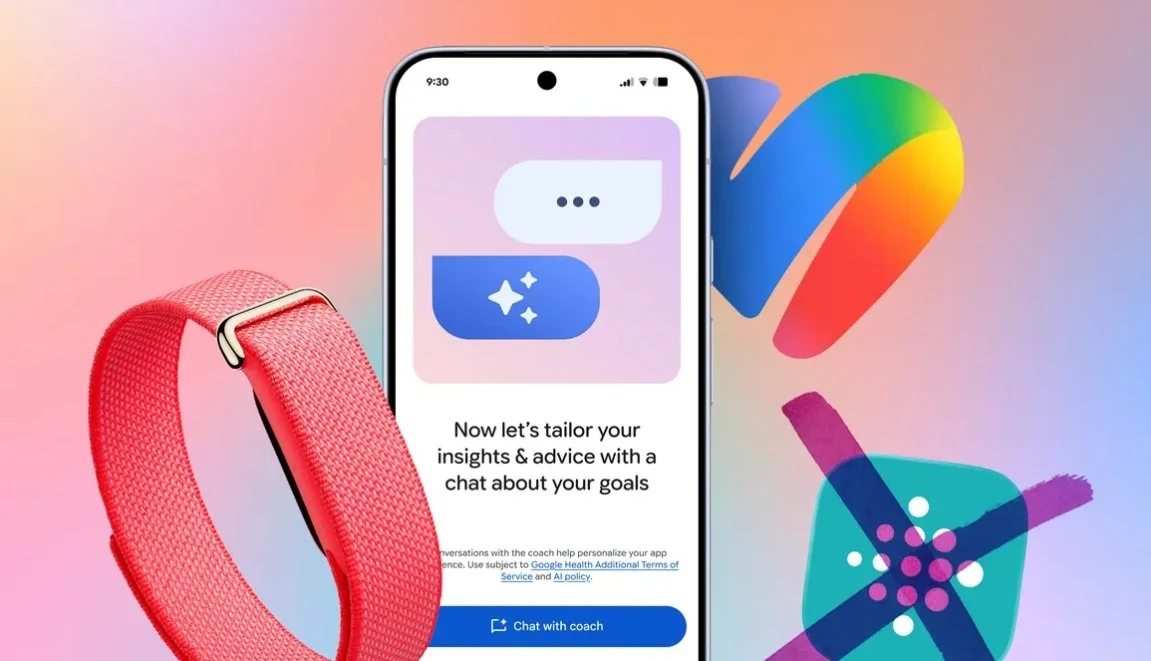
AI-Powered Health Coaching, Now Global

Google Health Premium (the renamed Fitbit Premium) gets a meaningful upgrade in the form of Google Health Coach, an AI assistant built on Gemini. The Coach adapts in real time to your metrics, learns your preferences, available equipment, and routines during setup, and provides proactive insights across sleep, fitness, and overall health. It can summarize medical records, build adaptive fitness plans, and now supports multimodal logging — meaning you can log a meal by snapping a photo of it, speaking aloud, or typing.

Google Health Premium is priced at $9.99 per month or $99.99 per year, and it's now bundled into Google AI Pro and AI Ultra subscriptions across 30+ countries. The Fitbit Air comes with a three-month trial of Google Health Premium included.

One caveat worth noting: the AI Health Coach currently works only with Google devices like Pixel Watch and Fitbit Air. Galaxy Watch users and owners of other third-party wearables will need to wait, though Google has hinted that broader compatibility could come down the line.

What Happens to Google Fit?

The arrival of Google Health also puts a clock on Google Fit, the company's original fitness app dating back to 2014. Google confirmed that Fit will shut down in 2026, and a migration tool will be provided later in the year so that longtime Fit users can transfer their data — potentially a decade or more of health metrics — into Google Health before the doors close.

The Bottom Line

Google is making a clear statement: health is no longer a Fitbit product bolted onto its ecosystem — it's a Google product. The Fitbit Air is an interesting hardware bet, especially at $99, and the Stephen Curry edition raises the bar for workout-focused wearables in this category. But the bigger story is the software. Google Health consolidates wearable data, medical records, Apple Health, and Gemini-powered coaching into a single app available in over 200 countries. Whether it can compete with Apple Health and its deep iPhone integration remains to be seen, but Google's platform ambitions have never been clearer.

The Fitbit Air is available for pre-order now at $99 (standard) and $129 (Stephen Curry Special Edition), shipping May 26.


Sources: 9to5Google, Wired, Thurrott, Android Headlines
GeniusIQ Powers a New Era of Sports Data Partnerships

1:1 Consulting
$150.00

Work with one of the Sports Tech Atlanta advisors and consultants on GTM, investor relations, pitch ideas, and much more.

GeniusIQ Powers a New Era of Sports Data Partnerships — Genius Sports
Partnerships & Technology
Genius Sports x Liga MX — player tracking and performance data graphic

Genius Sports · May 2026

GeniusIQ Powers a New Era of Sports Data Partnerships

Genius Sports · 4 min read · Technology & AI

From Swiss football pitches to Pac-12 arenas and NBA broadcast booths, Genius Sports is rapidly expanding its GeniusIQ platform — bringing real-time AI-powered tracking, augmented advertising, and integrity solutions to leagues across the globe.

600+
Live NBA games
15
NBA teams covered
3
New partnerships

Tracking Innovation Comes to Swiss Football

Genius Sports x SFL — real-time player speed tracking showing 31.2 km/h

Switzerland's elite football body is the latest league to harness GeniusIQ, unlocking cutting-edge tracking and performance technology across its entire ecosystem. The long-term tech and AI partnership gives the Swiss Football League access to what Genius Sports describes as the world's most advanced player tracking — delivering metrics like real-time player speed in live match conditions, as demonstrated by the 31.2 km/h showcase above.

The deal also executes upon Genius Sports' landmark innovation partnership with the European Leagues, extending GeniusIQ's reach further into continental football. Clubs, broadcasters, and commercial partners stand to benefit from richer data feeds and automated performance insights derived from every match.

Player Tracking GeniusIQ European Leagues Performance Analytics

Augmented Advertising Takes the NBA Court

NBC Sports California broadcast showing Sprite Stat Track augmented ad overlay on NBA game — SAC 92 vs UTAH 118

Genius Sports and NBC Sports Regional Networks have launched an exclusive augmented advertising platform that transforms live NBA broadcasts into dynamic, AI-powered advertising canvases. The expanded agreement adds four additional NBA teams, bringing total coverage to 15 teams and more than 600 live local games per season.

Global brands can now activate against NBA audiences with contextual ads that respond in real time to what's unfolding on court. Powered by GeniusIQ, the platform surfaces high-impact moments through insights including Player ID, Shot Probability, Shot and Defender Distance, and Heat Maps — giving advertisers unprecedented precision to own the moments that matter. Sprite's Stat Track integration, visible in the broadcast screenshot above, is a showcase example of the technology in action.

NBA Augmented Advertising Shot Probability Heat Maps Real-Time AI

Integrity, AI, and Betting Rights for the Pac-12

Genius Sports x Pac-12 conference partnership announcement

In a wide-ranging deal spanning integrity, technology, and AI, Genius Sports has partnered with the Pac-12 Conference to power authorized sports betting, moment-based advertising, and performance analysis across football and basketball competitions.

Central to the agreement is a new AGO (Authorized Gambling Operator) framework that responsibly licenses official data and intellectual property to regulated sportsbooks. The framework includes robust integrity safeguards: eliminating risky bet types, information-sharing and cooperation protocols, and the refusal of bets from prohibited individuals — setting a new standard for responsible sports betting partnerships.

On the media side, Genius Sports' Moment Engine enables brands to synchronize advertising with live game action across broadcast, streaming, and digital inventory simultaneously — creating seamless, context-aware campaigns at scale across all Pac-12 football and basketball coverage.

Pac-12 Sports Integrity Authorized Betting Moment Engine College Sports

Genius Sports and Liga MX Strike Landmark Technology and AI Partnership

Genius Sports x Liga MX — Gilberto Mora player tracking graphic showing speed, reaction time and assists

In a landmark deal set to drive the future of Mexican soccer, Genius Sports has deployed its cutting-edge data and AI platform GeniusIQ in every Liga MX stadium. The partnership represents a transformative step forward for one of the world's most-watched football leagues, embedding world-class technology at the heart of the competition.

GeniusIQ is powering an impressive suite of solutions across Liga MX and its partners — from dynamic advertising and enhanced broadcast experiences to officiating support and performance analytics. Real-time sponsor inventory creation gives commercial partners new ways to activate against passionate Liga MX audiences, while unique broadcast enhancements deliver richer storytelling for fans.

A standout feature of the partnership is the deployment of world-leading semi-automated offside technology, raising the bar for officiating accuracy and consistency across the league — a milestone moment for Mexican football on the global stage.

Liga MX GeniusIQ Semi-Automated Offside Dynamic Advertising Enhanced Broadcast Performance Analytics

All partnerships powered by GeniusIQ — Genius Sports' unified data and AI platform for sports leagues, broadcasters, and brands.

Beyond the Playing Field: The Black Investors Reshaping Sports Ownership

For decades, the landscape of professional sports ownership has been strikingly uniform: predominantly white, predominantly male, predominantly inherited wealth. Meanwhile, the leagues themselves — the NFL, NBA, and WNBA in particular — have been powered overwhelmingly by Black athletes. The disconnect has been glaring and well-documented. But a quiet revolution is underway, and it's being led not by the players, but by a new generation of Black financiers, media moguls, and executives who are buying seats at the table.

The 2024-2025 NFL season made history with the highest number of Black minority team owners in the league's history. It's a milestone worth celebrating — and worth examining, because the people driving that change are as compelling as the change itself.

Mellody Hobson — The Trailblazer in the Boardroom

If there's one name that anchors this conversation, it's Mellody Hobson.

The co-CEO and President of Ariel Investments — one of the largest Black-owned asset management firms in the United States, with over $14 billion in assets under management — Hobson has spent decades navigating financial power structures that were not designed for her. In June 2022, she made history again: joining the ownership group that purchased the Denver Broncos for a record $4.65 billion, becoming the first Black woman to hold an ownership stake in an NFL franchise.

The significance wasn't lost on Broncos quarterback Russell Wilson at the time, who called it "history-making" and noted it had perhaps "gone over people's heads a little bit." Hobson didn't just buy a sliver of a football team — she bought it as a financial institution builder, an investment professional, and a woman who has sat on the boards of Starbucks and JPMorgan Chase. This wasn't celebrity ownership. This was institutional capital meeting professional sports.

And she isn't stopping there. Through Project Level, Ariel Investments' women's sports-focused fund, Hobson has raised $250 million to invest across the women's sports ecosystem — from franchise ownership to the technology and infrastructure that surrounds it. Her position is clear: women's sports aren't an "emerging story" anymore. Their time has arrived, and she intends to be at the center of it.

Jay-Z — The Blueprint Maker

Long before he became a mogul in the traditional business sense, Shawn Carter — Jay-Z — was writing the blueprint for Black investment in professional sports.

In 2003, he invested approximately $1 million for a minority stake in the New Jersey Nets, becoming one of the most prominent Black investors in professional sports at the time. His involvement went beyond a financial check: he was integral to the Nets' rebrand and relocation to Brooklyn, helping transform the franchise's identity and fanbase. It was a proof of concept — that hip-hop culture, Black business acumen, and sports investment could occupy the same space.

He sold his Nets stake in 2013, but for a reason that only deepened his influence in sports: to launch Roc Nation Sports, a full-service athlete representation and management agency that has grown into one of the most powerful in the world, with a roster spanning the NFL, MLB, NBA, and international football. Roc Nation didn't just manage athletes — it reimagined what a sports agency could be, building brands, media partnerships, and cultural capital alongside traditional contracts.

Jay-Z's pivot from team ownership to sports infrastructure may have been the more powerful move. Owners come and go. The agency that shapes athletes' careers, images, and deals has longer, quieter leverage.

Venus & Serena Williams — Pioneers in the NFL

Before we move further, it's worth pausing on the Williams sisters — not as athletes here, but as investors and pioneers of a different kind.

In 2009, Venus and Serena Williams became the first Black women to hold ownership stakes in an NFL franchise, purchasing a minority interest in the Miami Dolphins. At the time, the team was valued at approximately $1.02 billion. Today, that valuation sits around $4.6 billion — a return that speaks for itself.

The investment was historic, visionary, and — perhaps most importantly — early. They didn't wait for the door to open wider. They walked through the one that existed and, in doing so, helped widen it for everyone who came after.

Will Packer — Hollywood Meets the Huddle

Will Packer is one of Hollywood's most successful film producers, responsible for hits including Girls Trip, Straight Outta Compton, and Think Like a Man. In May 2024, he expanded his footprint significantly by joining the Atlanta Falcons' ownership group as a limited partner — alongside Rosalind Brewer, Rashaun Williams, and Olympic champion Dominique Dawes.

Falcons owner Arthur Blank described the group as "impressive leaders who have made an impact in a variety of enterprises." For Packer specifically, the ownership stake represents a bridge between entertainment and sports — two industries that have been converging for years, but where Black ownership has historically remained on the entertainment side of the ledger. Packer's Falcons investment puts him in the room where stadium deals, broadcast rights, and franchise strategy get decided.

Rosalind Brewer — The Executive in the Owner's Suite

Joining Packer in the Atlanta Falcons ownership group, Rosalind Brewer brings a distinctly corporate C-suite pedigree to sports ownership. A former CEO of Walgreens Boots Alliance and COO of Starbucks, Brewer is one of a small number of Black women to have led a Fortune 500 company. Her addition to the Falcons' ownership group in 2024 signals a maturing of the Black investor class in sports — it is no longer only entertainers and athletes (or former athletes) buying in. It is executives, operators, and institutional thinkers.

Robert F. Smith — The One Who Almost Bought the Broncos

Robert F. Smith, the founder of Vista Equity Partners and the first Black American to sign the Giving Pledge, represents the ceiling of Black financial achievement in the United States. His firm manages over $90 billion in assets. He is, simply, one of the most powerful private equity investors in the world.

Smith was among the names reported to be actively pursuing the Denver Broncos before the franchise was ultimately sold to the Walton-Penner group in 2022. That he didn't land the Broncos is a story about how capital alone doesn't guarantee entry into the NFL's ownership club — networks, relationships, and league approval all play their parts. But Smith's pursuit was significant. It demonstrated that the capital to pursue majority NFL ownership exists within the Black investor class. The structural barriers that remain aren't about money.

Smith's presence in the sports investment conversation continues. As leagues increasingly court institutional investors, the Vista Equity playbook — patient capital, operational improvement, long-term value creation — maps well onto franchise ownership models.

Byron Allen — Media, Sports, and the Long Game

Byron Allen, the founder and CEO of Allen Media Group, has been one of the most persistent and vocal advocates for Black ownership in major professional sports. He made bids for both the Denver Broncos and the Washington Commanders (now the Commanders), only to see both deals go elsewhere. His media empire — which includes The Weather Channel, The Grio, and a portfolio of local television stations — gives him the kind of cross-platform reach that makes him a uniquely valuable potential sports owner in the media rights era.

Allen has been outspoken about what he sees as structural barriers to Black ownership in the NFL, and his continued pursuit of franchise ownership represents a principled, long-term campaign. The story isn't over. The Commanders deal that went to the Josh Harris group in 2023 — a record $6.05 billion transaction that included Magic Johnson as a minority owner — was another moment where Allen was edged out. But he remains one of the most credible Black voices pushing on the door of majority ownership.

The Bigger Picture

The individuals profiled here are not a monolith. They span finance, film, media, and tech. Some hold minority stakes; others are pursuing majority control. Some came through entertainment; others climbed corporate ladders. What they share is a willingness to direct capital toward an asset class — professional sports — that has historically treated Black wealth as labor, not ownership.

Across the NFL, NBA, MLB, and NHL's combined 154 franchises, zero teams are majority-owned by African Americans in the NFL, MLB, or NHL. That structural reality makes every minority stake, every limited partnership, and every bid for a franchise not just a financial decision, but a statement about where Black wealth is going and what it demands.

The playing field has always had Black excellence. The owner's suite is starting to catch up.

Pole Position in Real Estate: Inside Lewis Hamilton's Global Property Empire

He's claimed seven Formula 1 world championships. Now take a lap around the other empire he's quietly been building — one penthouse at a time.

Lewis Hamilton has always known how to play the long game. On the track, that means tire management, pit strategy, and reading conditions fifteen corners ahead. Off it, it means something else entirely: a sprawling, meticulously curated collection of luxury properties spread across some of the world's most coveted addresses. From a lakeside Swiss retreat purchased before he'd won his first championship, to a brand-new Milan apartment secured just in time for his headline-grabbing Ferrari debut, Hamilton's real estate portfolio reads like a Grand Prix calendar rewritten for the ultra-wealthy.

Let's go corner by corner.

Switzerland, 2007 — Where It All Started

The very first entry in Hamilton's property ledger is quietly understated for someone who would go on to own penthouses with squash courts and Hudson River panoramas. Back in 2007 — the year of his rookie F1 season with McLaren — he picked up a three-bedroom apartment in Luins, a small village in the Nyon district above Lake Geneva.

The move was strategic as much as personal. Switzerland has long been the unofficial home away from home for Formula 1 royalty: Michael Schumacher, Fernando Alonso, and Kimi Räikkönen all made similar choices for the same reasons — favorable tax treatment, discretion, and that particular Swiss quality of being somewhere beautiful that also somehow feels like nowhere at all. Hamilton's apartment, overlooking the shimmering expanse of Lac Léman, gave him a foothold in that world from the very beginning of his career.

Monaco — The Paddock's Most Prestigious Address

No Formula 1 property tour is complete without Monaco, and Hamilton is no exception. His primary residence for much of his career has been in the Fontvieille district — one of Monaco's quieter, more private quarters, away from the Grand Prix spectacle and the superyacht traffic of the port. Penthouse apartments in Fontvieille can command north of £30 million, and Hamilton's is believed to be among the district's most enviable addresses, with infinity pool access and the kind of security and privacy that a global celebrity requires.

The appeal goes beyond lifestyle. Monaco's zero income tax rate is something of a permanent pole position for high earners, and the principality's proximity to the circuits of Southern Europe made it an obvious base during his Mercedes years.

London, 2017 — Coming Home in Style

In 2017, Hamilton put down roots in a place that actually felt like home: a magnificent four-story Kensington mansion purchased for approximately £18.2 million from Christopher Bailey, then the creative director of Burberry. The property is everything you'd expect from one of London's most prestigious postcodes — multiple reception rooms, generous square footage, and that particular Kensington quality of grandeur that never quite tips into ostentation.

It was a meaningful acquisition. Hamilton has often spoken about his upbringing in Stevenage, the ordinariness of his early life before F1 transformed it. Owning a Kensington mansion wasn't just wealth management; it was a statement of arrival. Whether or not he spends the majority of his time there (Monaco tax residency has its obligations), the London house represents something personal that the others don't quite.

New York City — Two Penthouses, One Legendary Exit

Hamilton's relationship with Manhattan deserves its own chapter, and arguably its own accountant.

In 2017, he acquired a spectacular Tribeca penthouse spanning three floors and approximately 8,900 square feet, for around $44 million. Five bedrooms, six bathrooms, and the kind of raw loft-meets-luxury aesthetic that only Tribeca does at that price point.

Then, in 2019, he doubled down: a second Manhattan penthouse, this time in a condo development that counted NFL legend Tom Brady among its part-owners, purchased for around $41 million. The 6,457-square-foot residence came with panoramic Hudson River views, a private swimming pool, a home gym, and — because apparently a regular gym isn't enough — a squash court.

By 2021, Hamilton had sold the Tribeca penthouse for an eye-watering $50 million, banking a clean profit of roughly $6 million. His New York chapter is perhaps the clearest demonstration of Hamilton's real estate instincts: buy well, hold patiently, exit on your terms.

Colorado — The Quiet One

Less discussed than the Manhattan penthouses or the Monaco base, Hamilton's retreat in Colorado — believed to be in or around the Aspen area — reflects a different side of his personality. The mountains, the altitude, the clean-air remove from the global circus of Formula 1. It also dovetails with his investment in the Denver Broncos, the NFL franchise he became a minority stakeholder in — a move that both deepened his American connections and added another asset class to his portfolio.

For a driver who has spent decades living out of hotels and motorhomes for nine months of every year, the Colorado property feels like somewhere he might actually go to exhale.

Milan, 2025 — The Ferrari Chapter Begins

The most recent addition is also the most symbolically loaded. Ahead of his much-anticipated move to Ferrari for the 2025 season, Hamilton secured a luxury apartment in Porta Nuova, Milan's gleaming, architecture-forward financial district. The neighborhood — all glass towers, boutique hotels, and aperitivo bars — is the city's most sought-after modern address, with property prices among the highest in Italy.

Hamilton reportedly considered properties in Modena and Bologna — both closer to Ferrari's Maranello base — before choosing the cosmopolitan energy of Milan. It's a characteristically Hamilton choice: practical (it's close enough to Maranello), but also calibrated for a life lived at the highest level. He wanted a city, not a commuter town.

The price hasn't been disclosed, but in Porta Nuova, you don't need to ask.

The Bigger Picture

Taken together, Hamilton's property portfolio isn't just a collection of expensive addresses — it's an autobiography in real estate. Each acquisition maps a moment in his career and his identity: the Swiss apartment of a hungry rookie, the Monaco fortress of a reigning champion, the London mansion of a Stevenage kid who made it, the New York penthouses of a global icon, the Milan apartment of a man who still has something left to prove.

The through-line isn't extravagance for its own sake. It's intentionality. Hamilton has always known that careers end, contracts expire, and form comes and goes. The portfolio he's built — now spanning at least five countries across two continents — is what endures when the chequered flag falls for the last time.

Seven titles. One property empire. The race, it turns out, was never just about the cars.

Instant Startup Deal Memo Service
$399.00

Instantly elevate your startup's investor appeal with a tailored deal memo crafted by professionals.

  • Create a professional deal memo effortlessly, enhancing your startup's appeal to investors.

  • Get insights into your product-market fit with tailored analysis from seasoned experts.

  • Streamline the investor connection process with clear, concise deal memos.

Unlock potential investment opportunities and set your startup on a path to success with ease and confidence. This service empowers you to focus on growth while we handle the heavy lifting of investor engagement.

What you get: 45 days from day of purchase of connection to Sports Tech Atlanta. After the deal memo is created, Sports Tech Atlanta will begin to direct communication to potential partners. This memo service does not guarantee an investment, deal, or partnership. Throughout the 45 days STA will send weekly check ins to update on outreach targets and communications. Upon completion of the 45 days. STA will deliver a report displaying performance, targets, outreach, and any additional information gathered throughout the process.