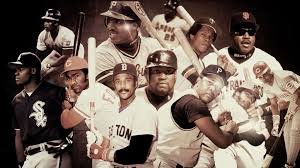
The numbers are moving. The pipeline is producing. The question now is whether baseball can sustain the momentum.


Instantly elevate your startup's investor appeal with a tailored deal memo crafted by professionals.
Create a professional deal memo effortlessly, enhancing your startup's appeal to investors.
Get insights into your product-market fit with tailored analysis from seasoned experts.
Streamline the investor connection process with clear, concise deal memos.
Unlock potential investment opportunities and set your startup on a path to success with ease and confidence. This service empowers you to focus on growth while we handle the heavy lifting of investor engagement.
At Sports Tech Atlanta, we track pipelines — not just in sports tech, but across every system where investment meets talent development. The story unfolding inside Major League Baseball's diversity numbers is exactly the kind of inflection point worth paying attention to.
On Opening Day 2025, Black players made up 6.2% of MLB rosters — a rise from 6.0% the year prior, with 59 Black players appearing on active and inactive lists and an additional 18 in the minor leagues on 40-man rosters. That uptick is modest by any measure. But context matters here, and the context is this:
In 2023, Black players hit a record low of 6.2% — down from 7.2% in 2022 — the lowest figure since TIDES began tracking the data in 1991, when 18% of MLB players were Black. That was the floor. What we are watching now is the bounce.
Black Player Representation in MLB — Key Years
Year
Black Players %
Notes
1991
18.0%
Peak era
2022
7.2%
Record low at time
2023
6.2%
All-time low (TIDES)
2024
6.0%
Bottomed out
2025
6.2%
Trending back up
Source: TIDES / Institute for Diversity and Ethics in Sport, University of Central Florida
The Pipeline Was Always the Play
This is where the Sports Tech Atlanta lens kicks in. When an ecosystem has a representation problem, the solution rarely lives at the top of the funnel — it lives in the infrastructure built years earlier. MLB understood this, and the data is beginning to confirm the investment thesis.
Of the 59 Black players on Opening Day rosters in 2025, 17 were alumni of MLB Develops programs — including the MLB Youth Academy, the Breakthrough Series, the DREAM Series, the Nike RBI program, and the Hank Aaron Invitational.
That is a program-to-pipeline conversion rate that any investor or operator would want to see. The league did not just write a mission statement about Black representation — it built infrastructure.
MLB's pipeline begins with an annual tour of pro-style camps targeting kids around 13-14 years old, which has grown from 12 stops in 2018 to 18 cities today. That is the top of the funnel. And it is starting to push volume through.

The Draft Tells the Real Story
If Opening Day rosters are the scoreboard, the draft is the engine room — and the signal there has been unmistakable.
Between 2012 and 2021, 17.4% of first-round picks were African American players. That number spiked to 30% in 2022, when four of the first five selections were Black players for the first time ever — and all four were alumni of at least one MLB diversity initiative. In 2023, Black players made up 10 of the first 50 draft selections, or 20%.
In the 2024 Draft, 30% of players taken in the opening round were Black — matching 2022 for the most by total and percentage since 1992. Back-to-back drafts at 30% is not a spike. That is a trend.
The minor league numbers are echoing it. MLB Pipeline's Top 100 Prospects list features 17% Black players — nearly triple the current MLB roster percentage — and 16% of the Top 100 Draft Prospects for the 2025 MLB Draft are Black. The talent is there. The lag is just biology: baseball's development timeline is long, and it takes years for draft classes to matriculate into big-league rosters.
"Back-to-back drafts at 30% Black representation is not a spike. That is a trend."
The Access Problem Is Real — and It's Being Addressed With Dollars
We do not ignore the structural challenge just because the trend line is improving. The sport has gotten expensive in ways that have systematically priced out communities. Programs are largely funded through USA Baseball, covering equipment, meals, and travel for showcases that could otherwise cost upward of $700 per event.
That is a genuine barrier. But it is also a solvable one when capital is aligned correctly. MLB has committed to investing $100 million over a decade in the nonprofit Players Alliance, in part to support and encourage a greater number of young Black players. That is not a marketing line — that is a capital deployment decision. And at Sports Tech Atlanta, we take capital deployment seriously as a signal of organizational commitment.
As former MLB manager Jerry Manuel put it plainly: the sport has gotten so expensive that it has eliminated a lot of our kids. The programs filling that gap — equipment, meals, travel subsidies, mentorship from former pros — are the infrastructure that makes equitable access possible.
What We're Watching
The numbers going from 6.0% to 6.2% is not a headline by itself. What is a headline is the totality of leading indicators pointing in the same direction: draft composition, prospect rankings, program alumni making Opening Day rosters, and eight-figure investment into community access. When multiple indicators align, that is when a trend becomes structural.
Thirty-five players on 2025 Spring Breakout rosters participated in MLB Develops programs — the next generation is already in the system, and they are wearing the league's pipeline programs on their sleeves.
Atlanta has a stake in this story too. Players like Michael Harris II in center field for the Braves — a Decatur native — and Termarr Johnson, who grew up in Atlanta choosing baseball over basketball and football before being selected fourth overall in the 2022 draft, represent exactly the kind of local talent the MLB pipeline was designed to find and develop.
"Baseball was the first major American sport to break the color barrier. The work to make that legacy real in today's game — at scale, with data, and with dollars behind it — is underway."
The floor appears to be in. The pipeline is producing. Now baseball has to sustain it.
At Sports Tech Atlanta, we work at the intersection of sports, technology, and capital. Stories like this one — where pipeline investment meets measurable outcomes — are exactly the kind of signal we believe operators, investors, and communities should be tracking.
Sources: MLB.com, TIDES / UCF, NBC News, ESPN, Essence, Yahoo Sports, Washington Times