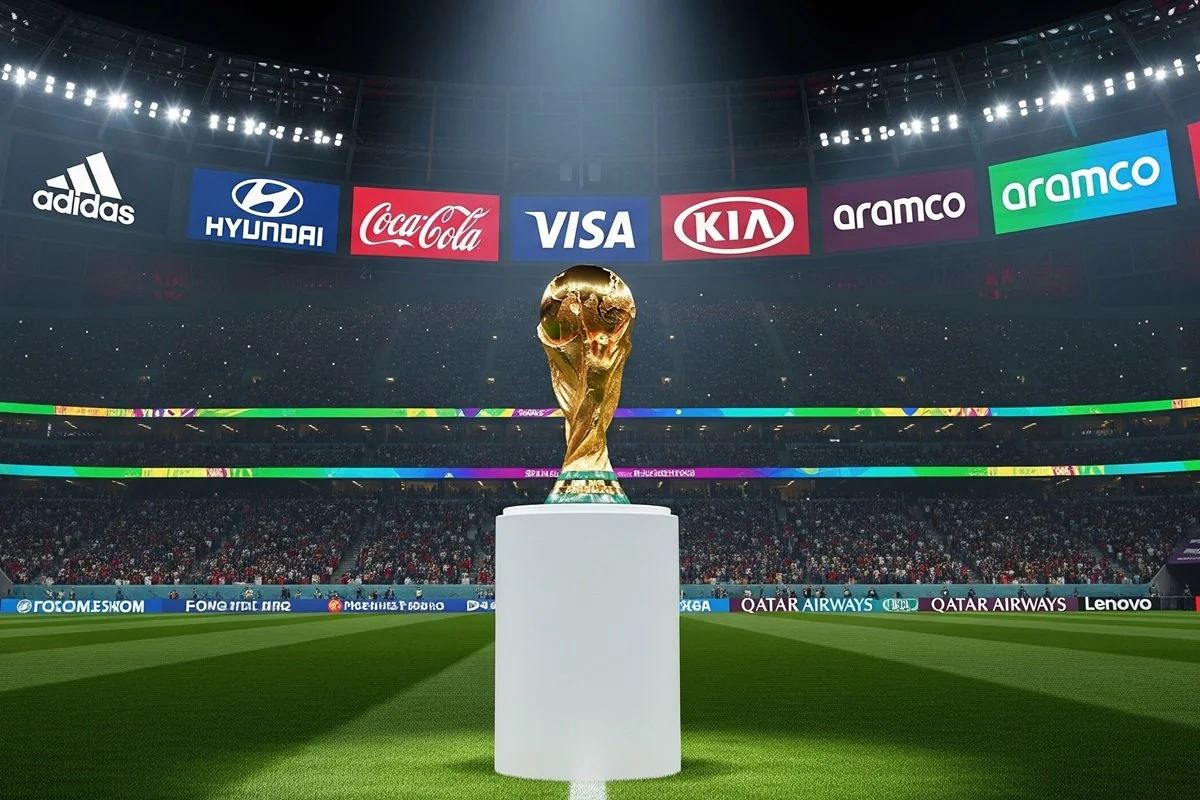
The 2026 men’s World Cup is on track to deliver the biggest sponsorship haul in the history of the sport — recent reporting puts the number near $2.8 billion, up from roughly $1.8 billion around Qatar 2022. FIFA has effectively sold out its inventory ahead of kickoff.
The headline writes itself: record money, biggest-ever tournament, 48 teams across 104 matches in 16 cities spanning the U.S., Canada, and Mexico. But the headline isn’t the interesting part. The interesting part is the composition of the money — and what it tells anyone trying to build, sell, or fund a brand right now.
Two forces did the heavy lifting
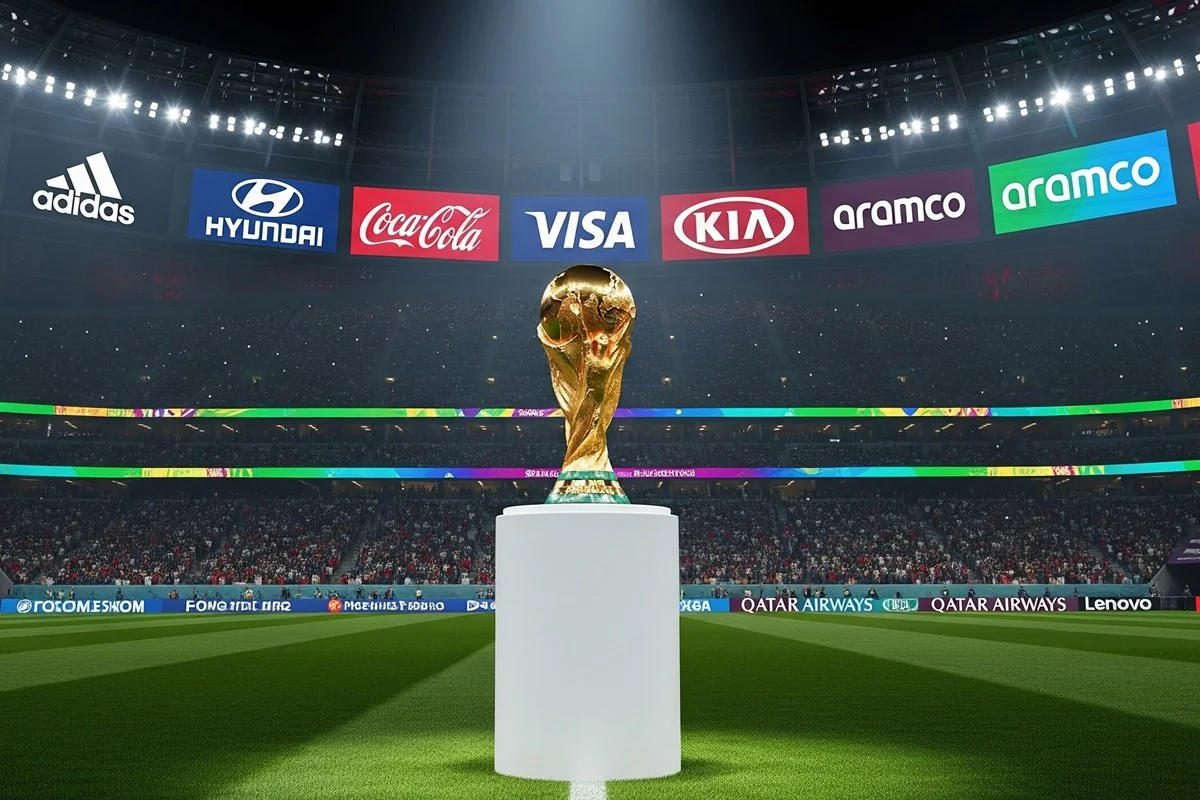
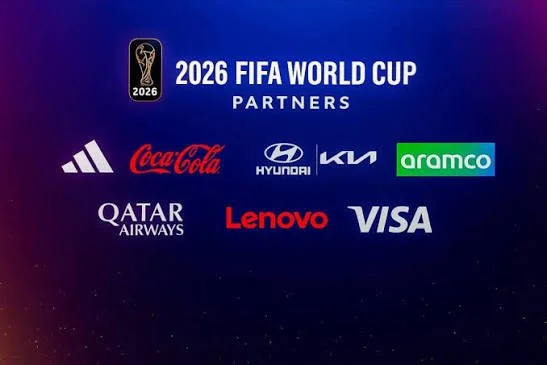
A Saudi energy mega-deal anchored the top tier. Aramco came in as a FIFA Major Worldwide Partner on a four-year global agreement — reportedly around $100 million a year — covering the 2026 Men’s and 2027 Women’s World Cups. It’s a textbook example of a brand buying global positioning rather than matchday consumption. Aramco isn’t chasing the fan with a cup in their hand; it’s buying continuous, geographically diverse presence at the one event that reliably commands the planet’s attention every four years.
U.S. brands flooded the second tier. This is the part North American operators should sit with. Bank of America became FIFA’s first-ever global banking sponsor. Verizon signed as the telecom partner. Frito-Lay upgraded into a global World Cup slot. Stack them next to AB InBev, McDonald’s, and Unilever and you can read FIFA’s thesis right off the page: this tournament was built for finance, connectivity, and snackable fan culture as much as for football tradition. Hosting on home soil pulled American capital off the sidelines.
Why this matters beyond FIFA
A few signals worth pulling out, because they apply well below the nine-figure tier:
Category exclusivity is the asset. Visa has held its FIFA position since 2007 — not for logo visibility, but because it sits inside the purchase moment where fandom converts to payment volume and data. The most defensible sponsorships own a transaction or a behavior, not a placement.
The money follows cultural relevance, not just reach. FIFA has spent a decade reframing the World Cup as a platform that runs through fashion, food, music, and community — year-round engagement, not a 40-day media buy. Sponsors are paying for the platform, not the logo board.
Host-market gravity is real. The surge of American brands didn’t happen because soccer suddenly got popular in the U.S. It happened because the event came here, and proximity lowered the activation risk. If you’re a brand or a property, geography is still a lever.
The takeaway for founders and brand-side operators
You will never write FIFA a $100M check. That’s not the lesson. The lesson is that the most expensive sporting event ever staged got that way by selling access to fan behavior — how fans travel, what they eat, how they pay — and by letting partners build around the game rather than just stamping a logo on it.
If you’re pitching a sponsorship, a partnership, or a product into sport right now, the question isn’t “how much visibility can I buy?” It’s “what fan behavior can I own, and can I activate it year-round?” That’s where the premium is — at every tier, not just the top of the pyramid.
The World Cup is just the cleanest proof of it.
Original reporting: SportBusiness Sponsorship, “US brands and Aramco mega-deal drive record Fifa sponsorship income” (Ben Cronin, June 11, 2026). Figures and sponsor detail drawn from SportBusiness, SportsPro, and TheStreet.
— Sports Tech Atlanta | Seed Talk