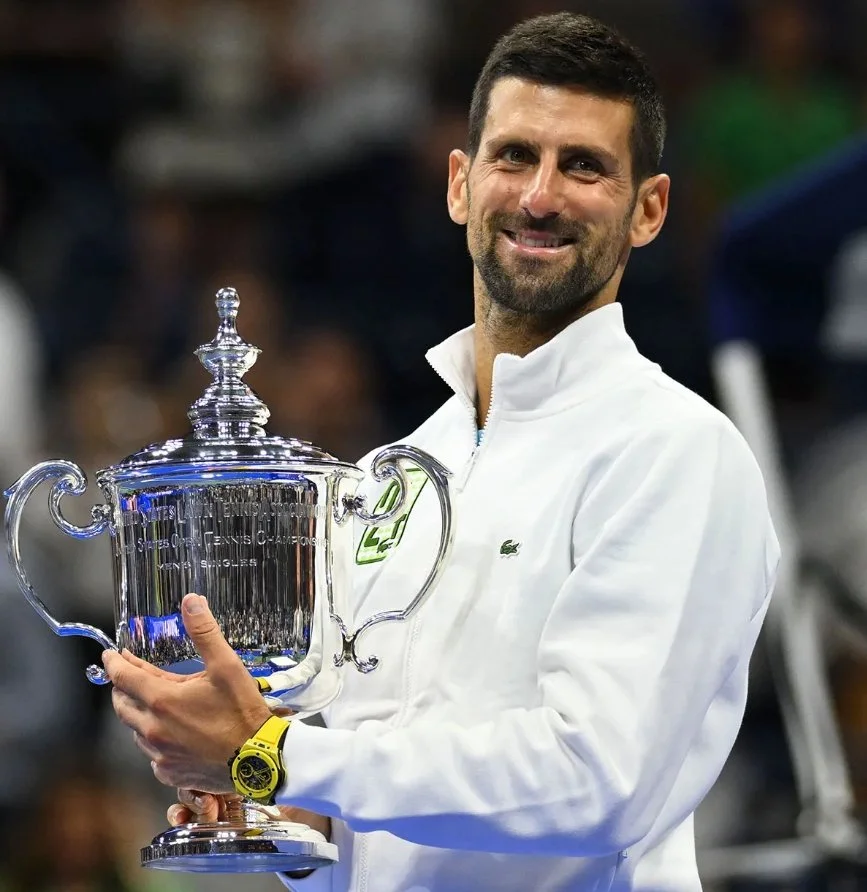
Within days of each other, Novak Djokovic and Gareth Bale walked through the same door. They came out in very different rooms. Both moves tell you where the smart money in sports is actually going.
SPORTS TECH ATLANTA | MARKET NOTE | JUNE 2026
There's a version of the athlete-investor story we've all heard too many times: a logo on a can, a percentage point in a startup, a "passive" stake that's really just a glorified endorsement. That story is ending. What's replacing it is more interesting — and, for anyone building or selling into the sports economy, far more consequential.
This week gave us two clean data points.
Djokovic walks into the firm
On June 26, Novak Djokovic — chasing a record-tying eighth Wimbledon title at 39 — signed on as a global strategic advisor to General Atlantic, the growth-equity firm managing roughly $126 billion in assets. This is the firm that backed Facebook, Uber, Vuori, and Gymshark. Djokovic's mandate is pointed: health, wellness, and sports technology. He's not buying a team. He's bringing a network and deal flow to a firm that wants deeper exposure to exactly the categories he's spent two decades obsessing over.
His framing was telling. Speaking to ABC, he argued that the foundations of elite sport and high finance are essentially the same — long-term thinking, leadership, dedication, strategic teamwork. To Bloomberg, he put it more plainly: "I like to disrupt, I like to challenge the status quo on and off the court."
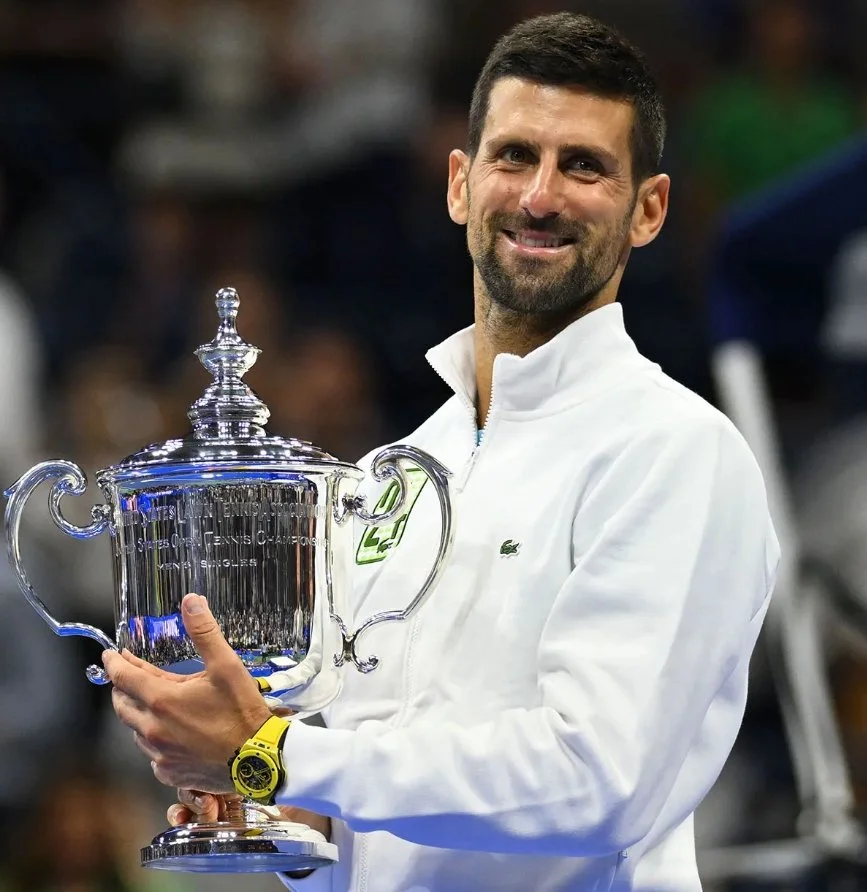
This is the advisor model. Djokovic lends his name, his relationships, and a credibility halo to a portfolio. In an industry where a great management team and the right culture make or break an investment, firms increasingly treat human capital — the psychology of high performance — as a real value driver. An athlete who has optimized himself for twenty years is, to General Atlantic, a credible expert on the human element of winning. Federer did a version of this with On. Venus Williams did it joining Topspin Consumer Partners as an operating partner. LeBron and Serena built family offices. Djokovic just institutionalized the playbook from inside one of the biggest shops on the Street.
Bale builds the fund
Gareth Bale went the other way — deeper. He didn't take a personal stake in a club with his own money. He became a named partner in Juggernaut Diversified Sports, a new platform from Washington-based private-equity firm Juggernaut Capital, raising and deploying institutional capital across a portfolio.
The strategy is deliberately contrarian. While the mega-funds chase passive minority slices of $5B+ franchises, Juggernaut is keeping the fund under $1 billion and pursuing control or near-control positions — domestic teams and leagues, international football clubs, and, pointedly, women's and youth sports. The firm already owns 3STEP Sports, giving it a real youth-sports operating footprint, and founder John Shulman has signaled a first investment in a professional women's team within roughly 60 days. Bale's hometown club, Cardiff City, remains "one of many" on the board.
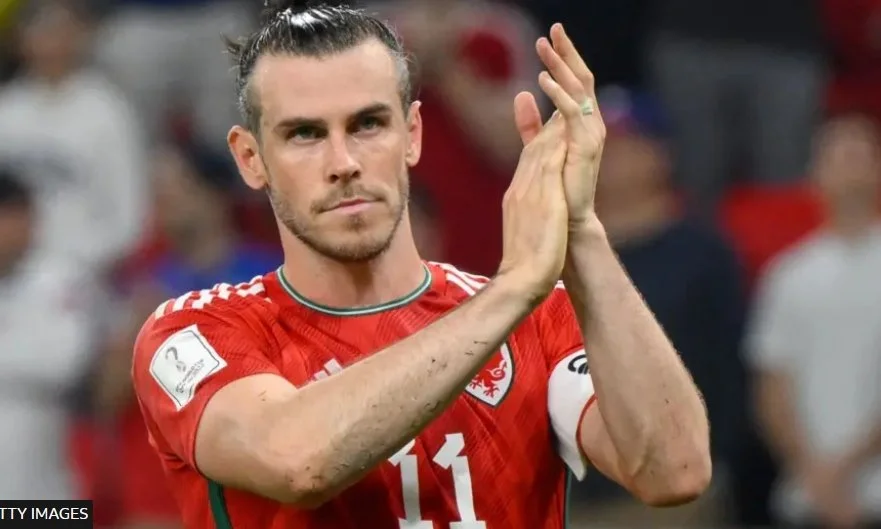
That's a different animal entirely. Compare it to how most of his peers have played it: Ronaldo took a 25% stake in Almería through CR7 Sports Investments; Mbappé bought 80% of Caen through his own vehicle. Personal capital, single club. Bale is on the general partner side — building a portfolio, underwriting deals, deploying other people's money with an operator's read on the locker room. As he told Reuters, he's been inside the dressing room and knows how it works from the athlete's side; the Juggernaut team knows the other side. Mesh the two and you have a thesis.
Why both of these happened in the same week
Neither of these is a vanity move. They're symptoms of a structural shift that's been building for years: sports has matured into a bona fide institutional asset class.
The numbers behind the headlines:
2019–2024Private equity poured $55B+ into sports-related assets — franchises, leagues, media rights, data, and technology.2024The NFL voted to allow PE minority stakes (up to 10%). With that, all major U.S. leagues now permit institutional capital. MLB opened the door in 2019; the NBA and NHL followed in 2021.FEB 2026KKR acquired Arctos Partners for ~$1.4B — a clean validation that sports is now a core alternative asset class, not a novelty.10-YRThe Ross-Arctos Sports Franchise Index returned ~16% annualized through Q1 2026, with historically low correlation to equities, credit, and real estate. That last part is the whole game for an allocator: diversification with upside.
Why does the asset behave so well? Three words that keep showing up in every analyst note: scarcity, loyalty, predictability. Leagues are closed systems with a fixed number of teams and no relegation risk in the U.S. — finish last and you get a draft pick, not extinction. Media rights deliver long, contracted revenue. And fans are the most inelastic consumers in any industry; they don't churn when the product underperforms. As KPMG's Paul Harris put it, scarcity is hugely important — and sport is one of the last forms of content people still plan their lives around.
Then there are the growth lanes the smart money is racing toward:
Women's sports — different growth curve from mature men's leagues. The WNBA, NWSL, WSL, and the PWHL have re-rated valuations and pulled in sponsors and broadcasters. This is precisely the lane Juggernaut and Bale are targeting first.
Youth sports — a ~$40B U.S. market growing 8–10% a year, consolidating from fragmented local operators into national platforms (see BPEA EQT's $1.25B IMG Academy deal). Recession-resistant, recurring revenue, white space everywhere.
The ecosystem around the game — stadium "live-work-play" real estate, media rights, data and analytics, betting, and sports technology. This is where the enterprise value increasingly lives.
The part that matters for the rest of us
Here's the through-line connecting Djokovic the advisor and Bale the GP: the athlete is no longer the endorsement — the athlete is the capital allocator. Equity compounds for decades. Endorsements expire with the prime. Every sophisticated athlete with a long horizon is figuring out which side of the cap table to sit on, and the most ambitious ones are choosing to deploy capital, not just attract it.
For founders, operators, and brands in the sports and fitness economy, that's not trivia — it's a map. It tells you who's writing checks, what theses they're underwriting, and where the next wave of strategic capital and distribution is going to concentrate. When a $126B firm explicitly wants more health, wellness, and sports-tech exposure and hires a network to find it, that's a buying signal for an entire category of companies. When a sub-$1B fund decides women's and youth sports are control-stake opportunities, that's a re-rating happening in real time.
We've been tracking this institutionalization for a while — including the broader debate over private capital marching into college sports, which we got into on The Seed Talk Podcast (the "Private Equity Firms are coming to college sports — good or bad?" segment). The throughline hasn't changed: as the money gets more institutional, the operators and technologies that make these assets run — the data layer, the fan-engagement layer, the retail and commercial infrastructure — get pulled along with it.
🎧 Listen: The Seed Talk Podcast — Sterling & Taylor Mack on sports, tech, and where the capital is moving.
The takeaway isn't that two famous athletes got new jobs. It's that two of them, in the same week, picked different seats at the same table — one advising the capital, one allocating it — because the table itself has gotten a lot more valuable. Sports stopped being a passion asset and became a portfolio asset. The people who understand the difference are about to have a very good decade.
Sports Tech Atlanta connects founders, investors, brands, and properties across the sports-technology economy. If you're building in this space — or allocating into it — let's talk.