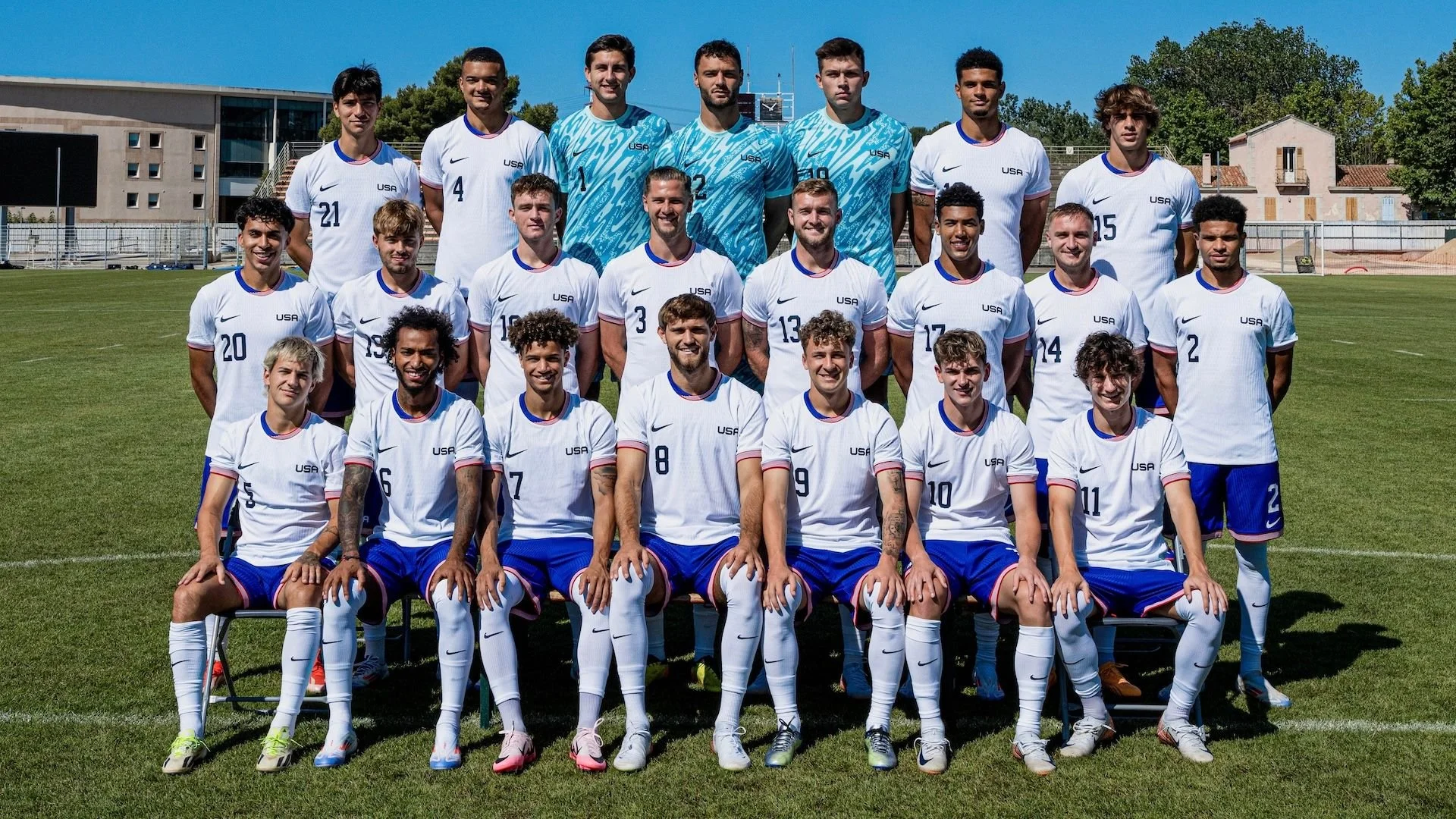
For decades, American youth soccer has operated on a broken economic engine: the “Pay-to-Play” model. While Europe treated its elite youth academies as speculative venture capital funds—where a single player sale could fund a decade of local development—the U.S. treated youth sports as a service industry.
Parents paid thousands in tuition to buy jerseys and fund tournament travel, locking out elite, lower-income talent and prioritizing weekend trophies over developing world-class individual assets.
Now, a sweeping structural overhaul orchestrated by Major League Soccer (MLS) is fundamentally rewriting the playbook. Driven by a combination of new financial grants, the adoption of global regulations, and predictive data analytics, the United States is finally copying the world’s most lucrative soccer monetization loops.
The Gold Standards: Benfica and Ajax
To understand the target model, look to Europe’s master developmental hubs. Portuguese powerhouse SL Benfica has weaponized its academy to generate €589 million in player sales over the last decade. Because academy graduates cost nothing to buy, their transfer fees represent 100% net capital gains on the books. In the Netherlands, AFC Ajax operates on a similar plane, netting €454 million. For these clubs, domestic TV revenue is low; their academies are their primary business engine, turning talent development into a self-sustaining cycle that funds first-team ambitions.
The Corporate Blueprint: Chelsea and PSG
Even the world’s wealthiest clubs have shifted their youth strategies to align with modern financial realities. In England, Chelsea FC has industrialized its youth pipeline, generating €442 million. Under strict Premier League Profitability and Sustainability Rules (PSR), Chelsea utilizes academy graduates as vital accounting mechanisms. Selling a homegrown player brings instant “pure profit” to the ledger, allowing elite clubs to balance out multi-million dollar first-team spending sprees.
Meanwhile, Paris Saint-Germain (PSG) has converted its academy system into a dual-threat asset: dominating the ultra-dense Parisian talent pool while scaling a massive global franchise network that generates recurring commercial and retail revenue.
The Transatlantic Highway: MLS-to-Europe Express Deals
The gap between the American system and these elite European networks is rapidly closing. MLS clubs are no longer waiting around for European scouts to stumble upon their players; they have built formal institutional pipelines. Through Multi-Club Ownership (MCO) and Strategic Alliances, the transfer pathway is fully industrialized. The New York Red Bulls feed directly into Europe via RB Leipzig and Red Bull Salzburg. New York City FC uses the data-sharing network of the City Football Group to track talent alongside Manchester City. Meanwhile, independent alliances like FC Dallas’ partnership with Bayern Munich give European giants an official “first-look” right at American prospects in exchange for sharing elite training methodologies. The financial results of these pipelines speak for themselves. The transfer market for young American players has split into a lucrative three-tier pricing model:
The Elite Prodigy Premium (€12M – €20M+): Highlighted by massive deals like Chicago Fire selling Gaga Slonina to Chelsea for a $15 million package, or FC Dallas moving Ricardo Pepi to the Bundesliga for €16M+.
The Proven MLS Starter (€4M – €10M): Exemplified by the Philadelphia Union selling Brenden Aaronson to Salzburg for €5.5M after proving his statistical efficiency in domestic professional play.
The Speculative Developmental Bet (€1M – €3M): Where European clubs buy raw academy stars or standout MLS NEXT Pro performers early, absorbing them directly into their reserve ranks.
How the Rest of the American Pipeline is Being Re-Engineered
To feed this international demand, MLS is overhauling its grassroots setup via four critical technological and regulatory pillars:
1. Incentivizing the Grassroots via MLS NEXT Development Grants
Historically, if a small independent U.S. youth club spent seven years developing an elite 14-year-old prodigy, a nearby MLS academy could simply poach that player for free. The original club received zero financial reward, forcing them to remain dependent on parental fees to survive. The introduction of the MLS NEXT Development Grant Program changed the financial equation. Under this framework, when an independent “Elite Academy” produces a player who goes on to sign an MLS professional contract, the grassroots club is financially compensated. Payouts trigger immediately upon signing and scale up to $30,000 as the player achieves professional appearance milestones. Most importantly, the original youth club retains a sell-on clause, ensuring a massive windfall if that player is eventually sold to an overseas powerhouse.
2. Digitizing and Claiming Global Solidarity Capital
For years, U.S. Soccer avoided FIFA’s mandated Training Compensation and Solidarity Mechanism out of a fear of domestic antitrust and child labor lawsuits. If a player left an American youth academy for Europe, the American club didn’t see a dime of the multi-million dollar transaction. Today, the “exception nation” era is over. Propelled by automated tracking tools like the FIFA Clearing House, MLS and independent academies are aggressively claiming their 5% solidarity cuts on international transfers. This influx of foreign capital is being reinvested straight into local infrastructure, removing the financial burden from families.
3. Data Over Results: De-risking Talent with Tech
The shift isn’t just happening on balance sheets; it’s happening on the pitch through advanced sports technology. In a bold experiment, MLS NEXT partnered with UK-based sports data analytics firm Taka to overhaul how youth academies are evaluated. Instead of traditional win-loss league tables, the ecosystem uses a “Quality of Play” Index to rank youth clubs. By tracking technical progression, spatial awareness, and player execution rather than match outcomes, the league incentivizes coaches to focus entirely on individual player growth. For tech investors, this transforms youth players from unquantifiable gambles into highly legible, data-backed financial assets.
4. Building the “Shop Window” via MLS NEXT Pro
To bridge the massive competitive gap between U-17 youth soccer and a first-team stadium environment, the league established MLS NEXT Pro. Operating similarly to the “B-teams” utilized by clubs like Benfica and Ajax, this professional reserve tier ensures that top prospects get professional minutes against grown men during their teenage years. From an economics standpoint, MLS NEXT Pro serves as a global marketplace where scouts from across Europe can monitor an American teenager’s data metrics in a professional domestic league, accelerating the player’s outward transfer value.
The Bottom Line
The monetization of American soccer has evolved past the era of charging parents for field time. By weaponizing sports analytics, opening up free elite pathways, and structuring financial kickbacks for grassroots clubs, MLS is turning the American youth system into a genuine global exporter of talent. For sports tech innovators and investors looking at the U.S. market, the message is clear: the infrastructure has arrived, and the monetization of the American player asset is just getting started.
About Sports Tech Atlanta
Sports Tech Atlanta (STA) is a boutique sports-technology advisory and commercial development firm, helping startups raise capital, brokering sports technology partnerships, and building strategy and business development engines for sports properties, technology companies, and athlete talent.