
The next competitive advantage in college sports may not be found in another wearable, camera, or performance metric. It may be found in understanding how athletes respond when the pressure rises.
The University at Buffalo is taking a step in that direction.
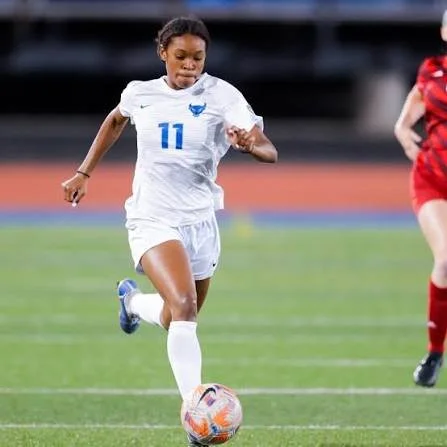
Buffalo's women's soccer and women's volleyball programs are now working with NTangible, bringing two programs within the same athletic department onto the platform together.
That matters.
Rather than treating mental performance as an individual initiative or something addressed only when an athlete is struggling, Buffalo is incorporating it into the broader performance environment.
Both programs are using NTangible assessments through Peak Flow, giving coaches another lens into how athletes respond to pressure, competition and the moments that can change the outcome of a match.
And the timing is particularly interesting.
What happens when the match gets tight?
Coaches have always had an intuitive understanding of which athletes they trust when the game is on the line.
Who wants the ball?
Who communicates?
Who stays composed after a mistake?
Who elevates their performance when the pressure increases?
And perhaps most importantly:
Who rises when the match tightens?
Historically, many of those answers have come from observation, experience and what coaches see during competition.
Technology is now creating an opportunity to make that understanding more measurable.
That's where NTangible's approach becomes interesting.
The goal isn't simply to generate another dashboard or another number for coaches to track.
It is about creating a framework for understanding the mental side of performance — and potentially giving coaches insight into characteristics that don't always show up in traditional athletic testing.
From physical performance to total performance
College athletics has become increasingly sophisticated at measuring the physical side of an athlete.
GPS tracking.
Heart-rate monitoring.
Strength testing.
Sleep.
Recovery.
Workload.
Video analysis.
Biomechanics.
All of these technologies help answer an important question:
How is the athlete performing?
But there is another question that is becoming increasingly important:
How does the athlete perform when the environment becomes difficult?
A soccer player can have the physical tools to dominate a match.
A volleyball player can have the technical ability to make the play.
But competition introduces variables that cannot always be captured by traditional performance metrics.
Pressure.
Momentum.
Mistakes.
Confidence.
Adversity.
Decision-making.
Communication.
The ability to reset.
Those factors can determine what happens when the score is tied late, when the crowd gets loud, or when an athlete has to make the next play after something goes wrong.
That is the space mental-performance technology is beginning to address.

Buffalo may be showing where this goes next
One of the most interesting aspects of Buffalo's adoption is that two programs within the same athletic department are coming onto the platform together.
That creates the potential for something bigger than a single-team experiment.
Instead of mental performance living in isolation, athletic departments can begin thinking about it as part of a broader performance infrastructure.
And Buffalo is just the beginning.
Lucinda Snyder is bringing several of her college programs onto NTangible over the next three weeks, with Buffalo serving as the first.
That creates an interesting question for college athletics:
What happens when mental performance data becomes as normal to the performance conversation as physical performance data?
We are still early in that transition.
But the direction is clear.
The next generation of sports technology won't necessarily be about replacing coaches' instincts.
It may be about giving those instincts better information.
The mental-performance operating system
The phrase NTangible uses — "The Operating System for Mental Performance" — is worth paying attention to.
Because an operating system is not just one application.
It is infrastructure.
It connects different pieces of information and creates an environment in which people can make better decisions.
That's potentially the bigger opportunity for mental-performance technology in sports.
Imagine a future where a coaching staff can look at physical workload, recovery, video, scouting and mental-performance indicators as interconnected pieces of the same performance picture.
The objective isn't to reduce an athlete to a score.
It's to better understand the athlete.
And perhaps identify the difference between an athlete who performs well when everything is going right and one who gets better when everything is on the line.
The next competitive advantage?
College sports is increasingly becoming a data business.
The programs with the best information don't necessarily have an advantage because they have more data.
They have an advantage because they know which data matters and how to use it.
Mental performance may be one of the next frontiers.
Buffalo's women's soccer and women's volleyball programs are now putting that concept into practice.
And if more athletic departments follow, mental performance could move from the margins of sports science into the center of the performance conversation.
Because ultimately, games aren't played in perfect conditions.
They are played under pressure.
And the athletes who can perform when the match tightens are often the ones who decide what happens next.
Sports Tech Atlanta will continue to track the technologies and companies changing how athletes, teams and leagues approach performance.
If you’re building in sports technology or sports business, check out Sports Tech Atlanta — the boutique advisory I run connecting innovative companies with the sports ecosystem.
We’ve also built:
🏟️ Sports Tech Matchmaker — connecting sports organizations with technology solutions
🎙️ Our Podcast — a platform for founders and companies to tell their stories and engage with the sports business community.
If you’re building, investing, or looking for opportunities in sports, let’s connect.