


The NWSL Gold Rush

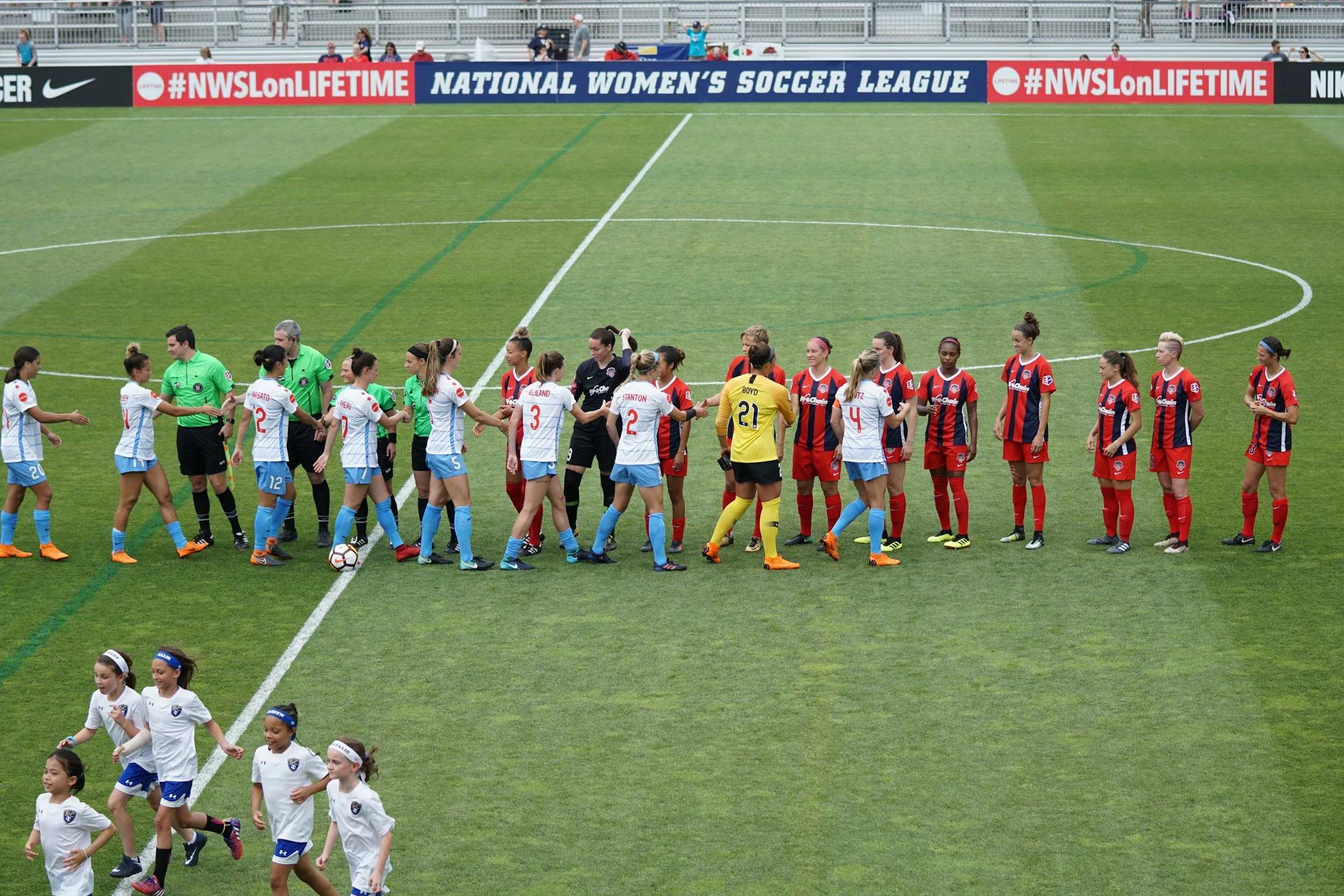
The National Women’s Soccer League (NWSL) has shifted from a burgeoning niche to a heavy-hitting financial powerhouse. As the 2026 season kicks off, the league’s collective valuation has skyrocketed to an estimated $2.6 billion, with the average franchise now worth $184 million, a staggering 179% increase since 2023.

The New Benchmarks of Success

The league’s financial landscape has been redrawn by high-profile sales and record-breaking expansion fees. Only a few years ago, expansion fees hovered around $2 million; today, that entry price has reached a record $165 million for the newly awarded Atlanta franchise.

  • Angel City FC | $335 Million | Sold to Bob Iger and Willow Bay; most valuable women’s sports team.

  • Kansas City Current | $315 Million | First NWSL team to build a purpose-built stadium (CPKC Stadium).

  • Bay FC | $208 Million | Expansion fee of $53M in 2024; value surged 72% in two years.

  • Washington Spirit | $196 Million | Acquired by Michele Kang in 2022 for ~$35M; now a ~5x return.
A major catalyst for this growth is the influx of institutional and private equity capital. Marc Lasry, the billionaire former co-owner of the NBA’s Milwaukee Bucks, recently invested $40 million into the North Carolina Courage through his Avenue Sports Fund.

This deal valued the Courage at $155 million, more than doubling the club’s 2023 valuation. Lasry’s move signals that sophisticated sports investors no longer view the NWSL as a “social cause,” but as an undervalued asset class with immense upside.

Player Economics:

The surge in valuations is directly reflected in player compensation. The 2026 season marks the first time multiple players have eclipsed the half-million-dollar mark in annual guaranteed salary.

  • Sophia Smith (Portland Thorns): Currently the league’s highest earner, Smith exercised a record $1 million player option for the 2026 season. As the premier face of the league, her contract reflects the “High Impact Player” (HIP) status that allows teams to exceed standard salary caps.

  • Maria Sanchez (San Diego Wave): Following a landmark deal initially signed with Houston and a high-profile move to San Diego, Sanchez earns an estimated $500,000 annually, part of a total compensation package nearing $1.5 million over three years.

  • Christine Sinclair (Portland Thorns): Even at 42, the legendary goal-scorer remains one of the league’s most valuable assets both on and off the pitch, commanding a salary of roughly $450,000 for her 12th NWSL season.

The Future: Youth and Analytics

Valuations aren’t just based on current stars; they are bets on the future.

Top Young Talent

  • Trinity Armstrong: At just 18 years old, the San Diego Wave defender represents the next wave of NWSL dominance. By signing professional contracts directly out of the youth ranks or early in college, players like Armstrong are becoming long-term “franchise pillars” that increase a club’s asset value.

Data-Driven Standouts

  • Bia Zaneratto: The Kansas City Current’s Brazilian powerhouse, Bia Zaneratto, has become a darling of soccer analytics. Beyond her raw scoring, her “progressive carries” and “expected goal involvements” (xG+xA) make her one of the most efficient offensive engines in the world, proving that NWSL teams are now using sophisticated data to justify high-value transfer fees and salaries.

Looking Ahead

With the league expanding to 16 teams in 2026 (adding Boston Legacy FC and Denver Summit FC), the NWSL is firmly positioned among the top-tier North American sports leagues. The combination of deep-pocketed owners like Lasry and the world-class talent of players like Smith and Rodman has created a virtuous cycle of investment that shows no signs of slowing down.


The Mane Event: Why the US Equestrian Market is an Undervalued Gem for Luxury and HNWIs

In the world of luxury, status symbols change. Cars pass, watches become collector’s items, but few pursuits offer the same unique blend of exclusivity, tradition, and untapped potential as equestrian sport.

While often seen as a niche pastime, the US equestrian market is, for those in the know, a sleeping giant. This multi-billion-dollar industry, once the sole preserve of the landed gentry, is undergoing a transformation. High Net Worth Individuals (HNWIs) are increasingly flocking to the sport, and luxury brands are beginning to take notice. Yet, for many in the finance and branding worlds, this remains a surprisingly undervalued opportunity.

Here’s why the US equestrian market is the next big thing in luxury and high-value investments.


Find out more about Sports Tech Atlanta opportunities across equestrian leagues at info@sportstechatlanta.com


The Power of Passion: HNWIs are Riding into Town

Forget exclusive golf courses and private jets; for a certain tier of ultra-high-net-worth individual, the stable is the new country club. The reason? A genuine, consuming passion. Unlike many other status symbols, horse ownership requires a massive investment not just of money, but of time and devotion. This deep, personal commitment creates a consumer who is uniquely receptive to high-quality products and services.

This commitment translates into significant spending. The cost of owning and training a high-level competition horse can easily run into the six, and sometimes even seven, figures. Add in competition fees, travel, veterinary care, and insurance, and you have an individual with significant, and often recurring, discretionary spending power. This is a demographic that values excellence and is willing to pay for it.

A Captive, Affluent Audience: Beyond the Winner’s Circle

The financial potential of the equestrian market isn’t just about the horses themselves. The sport attracts a broad and deeply affluent audience. From the sponsors of major events to the owners of world-class facilities, this is a world populated by individuals with significant financial clout.

Equestrian events, from prestigious horse shows to polo tournaments, are more than just competitions. They are highly social, networking hubs for the elite. This creates a powerful and captive audience for luxury brands. The atmosphere is sophisticated, the company is elite, and the potential for organic, authentic brand placement is unmatched.

The Premiumization of Everything: From Saddles to Stables

For too long, the equestrian market has been underserved by luxury brands outside the core equipment market. While high-end saddlery and specialized tack have always commanded premium prices, other aspects of the rider’s lifestyle have been relatively overlooked.

This is changing. We’re seeing a significant premiumization across the board. Riders are looking for more than just functional gear; they want luxury apparel that reflects their taste and status. This has led to the rise of specialized high-end equestrian fashion lines, often from traditional luxury brands that see the potential in this market.

This premiumization extends to every touchpoint. From exclusive equestrian-themed wellness retreats to high-end real estate developments designed for horse owners, the opportunity for innovation and premium product development is vast.


Beyond Apparel: The Untapped Potential in Lifestyle and Tech

The opportunities are not limited to fashion and equipment. The equestrian market is primed for disruption in other sectors, particularly technology and lifestyle services.

For luxury brands, this means creating holistic experiences. Imagine high-end travel packages for horse owners, curated equestrian-themed culinary experiences, or exclusive membership programs that offer access to the world’s most prestigious competitions and private stables.

In the tech space, the opportunities are just as compelling. There is a growing demand for advanced tracking systems for horse health and performance, specialized training platforms, and secure digital platforms for managing horse records and competition schedules. For forward-thinking tech companies and investors, this is an area where early investment could yield significant returns.

The Real Estate Play: Equine Estates and Luxury Developments

For high-net-worth investors, one of the most direct and tangible ways to capitalize on the equestrian market is through real estate. Equine properties, from private, state-of-the-art training facilities to luxury residential developments that cater to horse owners, are in high demand.

This goes beyond just a barn and a paddock. Modern equine estates are high-end lifestyle properties, featuring luxury homes, multiple guest houses, world-class arenas, and extensive trail systems. These properties offer a unique combination of investment potential and personal enjoyment, making them an attractive asset class for HNWIs.

A New Chapter for Equestrian Sport: Why Now?

The time is ripe for investment in the US equestrian market. The sport is becoming more visible, thanks in part to increased television and digital coverage. Major events are attracting larger, more global audiences, raising the profile of equestrian sport and its participants.

This increased visibility is leading to a growing professionalization of the sport. We’re seeing more sponsorships, more corporate involvement, and a push towards greater commercialization. This professionalization is creating a more stable and predictable market, making it more attractive to sophisticated investors.

The US equestrian market, with its affluent demographic, passionate community, and growing professionalization, is no longer a niche hobby. It is a burgeoning luxury ecosystem with significant, and still largely untapped, potential. For luxury brands looking for authentic, engaged audiences and for high-net-worth investors seeking unique and potentially high-yielding opportunities, the stable might just be the most undervalued place to be. It’s time to saddle up.

Find out more about Sports Tech Atlanta opportunities across equestrian leagues at info@sportstechatlanta.com