
TGL Franchise Values Surge as Alexis Ohanian Bets Big on Women's Golf

The indoor golf league TGL is closing out its second season on a high note — not just on the course, but in the boardroom. One of the indoor golf league's franchises has sold a minority stake for $100 million, and other teams have sold stakes eclipsing $90 million, according to a report from Sportico. AOL

The financial momentum coincides with a triumphant week for one of the league's marquee ownership groups. The season wrapped with Los Angeles Golf Club winning the SoFi Cup title in a 2-0 sweep against Tiger Woods' Jupiter Links. Collin Morikawa, Sahith Theegala, and Englishmen Tommy Fleetwood and Justin Rose play for LAGC. AOL

Ohanian Doubles Down on Golf

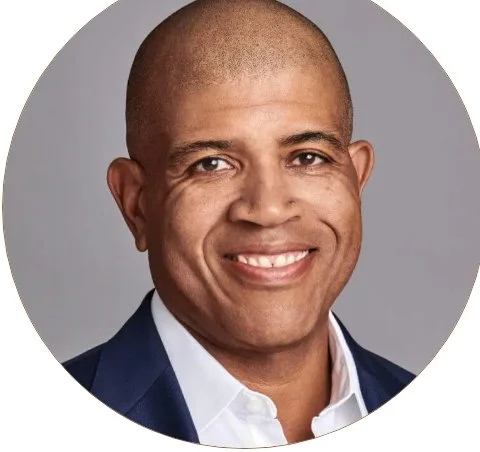
Reddit co-founder and tech entrepreneur Alexis Ohanian, who co-owns LAGC alongside tennis icons Serena and Venus Williams, wasted no time capitalizing on the championship euphoria. Ohanian was in the middle of celebrating his golf team's TGL championship Tuesday night when he broke a piece of news: earlier that day, he said, he'd purchased the second franchise in TGL's upcoming women's league. Sportico

Arthur Blank, owner of the NFL's Atlanta Falcons and TGL's Atlanta Drive, was the first to purchase a WTGL franchise, and Ohanian is the second. Both paid about $20 million, Sportico reported. WJOX-AM

Ohanian has been one of the league's most vocal advocates, framing TGL as the perfect vehicle for golf's digital future. "All it takes is a couple of generational talents on a big enough stage to change the entire perception of the sport," he said. "Golf is one of those sports that is so on the precipice. You can see it online. You can see the creator economy telling the story of this sport. This format of TGL is so perfect for the online generation. Again, I say this as a Reddit guy. Take my word for it. It is perfectly built for the social media age." Sportico

From $35M to $100M: A Rapid Rise

The financial trajectory of TGL franchises has been striking. TMRW sold its first six TGL franchises for a rough average of about $35 million. Sportico In under two years, valuations have nearly tripled. In October, Ilitch Sports + Entertainment bought into Ohanian's Los Angeles Golf Club at a number reported as "close to $90 million," while Blank's Atlanta Drive GC sold an LP stake that valued the club at about $100 million. Sportico

Industry watchers point to TGL's lean operating model as a key driver. Those close to the TGL say franchise economics have benefited from the league's single-venue model. It took MLS teams roughly two decades to hit the $100 million mark, and NWSL teams about a decade, and very few of those teams are profitable even today. Sportico By contrast, some of the circuit's seven teams finished this season with cash flow north of $1 million, due in large part to sponsorship deals and comparatively small overhead. Sportico

What's Next: WTGL and League Expansion

TGL launched in January 2025, the brainchild of Tiger Woods, Rory McIlroy, and media executive Mike McCarley. The league will grow from six participating teams to seven in 2027 with the introduction of Motor City Golf Club, representing Detroit. Big News Network

The WTGL is planning to launch later this year. While the existing men's franchise owners don't have contractual right of first refusal on those teams, it's telling that the first two have sold to existing TGL owners. Sportico Adding a women's team gives those groups expanded brand reach and more content inventory to offer sponsors.

Moving forward, in addition to WTGL, the group is looking to expand its men's league. That will likely start with an eighth franchise, but the league could grow further shortly after. There has been consistent interest from groups in Toronto, sources said, with other domestic and international groups also in the mix. Sportico

With championship-caliber play on the course and nine-figure valuations off it, TGL appears to be graduating from promising experiment to legitimate sports business — and the women's league hasn't even tipped off yet.

Sources: Sportico, Reuters, Field Level Media

Video Review Is Coming to Wimbledon — And It’s About Time

Video Review Coming to Wimbledon 2026 | Sports Tech Atlanta
Wimbledon aerial view
Tennis Technology

Video Review Is Coming to Wimbledon — And It’s About Time

Sports Tech Atlanta
March 27, 2026
4 min read

The All England Club has announced that video review technology will debut at Wimbledon 2026 — marking another major leap forward for a tournament that only ditched line judges a year ago.

After adopting electronic line-calling in 2025, Wimbledon is adding yet another layer of tech to its hallowed grass courts this summer. The All England Club confirmed during a media briefing — held 100 days before the tournament begins — that video review will be available on six courts for the first time in the championship’s storied history.

The technology, which allows players to challenge specific calls made by the chair umpire, will be deployed on Centre Court, No. 1 Court, No. 2 Court, No. 3 Court, Court 12, and Court 18. Players will have unlimited challenges and can use the system to contest whether a ball bounced or touched, whether they touched the net, or other disputed decisions — either on a point-ending call or immediately after a point concludes in cases of hindrance.

“The Grand Slam tournament most steeped in tradition is getting another modern upgrade — and the sport is better for it.”

★ Courts Equipped with Video Review in 2026

  • Centre Court
  • No. 1 Court
  • No. 2 Court
  • No. 3 Court
  • Court 12
  • Court 18

From a sports technology standpoint, this is a natural evolution. Video review made its Grand Slam debut at the 2023 US Open, then arrived at the Australian Open in 2025. The ATP Tour has been rolling it out across all Masters 1000 events, building on experience gained at the NextGen ATP Finals (since 2018) and the year-end ATP Finals for the top eight players (since 2020). Wimbledon is now the third Grand Slam to adopt it — with Roland Garros the only major yet to follow suit.

It’s worth noting that video review operates separately from electronic line-calling (ELC). ELC handles ball-in or ball-out rulings in real time. Video review addresses the other kinds of judgment calls — net touches, bounces, hindrances — that ELC simply wasn’t designed to cover.

That said, Wimbledon’s 2025 rollout of electronic line-calling wasn’t without turbulence. The tournament acknowledged “operator error” after a ball hit well long by Brit Sonay Kartal went uncalled against Anastasia Pavlyuchenkova. A separate point also had to be replayed due to system failure during a quarterfinal clash between Taylor Fritz and Karen Khachanov. Those incidents underscored that even the most sophisticated officiating tech depends on sound human oversight.

For Atlanta’s sports tech community, Wimbledon’s continued embrace of officiating technology is a compelling case study. The convergence of computer vision, real-time data processing, and broadcast-quality review systems is reshaping live sports — and tennis, with its binary calls and constant stoppages, has become one of the richest proving grounds for these innovations. Keep watching this space.

© 2026 Sports Tech Atlanta. All rights reserved.

Your Face Is Your Ticket: MLB Goes All-In on Biometrics and AI for the 2026 Season

From frictionless stadium entry to AI player avatars you can actually chat with — Major League Baseball isn't waiting for the future. It's building it now.


At Sports Tech Atlanta, we talk a lot about the bridge between innovation and implementation. The moment when a technology stops being a pilot and starts becoming the standard. In Major League Baseball this season, that bridge has officially been crossed. Twice.

Two seismic shifts are reshaping the game-day experience in 2026: an accelerating national rollout of biometric stadium entry, and a landmark AI deal that puts a virtual version of every MLB player directly in fans’ hands. Together, they signal that baseball isn’t just America’s pastime — it’s becoming one of the most aggressive adopters of fan-facing technology in professional sports.

  • 8+MLB ballparks now running Go-Ahead Entry

  • 2sAverage gate entry time with facial auth

  • 75%Fan enrollment rate at early adopter stadiums

Ralph Lauren X MLB

Biometrics at the gate

Go-Ahead Entry: The monolith is coming to a ballpark near you

If you haven’t seen one yet, you will soon. MLB’s “Go-Ahead Entry” pedestals — internally dubbed “monoliths” — are large, purpose-built kiosks powered by NEC facial authentication technology. Fans who opt in through the MLB Ballpark app upload a selfie, link it to their Ticketmaster account, and from that point forward, their face is their ticket. No phone out. No barcode scan. No fumbling.

“You don’t even break stride. It recognizes you from about 10 feet out — and by the time you take a few more steps, you’re validated.” — Tampa Bay Rays CBO Bill Walsh

The program launched with the Philadelphia Phillies as a beta in 2023 and has since expanded to San Francisco, Houston, Washington D.C., Cincinnati, Kansas City, Tampa Bay, and more. What started as a COVID-era experiment in crowd management has evolved into a fan experience differentiator. The system works even with hats and sunglasses on, can validate an entire group on one account in a single look, and has clocked average entry times of just two seconds per ticket — fast enough, the Cleveland Browns (an early Wicket-powered adopter) say, to clear their gates ten minutes faster than traditional scanning.

By the end of last season, close to 75% of fans at the most mature deployments had enrolled — more than double the projections of stadium operators. That kind of organic adoption doesn’t happen unless the product actually works. And here’s the thing from an investment and go-to-market lens: once fans experience frictionless entry, friction becomes unacceptable everywhere else. This is the flywheel moment.

The technology is also integrating with AI-based security screening systems already in place, allowing fans to walk past metal detector equivalents without stopping. The next frontier is concessions — think age verification for alcohol purchases at the point of sale, handled without a single ID check. The Los Angeles Clippers are already doing this at Intuit Dome with CLEAR’s identity platform. MLB is watching closely.

AI fan engagement

Chatting with Shohei: the Genies deal changes the player-fan relationship

In February, MLB Players Inc. — the business arm of the MLBPA — announced a landmark agreement with California-based AI firm Genies to create AI avatars of every single player on a major league roster. Not a handful of marquee names. Every player. The avatars will carry each player’s voice, personality, and interests, and will be able to hold genuine back-and-forth conversations with fans — remembering details across sessions the more a user interacts with them.

Genies is building a monetization layer on top: paid chat interactions, in-app experiences, and digital goods. Think of it as a trading card that talks back — and one that gets to know you over time.

This is one of the first deals that meaningfully bridges AI companionship technology with professional sports IP at league scale — and it’s happening in baseball first.

The implications for fan engagement, merchandise, and media rights are enormous. For sports tech founders and investors, this is a category signal. Personalized, AI-driven fan relationships are no longer theoretical. They’re being built right now, and the moats will form fast around whoever owns the infrastructure, the data, and the rights deals to do it.

There’s nuance worth tracking, of course. Not every player will be thrilled with a blanket agreement representing their likeness in ways they can’t fully control. Privacy advocates will continue to raise important questions about where biometric data goes and how it’s stored. Both are conversations the industry — and legislators — are actively having. This space rewards founders who build trust into the architecture from day one, not as an afterthought.

The bigger picture

What MLB’s tech push means for the sports tech ecosystem

Baseball has historically been a proving ground. The Moneyball revolution in analytics started on the diamond and transformed every sport. The same thing is happening now with fan-facing biometrics and AI. What MLB validates at scale, every other league will accelerate. Atlanta, with Truist Park and State Farm Arena already investing in premium digital experiences — and Centennial Yards on the horizon — is perfectly positioned to be a node in this network, not just a spectator.

If you’re building in the stadium tech, identity, AI engagement, or fan experience space, the 2026 MLB season is your case study. The adoption curves are real. The investment appetite is there. And the window to build the infrastructure that powers the next generation of the ballpark experience is open right now.

At Sports Tech Atlanta, we don’t just watch these trends. We help founders get in front of the operators, investors, and league partners who are writing the checks. This is the moment. Step up to the plate.

Reach out to info@sportstechatlanta.com to learn more.

Haaland's Gambit: Why the World's Best Striker Just Invested in Chess and What It Tells Us About the Game's Tech Future

This week, Erling Haaland made his boldest move off the pitch yet. It wasn't a stock. It wasn't a startup. It was chess. Here's why that matters and the sport's booming tech.


Erling Haaland has spent the past few years doing things no one expected. Breaking Premier League scoring records. Becoming Norway's all-time international scorer — shattering a record that stood since 1934. Racking up 40 million Instagram followers while barely trying.

And now this: on March 19, 2026, Haaland announced he was becoming a strategic investor in Norway Chess and the newly launched Total Chess World Championship Tour — a global circuit backed by FIDE, chess's world governing body, and widely expected to feature his fellow Norwegian legend Magnus Carlsen. Through a company he co-founded called Chess Mates, the 25-year-old striker now holds a 25% stake in Norway Chess.

It's being called a "striking gambit." And it may be smarter than it looks.

The Move: What Haaland Actually Did

Haaland co-founded Chess Mates alongside Norwegian businessman Morten Borge, and the company has become a significant owner of Norway Chess — the organization launching the Total Chess World Championship Tour.

The tour itself is ambitious. It will run four events per season across fast classical, rapid, and blitz formats — crowning a single combined world champion. A pilot tournament is scheduled for autumn 2026, with the full championship cycle launching in 2027. The minimum annual prize pool is $2.7 million, and FIDE has approved the format for at least 16 years.

Haaland was direct about his motivation: "I'm investing in Norway Chess because I believe the new Total Chess World Championship Tour can turn chess into an even bigger sport for spectators around the world. The team behind Norway Chess has already done an impressive job growing the event, and joining the project was too exciting to pass up."

He also drew the parallel most athletes and coaches in his orbit have quietly made for years: "You have to think quickly, trust your instincts, and think several moves ahead. Strategy and planning are everything." Pep Guardiola — Haaland's manager at Manchester City — has said the same thing. Chess and elite football, it turns out, speak the same language.

And Haaland isn't alone in the locker room. Arsenal's Eberechi Eze recently won the $15,000 PogChamps 6 on Chess.com. Liverpool's Mohamed Salah is a Chess.com user who describes himself as rated around 1400. Trent Alexander-Arnold is a known fan. Chess is having a moment in football — and Haaland just made it official.

The Game Behind the Game: Chess Is Booming

To understand why Haaland's investment makes sense, you have to understand the remarkable moment chess is currently in.

Chess.com crossed 200 million registered members in April 2025 — doubling its user base in just over two years. The 2024 World Chess Championship drew 10 million concurrent viewers at peak — roughly the same audience as the Wimbledon men's final in the US and UK combined. Chess viewership on streaming platforms rose nearly 17% in 2024. The global chess market is now valued at over $3 billion.

The game didn't just survive the age of AI. It thrived. What fans love about chess was never the perfection of the moves — it was always the human drama behind them. And technology has found ingenious ways to make that drama more visible, more accessible, and more entertaining than ever before.

The Chess Tech Stack: What's Powering the Game's Rise

If Haaland wants to grow chess into a bigger spectator sport, he's betting on a tech infrastructure that's already moving fast. Here's what's currently shaping the chess experience for players and fans.

AI-Powered Live Analysis

The single biggest fan experience upgrade in chess has been real-time AI commentary. Modern broadcasts now display a live "evaluation bar" — a visual meter showing which player has the advantage and by how much — calculated in real time by engines like Stockfish, which now operates at an ELO rating exceeding 3900, far beyond any human player.

The Global Chess League — a FIDE joint venture — partnered with Google Cloud and Tech Mahindra to roll out AI and machine learning dashboards during live matches in 2025, delivering real-time player performance insights and enhanced smart broadcasting. The result is a broadcast that casual fans can actually follow: they can see the moment a blunder happens, understand why it mattered, and watch the momentum shift — even if they don't know the difference between a Sicilian Defense and a Queen's Gambit.

Smart Chess Boards

The physical chessboard is getting a technology upgrade. Smart boards like the Square Off Pro detect moves automatically, connect via Bluetooth or Wi-Fi to platforms like Chess.com and Lichess, and allow players to compete against opponents online while physically moving pieces on a real board.

More advanced models can move pieces robotically — meaning you're sitting at a board watching a ghost hand respond to your move, controlled by an AI opponent or a remote human player thousands of miles away. It's the closest thing to playing over-the-board chess from your kitchen table against a grandmaster in Tokyo.

Streaming & Creator Culture

Perhaps the most underrated driver of chess's growth has been its embrace of streaming culture. Grandmasters like Hikaru Nakamura and content creators like GothamChess (Levy Rozman) have built massive audiences on Twitch and YouTube by making chess entertaining, accessible, and personality-driven.

When Google's Kaggle launched its AI Chess Exhibition Tournament in August 2025 — pitting general-purpose AI models like Grok 4 and OpenAI's o3 against each other in a live bracket — Nakamura provided live Twitch commentary, GothamChess delivered daily YouTube recaps, and Magnus Carlsen himself wrote wrap-up analysis. The event combined sports drama, tech spectacle, and creator reach in a way that would have been unimaginable five years ago.

Chess.com's Platform Ecosystem

Chess.com is effectively the chess world's operating platform. With 200 million registered members, it hosts live tournaments, offers AI-powered coaching and game analysis, runs PogChamps (celebrity chess tournaments that have attracted global sports stars), and provides the API infrastructure that powers smart board connectivity, streaming integrations, and developer tools.

It also served as the distribution engine for the Kaggle AI tournament — bringing that experimental AI-vs-AI event to a mainstream chess audience. The platform is less a chess website and more a full-stack chess media and gaming company.

AI as Sparring Partner and Coach

For players — from beginners to grandmasters — AI coaching tools have transformed how chess is learned. Engines like Fritz, Stockfish, and Leela Chess Zero analyze any position instantly, identify mistakes, suggest improvements, and can even simulate the playing style of specific grandmasters for targeted preparation.

The latest version of Fritz 20 offers playing style analysis, searchable access to over 6 billion Lichess games, and cloud engine integration — turning a personal chess tool into a training platform that would have required a team of coaches a generation ago.

The Big Picture: Why Haaland's Bet Makes Sense

Norway has two global sporting icons: Magnus Carlsen, who dominates chess, and Erling Haaland, who dominates football. For years they've existed in parallel universes. Haaland's investment is the moment those universes collide.

With 40 million Instagram followers, Haaland brings something no chess organization has ever had: the ability to introduce the game to a massive young, global, sports-obsessed audience that has never watched a tournament in their life. The Total Chess World Championship Tour is specifically designed to be more spectator-friendly — combining formats, crowning a single champion, and touring multiple cities. It's chess built for the streaming era.

And the tech infrastructure to support that ambition is already in place — from AI-powered broadcasts to smart boards to creator-driven streaming audiences in the millions. The game itself has never been more ready for its mainstream moment.


Chess has always rewarded the player who sees the board differently.

Haaland just proved he can do that off the pitch too. Whether you're a chess obsessive, a football fan, or just someone watching the intersection of sports and tech with curiosity — this story is worth following. The pilot tournament launches in autumn 2026. The full tour goes live in 2027. And somewhere in Norway, two legends are probably about to share a very interesting board.

Subscribe to stay ahead of every move in sports tech.