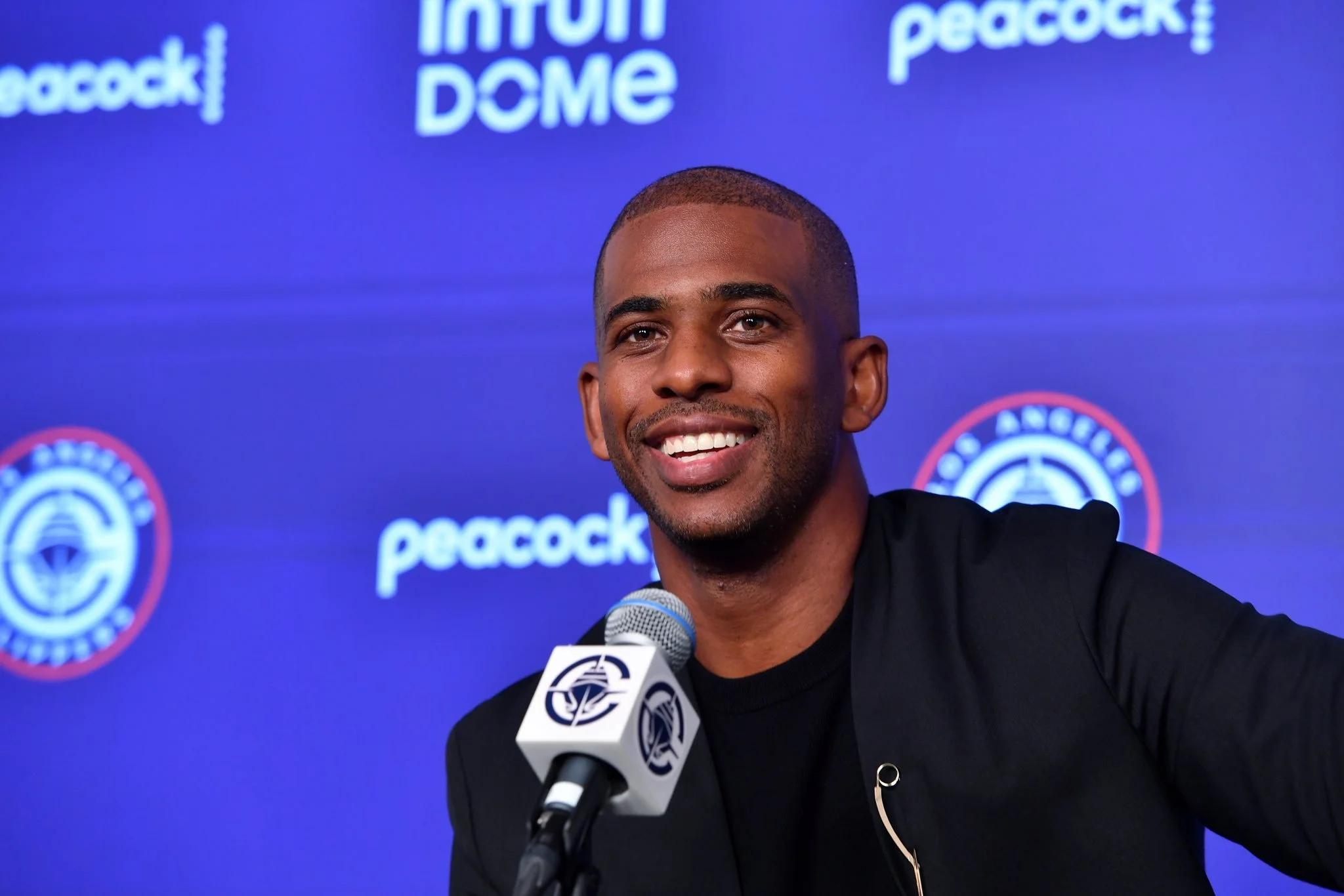





The NIL era was supposed to be a win for every athlete. For mid-major and small-school players, it's been anything but. ProTippz is changing that — one fan tip at a time.
Teams spend millions optimizing the body. NTangible is building the operating system for the one thing that still separates champions from everyone else — the mind.
Picture two athletes. Same sport. Same training regimen. Same physical gifts. One performs flawlessly under pressure. The other unravels. What's the difference?
It's not the legs. It's not the lungs. It's the six inches between the ears.
For decades, sports organizations poured resources into physical conditioning, biomechanics, and tactical analysis. Yet the mental side of performance — the part that governs composure, confidence, focus, and resilience — was largely left to chance. Some athletes figured it out. Most didn't. And almost no one had a system.
That's the gap NTangible was built to close.
This isn't a soft conversation anymore. The data is hard.
A 2025 study published in Frontiers in Psychology confirmed that mental toughness accounts for up to 30% of the performance gap between athletes of equal physical ability. Another study found that structured mental training interventions — things like visualization, breathwork, and mindfulness — can meaningfully improve competitive performance in as little as eight weeks. And a Harvard study revealed that MLB players who worked with a mental skills coach extended their playing careers by an average of 2.3 years.
Mental training programs are now one of the fastest-growing categories in all of sports tech — projected to grow 47% through 2026. The US Olympic Committee has a team of 15 full-time mental performance coaches. Major organizations across the NBA, NFL, MLB, and beyond have followed suit.
The question is no longer whether mental performance matters. The question is whether your athletes and teams have the infrastructure to develop it systematically.
Mental performance coaching isn't new. Sports psychologists have been working with elite athletes for generations. But the traditional model has a scalability problem.
Most teams have access to, at best, one mental skills resource — if they have any at all. Individual sessions are inconsistent. There's no shared language between coaches and athletes. No way to measure progress. No way to reinforce concepts across a 53-man roster or a full academy pipeline. The mental side of development has been episodic, not systematic.
The result? Over 35% of athletes report mental health concerns. Nearly three-quarters of youth athletes experience performance anxiety. And less than 15% of them have access to any kind of sports psychology support. The gap between what athletes need and what's available to them is enormous.
NTangible approaches mental performance the way the best organizations approach physical performance: with structure, consistency, and a shared system that scales.
Think of it as the operating system for the mental side of the game. Just like a strength and conditioning program gives every athlete a protocol to follow in the weight room, NTangible gives athletes and coaches a framework to follow in their mental preparation — one that can be tracked, measured, and continuously improved.
The platform helps teams build mental performance into the fabric of their culture, not as a crisis resource, but as a daily practice. Key areas the NTangible system addresses:
• Focus & Concentration — training athletes to sustain attention during high-pressure moments and recover quickly from mistakes
• Confidence & Self-Talk — building the internal dialogue that separates athletes who compete loose from those who tighten up
• Resilience & Adversity Response — developing the mental frameworks to bounce back from injury, slumps, and setbacks
• Arousal Regulation — equipping athletes with breathwork and mindfulness tools to control their physiological state before and during competition
• Team Cohesion & Communication — creating a shared mental performance language across an entire roster and coaching staff
The organizations winning the mental performance race right now are doing something different. They're treating the mind the same way they treat the body — with daily investment, measurable goals, and expert-backed methodology.
Platforms that integrate mental wellness alongside performance data see more than 3x higher daily engagement from athletes. And at the youth level, programs that provide mental performance tools see burnout rates drop by 41% and long-term sport participation rise by more than 50%.
The teams investing in mental performance now aren't doing it because it feels good. They're doing it because the competitive math is undeniable.
For too long, mental health support in sports has been reactive. An athlete struggles, and then someone gets involved. NTangible flips that model entirely.
The goal isn't to fix athletes when they break down. The goal is to build athletes who don't break down in the first place — athletes who have trained their minds as rigorously as their bodies, who have a vocabulary for what they're experiencing, and who have concrete tools to navigate the inevitable pressure, adversity, and uncertainty that competition brings.
Mental skills — focus, composure, resilience, confidence — are trainable. They are not fixed traits. They are capacities that can be built, strengthened, and optimized with the right system.
The physical ceiling is closer than ever. The mental ceiling? Most athletes haven't come close to it.
NTangible exists to change that. For athletes who want to unlock every dimension of their potential. For teams who know the game is decided as much between the ears as on the field. The operating system for mental performance is here — and the athletes who train with it will be the ones standing on the podium.
Learn more about NTangible at ntangible.com
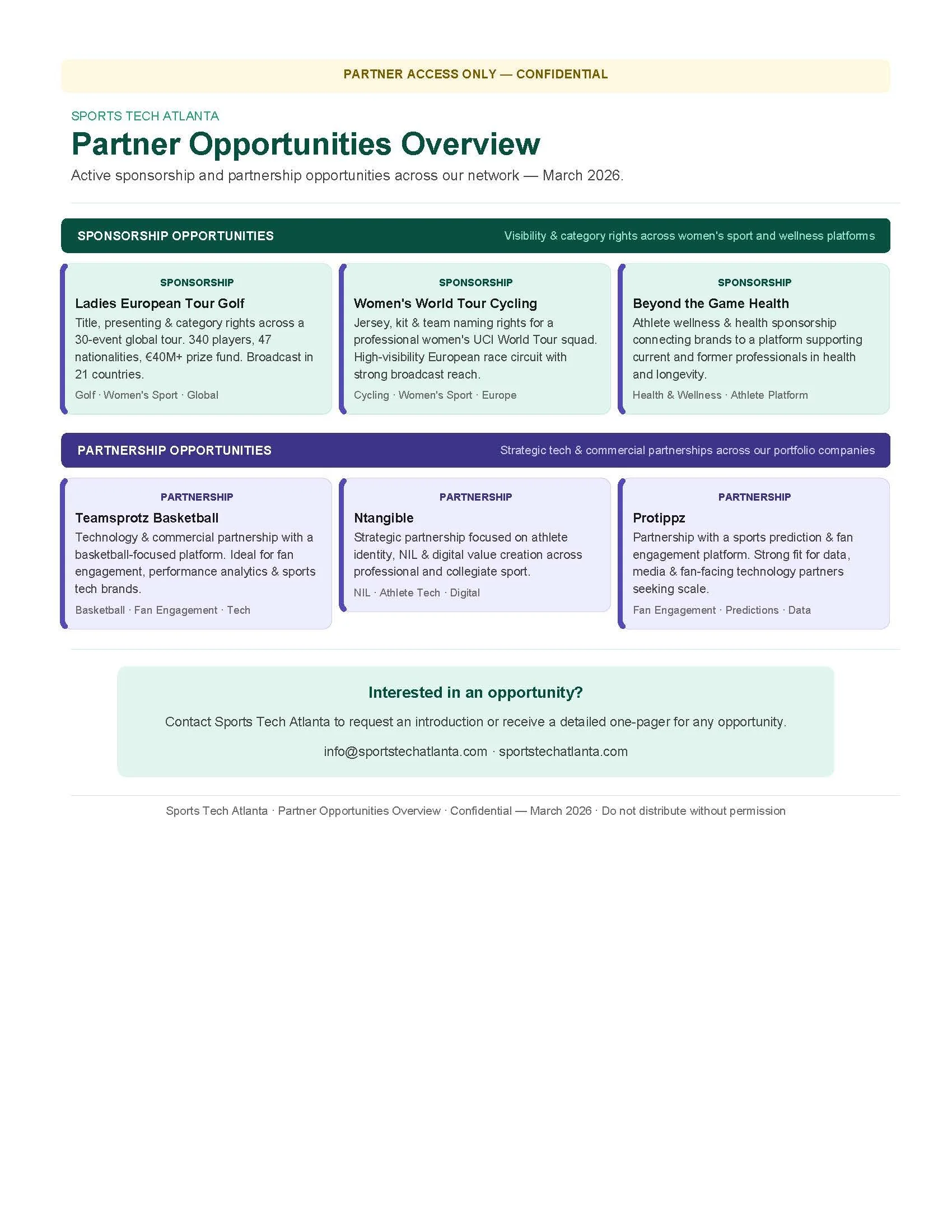
Partner Opportunities Overview
Active sponsorship and partnership opportunities across our network — March 2026. If anything looks of interest, please reach out to info@sportstechatlanta.com.
Two races in, and the 2026 F1 field is already turning heads. Here's our no-fluff breakdown of every team — from the front-runners to the "what on earth is happening" crowd.
After Melbourne and Shanghai, Mercedes leads the Constructors' Championship with 98 points, with Ferrari and McLaren in hot pursuit. The 2026 regulation overhaul has scrambled the grid — and nobody looks truly safe yet.
Mercedes came into 2026 with something to prove after McLaren dethroned them, and boy, are they proving it. George Russell won in Melbourne. Rookie Kimi Antonelli then took his first F1 win in Shanghai. A one-two sweep in just two races. If this is what the new regulations look like for the Silver Arrows, everyone else has a serious problem.
Ferrari fans, take a breath — it's not 2024 anymore. Charles Leclerc and Lewis Hamilton (yes, that Lewis Hamilton, now in red) have been consistent front-runners. Leclerc podiumed in Melbourne, and the Leclerc vs. Hamilton internal dynamic is already appointment television. They're 31 points behind Mercedes, which is a gap, not a chasm.
The reigning champions aren't going quietly. Lando Norris — defending world champion — and Oscar Piastri are still scoring points and staying in the fight. The Woking boys were dominant in 2025, and while the new regs have leveled the field a bit, don't count McLaren out. They know how to find pace as the season develops.
Nobody saw this coming. Ollie Bearman has been absolutely electric in 2026, and Haas have leapfrogged Red Bull in the constructors' standings. The kid is special — and Haas, who spent years as a punchline, are suddenly the feel-good story of the season. Don't sleep on them.
Oh, how the mighty have stumbled. Max Verstappen — four-time world champion, once seemingly unstoppable — has retired from one race and seen his teammate Hadjar crash out of another. The new Ford-Red Bull power unit hasn't hit its stride, and Max himself has been openly critical. He "never saw" Red Bull being close to Mercedes in pre-season. Turns out, he was right.
Alpine ditched Renault engines for Mercedes power this year — a huge shake-up. Early results are modest but the underlying car philosophy has changed dramatically. Think of them as a wildcard: probably not a title threat, but capable of a cheeky podium if everything clicks on a specific circuit.
Formerly Sauber, now fully Audi. The German giant is making its works F1 debut with its own power unit in a regulation-reset year — arguably the best possible timing. They won't win races in 2026, but if the power unit shows promise, this team could be a genuine threat in 2027–28. The long game is real.
| Team | Drivers | The Vibe |
|---|---|---|
| Cadillac | Sergio Pérez · Valtteri Bottas | Brand new American entry. Still finding their feet, currently without a championship point. But they're here, and that's a milestone. |
| Aston Martin | Fernando Alonso · Lance Stroll | Now on Honda power after years with Mercedes. Also pointless so far. Honda's F1 comeback hasn't exactly set the world alight... yet. |
| Racing Bulls | Yuki Tsunoda · Liam Lawson | Red Bull's junior outfit. Points scored but overshadowed by the senior team's woes. Tsunoda continues to entertain. |
| Williams | Alex Albon · Carlos Sainz | Sainz makes a return after a year away. P12 and P15 in Melbourne isn't the dream, but the season is long. |
This isn't business as usual. The 2026 season introduced a completely revised power unit — smaller, with greater electrical power — plus new active aerodynamics. Cars literally adjust their wings mid-corner. It's the biggest technical reset in years, which is why teams that built strong foundations (hi, Mercedes) are thriving while former kings (looking at you, Red Bull) are scrambling.
The 2026 season is shaping up to be one of the most unpredictable in years. Mercedes look like the team to beat — but with a regulation reset this big, the car that's fastest in March isn't necessarily fastest in September. Buckle up.