

Changing the Game: How Diana Flores is Pioneering Flag Football’s Global Revolution

When people think of American football, they often picture heavy padding, bone-crushing tackles, and iconic NFL stadiums. But over the past few years, a parallel movement has taken the global sports landscape by storm—and at the center of this movement is Diana Flores.

As quarterback and captain of the Mexican Women’s National Flag Football Team, Flores has transformed from a star athlete into a global icon. Her rise mirrors the meteoric growth of flag football, a sport rapidly evolving from a recreational pastime into a premier Olympic-level event.


The Catalyst: From Mexico City to Global Superstardom

Flores’ story is rooted in dedication and breaking boundaries. Starting her flag football journey at just eight years old in Mexico City, she often competed against older players and in all-male leagues due to a lack of dedicated girls' divisions. Her breakout on the international stage came when she led Mexico to a gold medal at the 2022 World Games, delivering a brilliant performance to defeat the United States in the final.

Her impact quickly expanded beyond the field:

  • NFL Super Bowl Stardom: Flores gained worldwide mainstream recognition starring in the NFL’s Emmy Award–winning 2023 Super Bowl commercial, “Run With It,” which highlighted female athletes dodging defenders across Los Angeles.

  • Pro Football Hall of Fame: She became the first flag football player to have personal artifacts displayed in the Pro Football Hall of Fame in Canton, Ohio.

  • NFL & IFAF Global Ambassador: Working alongside the NFL and the International Federation of American Football (IFAF), Flores regularly promotes youth participation and international competition.

What Diana Flores’ Leadership Means for the Future of Flag Football

Flores is not just benefiting from the growth of flag football—she is actively driving it. Her leadership signifies key trends in the sport's rapid development:

1. Breaking Gender and Regional Barriers

Historically, gridiron football was dominated by male athletes in North America. Flores’ prominence as a Mexican woman on global broadcasts proves that the future of football is both international and inclusive. Her presence inspires millions of young girls across Latin America, the U.S., and Europe to pick up a football.

2. Paving the Way for LA28 Olympic Debut

With flag football officially included in the 2028 Los Angeles Olympic Games, Flores stands as the face of this pivotal transition. The sport’s non-contact, high-speed, dynamic nature makes it an ideal fit for international Olympic audiences, offering high athletic performance with low barrier-to-entry infrastructure.

3. Exploding Collegiate and High School Pathways

Flores’ visibility has accelerated varsity recognition for high school flag football across the United States and internationally, as well as expanded collegiate scholarship opportunities through organizations like the NAIA. Girls now have direct athletic and academic pathways through flag football that did not exist a decade ago.

The Road Ahead

As flag football approaches its Olympic debut, Diana Flores continues to serve as quarterback, ambassador, and pioneer. Her journey demonstrates how passion and representation can elevate a grassroots sport into a global spectacle, reshaping how the world views football forever.

For a closer look at her historic achievements, check out this video on Diana Flores' Pro Football Hall of Fame induction.

This video highlights the historic moment when Diana Flores became the first flag football player to be enshrined with artifacts in Canton, showcasing her groundbreaking impact on the sport.


Who Actually Builds the Ref Cam? Mapping the Companies Behind Sport's Newest Camera Angle

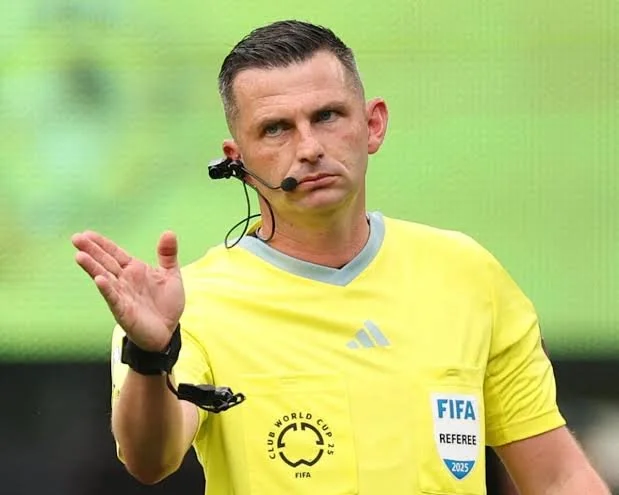
At the 2026 World Cup, the breakout star of the broadcast wasn't a player. It was a 14-gram camera clipped to a referee's headset.

FIFA deployed referee body cameras across all 104 matches — the first time in tournament history — after a trial run at the 2025 Club World Cup that Pierluigi Collina described as exceeding expectations. Fans finally saw the game from inside the storm: the speed of a challenge, the chaos in the box, the split-second read that gets a man vilified on Twitter for a week.

Here's the thing most of the coverage got wrong: "ref cam" is not one product. It's a category — and there are at least three distinct businesses hiding inside it, with different buyers, different economics, and very different exit paths.

Let's map them.

Lane 1: Broadcast POV — selling a camera angle to rights holders

This is the lane everyone sees. The buyer is a league, federation, or host broadcaster. The product is a new piece of broadcast inventory.

Riedel Communications (Germany)

The quiet giant. Riedel is a broadcast comms company — intercoms, fiber networks, private 5G — that built RefCam as an extension of the headset it was already selling to referees. The camera weighs about 14 grams, shoots 1080p, uses electronic image stabilization, and transmits over Riedel's own Easy5G private network. Crucially, it mounts onto the same earpiece as Riedel's existing referee comms: one kit, camera plus communications.

Riedel developed it through a joint venture called In-YS ("In Your Shoes") with working Bundesliga referees — which is why it doesn't feel like an engineer's guess at what an official needs. It debuted in the Bundesliga in 2024, went into handball with the IHF and at the Men's EHF EURO 2026, and the FIFA World Cup unit was spun out of Riedel technology.

Why it wins: Riedel wasn't selling a camera into a cold market. It was upselling a camera to a customer already wearing its headset. That's the whole strategy in one sentence.

MindFly (Tel Aviv)

The startup with the best highlight reel. MindFly builds AI-powered chest-mounted bodycams worn by both players and officials, integrated into a vest that looks and feels like the GPS vests athletes already wear. The AI does the heavy lifting: stabilization, auto-cropping, and auto-direction that mimics a human camera operator and director, then pushes clips straight to social or live broadcast.

The logo slide is legitimately impressive for a company that has raised roughly $1M: ESPN, CBS, NBC on the broadcast side; NBA, MLB, NHL, UFL, Premier League, EuroLeague on the league side; Manchester City, Juventus, Red Bull Salzburg on the club side. Referees wore MindFly bodycams at NBA All-Star. MLS put a MindFly vest on the referee at the 2022 All-Star Game. In the UFL, MindFly is a formal partner under the league's FAST innovation program, with body cameras on up to four players a week.

Why it matters: MindFly went where the incumbents didn't — player POV — and used the referee as the beachhead. Officials are the easiest body on the field to get a camera onto, because they're not being tackled and they're employed by the league.

Movicom (Europe)

The hardware pragmatist. Movicom's Refcam is a mini-camera plus mount plus COFDM wireless transmitter that clips to whatever helmet the official already owns. The ice hockey kit runs about 190g. It also makes an "Earcam" variant (~97g) for field hockey umpires, where there's no helmet to bolt to. Movicom has been active in hockey — Champions Hockey League, Tipsport Liga — often alongside Vislink on transmission.

Why it matters: Movicom competes on adaptability, not glamour. It'll fit your helmet. That's a real value proposition in sports where headgear is non-negotiable.

Gravity Media (UK/Australia)

The service play. Gravity Media isn't primarily a device company — it's a global broadcast production services firm that happens to own a RefCam product line, offered in both headgear-mounted (with mechanical stabilization, umbilical to a body-worn antenna vest) and chest-mounted configurations, at roughly 1.1kg fully rigged.

Why it matters: Gravity sells the camera as part of a production package. Different revenue model entirely — you're not buying a device, you're buying a crew that shows up with one.

Camera Innovations

Small, specialist, and worth watching. It built the referee camera used at the 2026 World Snooker Championship final — a miniature lapel-mounted unit on referee Rob Spencer, RF back to the truck, converted into a live broadcast-ready feed.

Why it matters: Snooker. That's the point. The next wave of ref cam adoption isn't football — it's every sport with an official standing close to the action and a broadcaster desperate for a fresh angle.

JockeyCam

Named in the same breath as the others in most surveys of the category, primarily in racing and rugby contexts. Smaller footprint, but it belongs on the map.

Lane 2: The AI layer — where Lenovo actually lives

Lenovo is the name in every World Cup headline, and it's worth being precise about what Lenovo does and doesn't do here. Lenovo did not build the camera. As FIFA's Official Technology Partner, Lenovo provides the AI-based real-time stabilization software that reduces motion blur by up to 50%, running on servers Lenovo installed at the International Broadcast Centre in Dallas. Lenovo is also behind the 3D player avatars feeding the tournament's semi-automated offside system.

That distinction is the most commercially interesting thing in this entire category.

The camera is a commodity. It weighs 14 grams and it's going to get cheaper. The moat is the processing layer — the thing that turns a nauseating, jittery, unwatchable POV feed into something a broadcaster will actually air. Raw bodycam footage from a sprinting human is unusable. Every serious player in this space (Riedel with EIS, MindFly with AI auto-direction, Lenovo with server-side stabilization) has independently concluded that the value sits in software, not glass.

If you're an investor looking at this category: buy the stabilization, not the sensor.

Lane 3: Referee safety — a completely different business

This is the segment nobody in sports-tech media covers, and it may be the larger market.

Reveal Media (UK)

Reveal is a body-worn camera company from the law-enforcement and security world — 40+ countries, police, healthcare, transport — that built a sports-specific "Referee Safety Cam." The English FA selected Reveal as its technology partner for the world's first grassroots referee bodycam trial, distributing cameras to roughly 100 referees across leagues in Middlesbrough, Liverpool, Worcester and Essex. Ontario Soccer ran a parallel pilot with Reveal and Brock University as part of its #NoRefNoGame campaign, deploying chest-mounted cameras at U8–U11 small-sided games.

The product logic is fundamentally different from broadcast. There's a front-facing screen: when an aggressor sees themselves on camera, incidents de-escalate. Pre-record captures the two minutes before the referee hits the button. It's a deterrent device that happens to also be an evidence device.

The market driver is brutal and simple: a BBC Radio 5 Live survey of over 900 grassroots officials found the overwhelming majority had experienced verbal abuse, with a substantial share reporting physical abuse. Referee retention is collapsing. No refs, no game.

Why this lane is underrated: the broadcast market has maybe a few hundred elite matches a week worth outfitting. The safety market has millions of grassroots games, funded by national federations with participation mandates and legal exposure. It's less sexy and far more recurring.

What this means commercially

Three takeaways for anyone building, buying, or selling in this space.

1. The rule change is the unlock. In February 2026, IFAB amended Law 5 to sanction referee cameras — chest- or head-mounted — as a competition option, with the organizer providing the cameras and controlling the footage. That last clause is the money clause. The competition organizer controls the footage. Ref cam isn't a broadcast toy; it's a new inventory class owned by the rights holder. Bundesliga ref cam clips reportedly drew around 2 million views a weekend. That's a sponsorable, sellable asset — and nobody has priced it properly yet.

2. The device is not the business. Riedel wins by bundling with comms. MindFly wins with AI auto-direction and social-native output. Lenovo wins by owning the processing layer at the IBC. Gravity wins by wrapping it in a production service. The camera itself is table stakes.

3. Two markets, two buyers, one word. "Ref cam" in the broadcast lane is a content product sold to a league's media department. "Ref cam" in the safety lane is a risk and retention product sold to a federation's participation department. Anyone pitching both with one deck is going to lose both.

The 14-gram camera on Wilton Sampaio's head in Mexico City was the visible part. The businesses underneath it are just getting started.

Sports Tech Atlanta advises sports properties, technology providers, and brands on commercial partnerships, investor relations, and go-to-market strategy. sportstechatlanta.com

Sources: FIFA, SVG Europe, Sports Video Group, Riedel Communications, MindFly, Movicom, Gravity Media, Reveal Media, Ontario Soccer, IHF, EHF, Digital Camera World, RedShark News.

The Only Room That Matters During Final Week: Inside the 2026 Global Game Summit

While the world watches the FIFA World Cup Final descend on the New York–New Jersey region, a smaller and arguably more consequential gathering will happen a few miles away in Newark. On Wednesday, July 15, 2026, the Global Game Summit returns to the Prudential Center with what its organizers are calling the deepest speaker roster in the event's history — and for anyone tracking where the commercial power in soccer actually sits, that's the room to be in.

Not a Fan Festival. The Executive Room.

The framing matters here. There will be no shortage of fan zones, watch parties, and brand activations orbiting the Final. The Global Game Summit is explicitly none of those. Produced by GK Digital Ventures in partnership with Harris Blitzer Sports & Entertainment, it positions itself as the only curated, full-day conference dedicated exclusively to the business of soccer in the United States — a single room where the people running clubs, leagues, media platforms, technology companies, and capital pools sit down together.

"This is not another soccer fan event or fan festival — it's the executive room," said Greg Kahn, CEO of GK Digital Ventures and founder of The Global Game. That's a deliberate line to draw. The value proposition isn't access to the sport; it's access to the operators deciding what the sport becomes.

A Cross-Industry Roster That Hasn't Shared a Stage

The 2026 program pulls confirmed speakers from across the soccer economy — FIFA, Major League Soccer, LALIGA, Hawk-Eye Innovations, U.S. Soccer, and a broader lineup spanning ownership, media, marketing, and league operations. The organizers' claim is that this cross-industry mix has never before shared a single stage at a soccer conference, and given how siloed these worlds usually are — governing bodies, domestic leagues, European rights holders, and performance-tech vendors rarely programmed side by side — that's a credible pitch.

The agenda runs four tracks that read like a map of where the money and the leverage are moving:

  • Business & Ownership — the future of soccer's ownership landscape, including sovereign funds, private equity, and multi-club models.

  • Content, Culture & Commerce — how streaming platforms, leagues, and broadcasters are reshaping control of the fan relationship.

  • Tech & Innovation — AI, data, and the next wave of performance and fan-engagement tooling.

  • International & Women's Soccer — the fastest-growing commercial segment in the global game, across media, investment, and cultural influence.

The People and the Panels

The published agenda runs the full day, with programming from 8:30 a.m. to 3:00 p.m. ET followed by executive networking and a World Cup semifinal viewing. Here's who's actually in the room and where the conversations land.

Business & Ownership. Moderated by Darren Rovell (founder, cllct Media), with Nicolás García Hemme (LALIGA North America), Charlie Stillitano (TEG Sport North America), Fred Mangione (FIFA World Cup 2026 NY-NJ Host Committee), Sarah Jordan (AFC Toronto), Amina Bulman (Boston Legacy FC), and Joe Stetson (Chief Commercial Officer, Red Bull New York). This is the multi-club, cross-border, capital-formation conversation — the room where the ownership economics get argued out.

The Attention Economy — Content, Distribution & Premium Fan Experiences (9:30–10:10 a.m.). Moderated by Vanessa Perdomo (Bloomberg), with Elliot Richardson (Dugout & ONEFOOTBALL), Michaela Hammond (OffBall), Rich Battista (Wave Sports & Entertainment), Bo Han (Transmit), and Jeremi Gorman (Fanatics Advertising). The distribution-and-monetization panel — how leagues and platforms are fighting for control of the fan relationship.

Inside the Investment — Venture Capital, Innovation & the Business of Sports Technology (10:25–11:05 a.m.). Featuring Chris Schlosser (Major League Soccer) and Max Wright (Hawk-Eye Innovations). For sports-tech founders and operators, this is the panel to watch — a league investor and a category-defining tech vendor talking openly about where capital and adoption are actually flowing.

The New Playbook — How Women's Sports Became the Fastest-Growing Business in Sport (11:25 a.m.–12:05 p.m.). A featured conversation moderated by Kacey White (former USWNT midfielder, match analyst for MLS on Apple TV), with Abe Geiger (U.S. Soccer Federation), Danita Johnson (D.C. United), Courtney Carter (Seattle Sounders FC & Seattle Reign FC), and Evan Dabby (New Jersey Youth Soccer & USCSA). The commercial-shift session — and, by the organizers' own framing, one of the most important on the agenda.

Featured athlete conversation. Greg Kahn (GK Digital Ventures) in conversation with pro athlete Junior Moraes, on the athlete-as-platform model.

Beyond the panels, the broader confirmed roster spans FIFA, MLS, LALIGA, Hawk-Eye Innovations, U.S. Soccer, Dugout & ONEFOOTBALL, D.C. United, LAFC, AFC Toronto, Seattle Sounders FC, Seattle Reign FC, IBM, Transmit, DIAGEO, Lenovo, Bloomberg, Fanatics Advertising, GEICO, and iHeartMedia — alongside names like HBO "U.S. Against the World" producer Rand Getlin, five-time Premier League champion Mikael Silvestre, and former USWNT goalkeeper Ashlyn Harris. (Moderators and speakers subject to change.)

Why the Timing Is the Whole Point

The Summit runs 8:30 a.m. to 3:00 p.m. ET, followed by executive networking through 6:00 p.m. and a viewing of the World Cup semifinal. Holding it in the days before the Final — in the region actually hosting the Final — is not incidental scheduling. It's the entire thesis. The inaugural edition drew senior leaders from 28 countries, and this year the organizers are leaning into the reality that the economics of global soccer are being rewritten in real time: new ownership structures, contested media rights, and a women's game that is quietly becoming one of the most important commercial stories in all of sports.

The Buying-Side Read

Here's what stands out from a commercial-development lens. Events like this are where the actual deal architecture gets set — not the sponsorship banners, but the conversations between the people who control distribution, the people who control capital, and the technology vendors trying to earn a seat at the table. The women's-game emphasis is the tell. When a summit built around the World Cup Final devotes a full track to the segment growing fastest, that's a signal to brands and tech providers about where the next open commercial lane is.

For sports-technology companies specifically, the read is simple: proximity to rights holders and ownership groups during a moment this concentrated is rare. The Summit compresses a year's worth of introductions into a single day, in a single building, during the one week the entire global game is looking at this region. If you sell into leagues, clubs, or media platforms, the calculus on being in that room writes itself.

Sports Tech Atlanta is a boutique sports-technology advisory and commercial development firm connecting technology providers with the leagues, clubs, brands, and rights holders shaping the business of sport. We help founders and operators turn moments like the Global Game Summit into pipeline — from positioning to partnership to close.

A financial look at why European Clubs grow talent and how MLS is looking to overhaul its grassroots system

For decades, American youth soccer has operated on a broken economic engine: the “Pay-to-Play” model. While Europe treated its elite youth academies as speculative venture capital funds—where a single player sale could fund a decade of local development—the U.S. treated youth sports as a service industry.

Parents paid thousands in tuition to buy jerseys and fund tournament travel, locking out elite, lower-income talent and prioritizing weekend trophies over developing world-class individual assets.

Now, a sweeping structural overhaul orchestrated by Major League Soccer (MLS) is fundamentally rewriting the playbook. Driven by a combination of new financial grants, the adoption of global regulations, and predictive data analytics, the United States is finally copying the world’s most lucrative soccer monetization loops.

The Gold Standards: Benfica and Ajax

To understand the target model, look to Europe’s master developmental hubs. Portuguese powerhouse SL Benfica has weaponized its academy to generate €589 million in player sales over the last decade. Because academy graduates cost nothing to buy, their transfer fees represent 100% net capital gains on the books. In the Netherlands, AFC Ajax operates on a similar plane, netting €454 million. For these clubs, domestic TV revenue is low; their academies are their primary business engine, turning talent development into a self-sustaining cycle that funds first-team ambitions.

The Corporate Blueprint: Chelsea and PSG

Even the world’s wealthiest clubs have shifted their youth strategies to align with modern financial realities. In England, Chelsea FC has industrialized its youth pipeline, generating €442 million. Under strict Premier League Profitability and Sustainability Rules (PSR), Chelsea utilizes academy graduates as vital accounting mechanisms. Selling a homegrown player brings instant “pure profit” to the ledger, allowing elite clubs to balance out multi-million dollar first-team spending sprees.

Meanwhile, Paris Saint-Germain (PSG) has converted its academy system into a dual-threat asset: dominating the ultra-dense Parisian talent pool while scaling a massive global franchise network that generates recurring commercial and retail revenue.

The Transatlantic Highway: MLS-to-Europe Express Deals

The gap between the American system and these elite European networks is rapidly closing. MLS clubs are no longer waiting around for European scouts to stumble upon their players; they have built formal institutional pipelines. Through Multi-Club Ownership (MCO) and Strategic Alliances, the transfer pathway is fully industrialized. The New York Red Bulls feed directly into Europe via RB Leipzig and Red Bull Salzburg. New York City FC uses the data-sharing network of the City Football Group to track talent alongside Manchester City. Meanwhile, independent alliances like FC Dallas’ partnership with Bayern Munich give European giants an official “first-look” right at American prospects in exchange for sharing elite training methodologies. The financial results of these pipelines speak for themselves. The transfer market for young American players has split into a lucrative three-tier pricing model:

  • The Elite Prodigy Premium (€12M – €20M+): Highlighted by massive deals like Chicago Fire selling Gaga Slonina to Chelsea for a $15 million package, or FC Dallas moving Ricardo Pepi to the Bundesliga for €16M+.

  • The Proven MLS Starter (€4M – €10M): Exemplified by the Philadelphia Union selling Brenden Aaronson to Salzburg for €5.5M after proving his statistical efficiency in domestic professional play.

  • The Speculative Developmental Bet (€1M – €3M): Where European clubs buy raw academy stars or standout MLS NEXT Pro performers early, absorbing them directly into their reserve ranks.

How the Rest of the American Pipeline is Being Re-Engineered

To feed this international demand, MLS is overhauling its grassroots setup via four critical technological and regulatory pillars:

1. Incentivizing the Grassroots via MLS NEXT Development Grants

Historically, if a small independent U.S. youth club spent seven years developing an elite 14-year-old prodigy, a nearby MLS academy could simply poach that player for free. The original club received zero financial reward, forcing them to remain dependent on parental fees to survive. The introduction of the MLS NEXT Development Grant Program changed the financial equation. Under this framework, when an independent “Elite Academy” produces a player who goes on to sign an MLS professional contract, the grassroots club is financially compensated. Payouts trigger immediately upon signing and scale up to $30,000 as the player achieves professional appearance milestones. Most importantly, the original youth club retains a sell-on clause, ensuring a massive windfall if that player is eventually sold to an overseas powerhouse.

2. Digitizing and Claiming Global Solidarity Capital

For years, U.S. Soccer avoided FIFA’s mandated Training Compensation and Solidarity Mechanism out of a fear of domestic antitrust and child labor lawsuits. If a player left an American youth academy for Europe, the American club didn’t see a dime of the multi-million dollar transaction. Today, the “exception nation” era is over. Propelled by automated tracking tools like the FIFA Clearing House, MLS and independent academies are aggressively claiming their 5% solidarity cuts on international transfers. This influx of foreign capital is being reinvested straight into local infrastructure, removing the financial burden from families.

3. Data Over Results: De-risking Talent with Tech

The shift isn’t just happening on balance sheets; it’s happening on the pitch through advanced sports technology. In a bold experiment, MLS NEXT partnered with UK-based sports data analytics firm Taka to overhaul how youth academies are evaluated. Instead of traditional win-loss league tables, the ecosystem uses a “Quality of Play” Index to rank youth clubs. By tracking technical progression, spatial awareness, and player execution rather than match outcomes, the league incentivizes coaches to focus entirely on individual player growth. For tech investors, this transforms youth players from unquantifiable gambles into highly legible, data-backed financial assets.

4. Building the “Shop Window” via MLS NEXT Pro

To bridge the massive competitive gap between U-17 youth soccer and a first-team stadium environment, the league established MLS NEXT Pro. Operating similarly to the “B-teams” utilized by clubs like Benfica and Ajax, this professional reserve tier ensures that top prospects get professional minutes against grown men during their teenage years. From an economics standpoint, MLS NEXT Pro serves as a global marketplace where scouts from across Europe can monitor an American teenager’s data metrics in a professional domestic league, accelerating the player’s outward transfer value.

The Bottom Line

The monetization of American soccer has evolved past the era of charging parents for field time. By weaponizing sports analytics, opening up free elite pathways, and structuring financial kickbacks for grassroots clubs, MLS is turning the American youth system into a genuine global exporter of talent. For sports tech innovators and investors looking at the U.S. market, the message is clear: the infrastructure has arrived, and the monetization of the American player asset is just getting started.

About Sports Tech Atlanta

Sports Tech Atlanta (STA) is a boutique sports-technology advisory and commercial development firm, helping startups raise capital, brokering sports technology partnerships, and building strategy and business development engines for sports properties, technology companies, and athlete talent.