


This is a blueprint on how teams are using sports tech to fuel not only innovation but to drive revenue streams. Find out how Sports Tech Atlanta is working with sports tech companies, teams, and leagues to fuel this new drive
The surge of flag football isn't just a feel-good grassroots story; it’s a rapidly professionalizing sports property commanding unprecedented corporate investment and demanding new technological solutions. For the sports tech ecosystem, this rise signals a clear path for innovation, data utilization, and market expansion.
With the NFL elevating its annual Flag Football Championship to a major, multi-platform broadcast event across Disney properties and NFL+, the league is strategically scaling its global addressable market through a low-barrier-to-entry product. The confirmation of flag football for the 2028 Los Angeles Summer Olympics has de-risked the long-term investment, transforming the sport into a premier global asset.
The Innovation Mandate: From Grassroots to Global Scale
The NFL is leveraging flag football as a powerful user acquisition tool, deploying high-level marketing—including a dedicated campaign featuring stars like Jayden Daniels—to onboard Gen Z and Gen Alpha fans from a young age. This creates a massive, diverse, and digitally native audience that will drive demand for next-generation fan engagement and performance tracking technologies.
The sponsorship roster at the championship is a living blueprint for brand activation in an emerging, high-growth vertical. Returning partners (Toyota, Visa, Gatorade) and new entrants (P&G, Jersey Mike’s) are not simply displaying logos; they are innovating the fan experience in a space that the league describes as an "open slate" for co-creation. This presents clear opportunities for the tech sector:
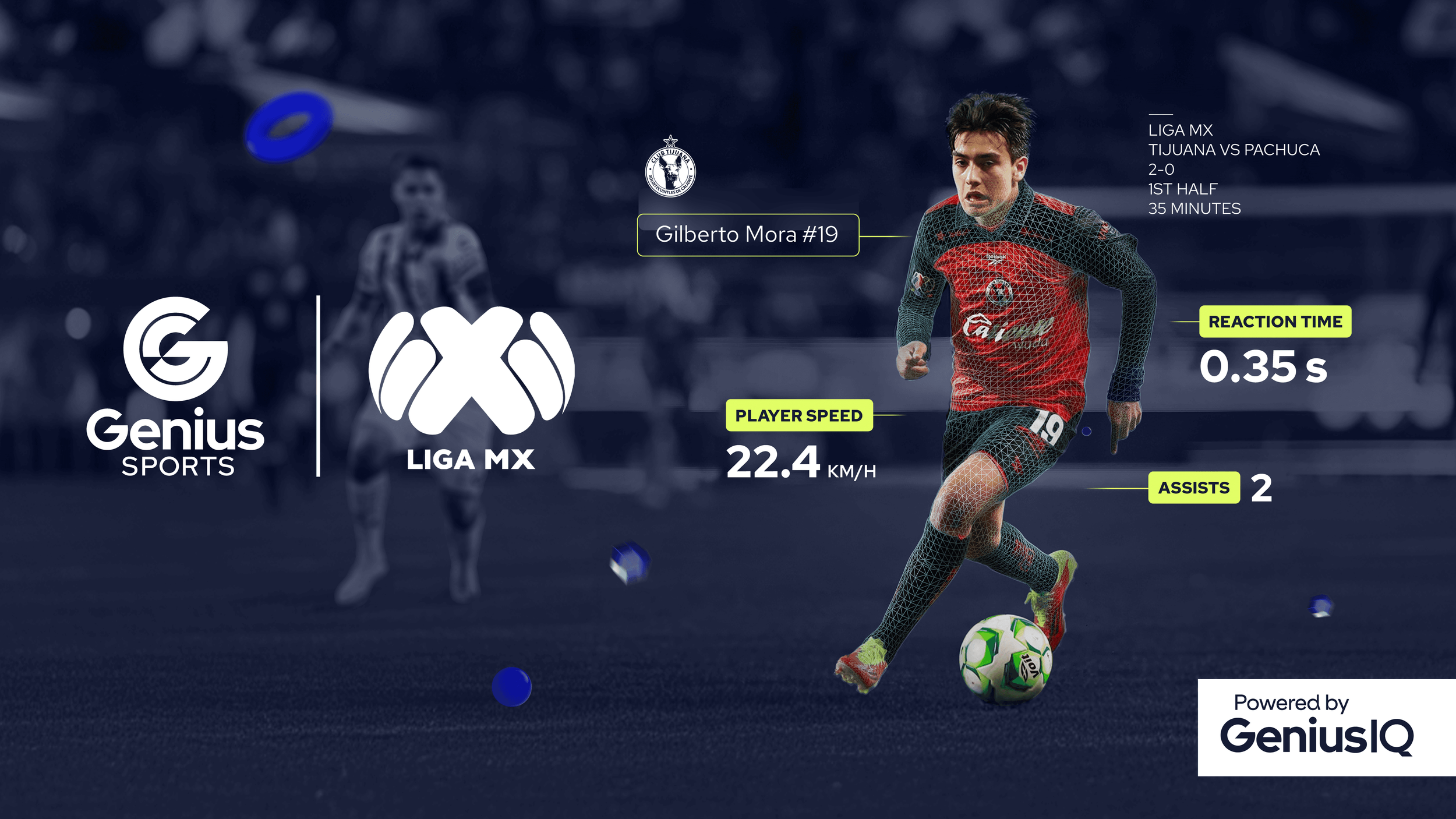
●Data Analytics and Biometrics: Developing player performance tracking systems optimized for the speed and movement of flag football, providing new data streams beyond traditional tackle metrics.
● Digital Fan Engagement: Creating personalized, immersive content and betting-adjacent experiences to captivate the diverse, multi-platform audience tuning in via ESPN+, Disney+, and linear broadcasts.
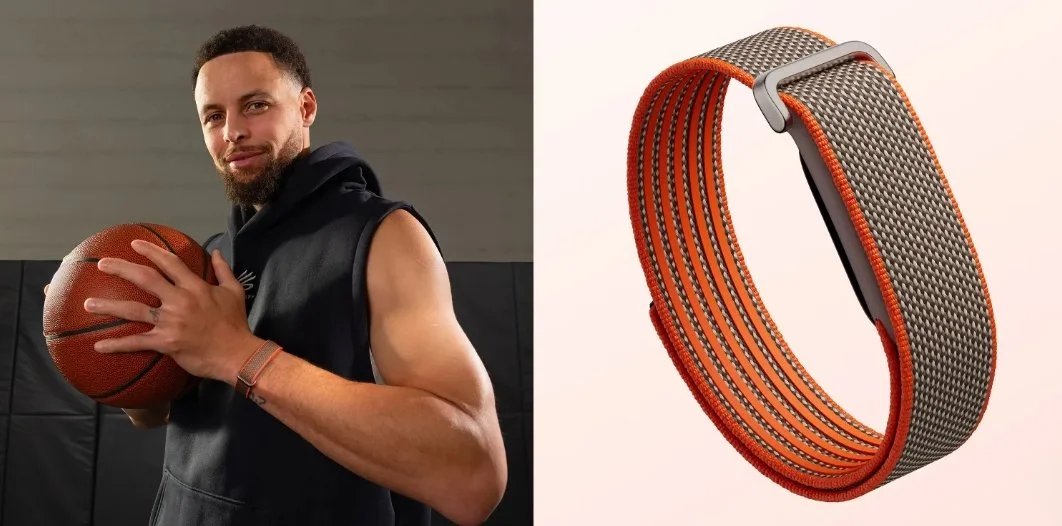
● Apparel and Equipment Tech: Innovation in smart gear and protective equipment for a non-contact sport, moving beyond traditional textile partnerships with brands like Nike and New Era.
The Investment Thesis
Flag football's appeal—its accessibility, international growth, and equal participation opportunities for girls—makes it a uniquely powerful vehicle for the NFL's international expansion strategy. As one league executive noted, learning flag football is the first step to becoming a football fan, creating a future revenue stream for the entire sport.
The championship’s audience, though not yet matching the NFL’s primary viewership, is strategically diverse, hitting the crucial Gen Z, Gen Alpha, and family unit demographics. This signals a robust future monetization pathway, particularly around youth development, educational technology, and international media rights.
For STA, we see flag football as a large consumer and brand opportunity and are actively working with early stage companies such as a 2nd Skull or flag football events centered around the Superbowl and Probowl with the NFL Alumni and NFL Play60.
Learn more at info@sportstechatlanta.com

CourtReserve, the undisputed category leader in racquet and paddle club management software, has just secured a massive $54 million strategic growth investment from vertical SaaS powerhouse Mainsail Partners.
This funding round is a major victory for the Sports Tech ecosystem, underscoring the explosive market demand for modern, cloud-based solutions tailored to the skyrocketing popularity of racquet sports—especially pickleball.

CourtReserve, which already powers over 2,000 facilities and serves five million players, is channeling this capital infusion directly into key technological initiatives:
AI and Data Features: The platform is set to heavily invest in next-generation AI-driven automation, focusing on smart member insights and predictive analytics. This will allow clubs to move beyond simple court booking and tap into sophisticated data for growth strategies.
Platform Architecture & Scalability: With adoption surging, the funds will ensure the core platform can handle exponential growth, guaranteeing the reliability needed for multi-club operators and large universities.
Integration Expansion: The company will strengthen connections with critical third-party systems, including ratings platforms, access control, accounting, CRM, and marketing tools, positioning CourtReserve as the central operating system for racquet facilities.
Mainsail Partners, a firm known for scaling vertical SaaS businesses, saw a clear opportunity. Partner Jason Frankel highlighted the deep founder understanding: “Ashley and Tim have first-hand experience operating racquet sports clubs, giving them a deep understanding of the complex workflows that can be optimized through software and AI.”
For CEO and Co-Founder Tim Owens, the investment is about scaling smarter. “Partnering with Mainsail Partners will help fuel us with the capital and operational resources we need to raise the bar even further, so our clubs can spend less time on admin and more time on growth and community.”
The focus is clearly on elevating the human potential of club staff by automating the back-office complexity. Co-Founder Ashley Owens reinforced this, noting that their “deep understanding of our customers” drives “real operational impact.”
By aggressively scaling their go-to-market and enhancing the platform’s intelligent features, CourtReserve is cementing its position at the forefront of the Sports Media & Broadcasting (via member engagement) and Smart Stadiums (via digital facility management) components of the sports tech landscape. This deal is not just capital; it’s a strategic mandate to dominate the vertical market for the fastest-growing sports in North America.

The NBA G League has just dropped a landmark, four-year Collective Bargaining Agreement (CBA) that represents a seismic shift in the world of sports performance technology and athlete data rights.
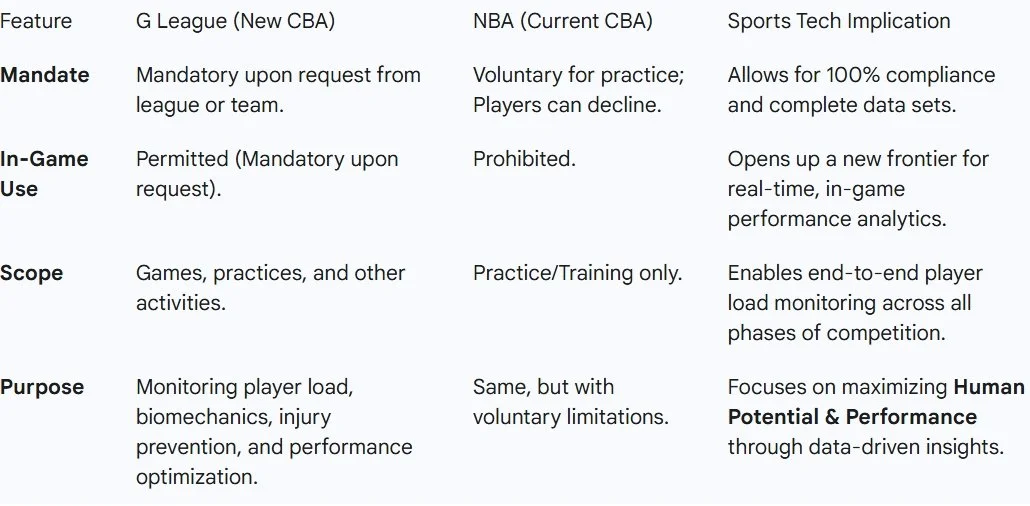
The critical takeaway? The new G League agreement allows the league or individual teams to mandate the use of approved wearable technology across games, practices, or other player activities.
This mandatory provision is a direct and stark contrast to the regulations in the NBA’s CBA, which currently prohibits all wearable use in games and gives players the autonomy to decline team requests for usage even during practice sessions.
While the full text of the agreement—between the G League and the Next Gen Basketball Players Union—is pending, a summary confirms that wearable devices are now squarely addressed under updated professional experience standards.
This move positions the G League as a crucial innovation lab for comprehensive, mandatory data capture in professional basketball.
The NBA G League has just dropped a landmark, four-year Collective Bargaining Agreement (CBA) that represents a seismic shift in the world of sports performance technology and athlete data rights.
The critical takeaway? The new G League agreement allows the league or individual teams to mandate the use of approved wearable technology across games, practices, or other player activities.
This mandatory provision is a direct and stark contrast to the regulations in the NBA’s CBA, which currently prohibits all wearable use in games and gives players the autonomy to decline team requests for usage even during practice sessions.
While the full text of the agreement—between the G League and the Next Gen Basketball Players Union—is pending, a summary confirms that wearable devices are now squarely addressed under updated professional experience standards.
This move positions the G League as a crucial innovation lab for comprehensive, mandatory data capture in professional basketball.
FeatureG League (New CBA)NBA (Current CBA)Sports Tech ImplicationMandateMandatory upon request from league or team.Voluntary for practice; Players can decline.Allows for 100% compliance and complete data sets.In-Game UsePermitted (Mandatory upon request).Prohibited.Opens up a new frontier for real-time, in-game performance analytics.ScopeGames, practices, and other activities.Practice/Training only.Enables end-to-end player load monitoring across all phases of competition.PurposeMonitoring player load, biomechanics, injury prevention, and performance optimization.Same, but with voluntary limitations.Focuses on maximizing Human Potential & Performance through data-driven insights.
The core purpose of this mandatory adoption is centered on player health, injury prevention, and performance optimization. By ensuring consistent data flow, the G League can generate more comprehensive analytics on player load, biomechanics, and recovery—insights that are critical for mitigating risk, a paramount concern in player development.
Like the NBA, the G League will still utilize a process—likely involving a validation program and a committee—to approve the specific wearable devices and ensure data integrity. However, the move from voluntary acceptance to mandatory deployment significantly amplifies the scope and reliability of the data collected.
This bold shift in the G League not only accelerates data collection for its players but also signals a potential blueprint for how future CBA negotiations across all leagues may address the increasing need for advanced, real-time biometric and kinematic data in the pursuit of the competitive edge.
A trio of NBA talent is pioneering a major shift in the sports media and fan engagement landscape. Cleveland Cavaliers star Darius Garland is teaming up with Indiana Pacers forward Aaron Nesmith and Boston Celtics guard Payton Pritchard to launch Off Court, a new, dedicated social media platform designed by and for athletes.
The iOS app officially dropped on October 17th, promising to revolutionize how players connect, control, and monetize their digital presence.
Unlike established giants like Instagram or TikTok, the core technology differentiator for Off Court is ownership. The platform is owned entirely by the athletes themselves. This structure provides players with full control over the algorithms, content monetization, and the ultimate usage of their content—a critical step forward in the digital age where athletes generate massive cultural value but often retain little financial or technological control.
The overarching goal is to strip away the "noise and negativity" found on dominant platforms and create an authentic space where players can share genuine, behind-the-scenes narratives.
As CEO Mac Hunt and co-founder Kevin Fee noted, "The intentional design philosophy provide a foundation for a healthier, more meaningful connection. We’re building community tools that center [on] real fans and real players."
Darius Garland, a key face of the Cavaliers franchise, views Off Court as a crucial tool for unlocking a new level of athlete-fan connection.
"Off Court isn’t about highlights or stats; it’s about showing who we are as people," Garland explained. "Fans get to see the day-to-day. The training, the music, the fits, the conversations, the stuff that doesn’t always make it to ESPN or Instagram. That’s what makes the connection real."
This level of transparency directly addresses the gap left by traditional media, offering fans a direct window into the training, travel, family life, and fashion choices of their favorite stars. By allowing players to post authentically—in their own words and style—the platform aims to build a stronger, more personal bond that transcends on-court performance.
The platform isn't just about connection; it's a model for enhanced athlete commerce. Off Court empowers players with direct-to-fan monetization tools, including:
Merchandise drops
Subscription services
Exclusive videos and podcasts
Day-in-the-life vlogs
This creates a more personal and profitable environment for players by providing unprecedented access for fans.
The concept originated with CEO Mac Hunt, a former Vanderbilt basketball player and musician who saw how creators could thrive when platforms supported them, but recognized the lack of ownership for athletes who drive so much of the online culture. The mandate is clear: "We don’t want content on Off Court to feel forced or formulaic," which is the exact hurdle athletes face on traditional, algorithm-driven social media.
This launch is a significant moment for the intersection of sports technology and athlete empowerment, effectively handing the keys to the content creators themselves.
What's inside:
Learn how retail buyers evaluate new products — and exactly what they need to see before saying yes
Get the frameworks for pricing margins, packaging requirements, and retailer-specific pitch structures for Home Depot, Lowe's, Target, and Walmart
Written from the buying side, this guide gives founders the insider knowledge that usually takes years and costly mistakes to learn
Plus advisory services such as office hours, 1:1 consulting, dinners, and more.
For a more tailored experience or package. Please reach out to info@sportstechatlanta.com to explore retain and commission advisory services.


