


Wimbldeon Fashion
A signal-reading newsletter from Sports Tech Atlanta. Every issue reads the real commercial signals moving through sports-tech. If you'd rather not wait for a newsletter to work your actual pipeline: I keep a few one-on-one seats open each quarter. Start with a single session — one live problem, worked in 60 minutes, credited toward your first month if you take a seat.
Arctos, RedBird, and their peers having spent the last few years turning franchises into an institutional asset class. The conclusion the room keeps reaching is that team prices won't plateau, because the product is flesh-and-blood humans performing for other humans, and that is the one thing the machines can't ship.
Seed Talk · Sports Tech Atlanta
For the first time, women’s hockey’s fastest-growing league took outside money — and the two names that walked through the door tell you exactly where this is headed.
Analysis · Women’s Sports Capital · June 2026
On June 22, the Professional Women’s Hockey League did something it had never done in its short life: it let outsiders buy in. Kilmer Sports Ventures, the investment firm run by Toronto’s Larry Tanenbaum, and Ilitch Companies, the Detroit empire behind the Red Wings and Tigers, joined the league as strategic partners. Reporting from Sportico and The Canadian Press pegs the combined commitment north of $100 million — with Kilmer alone reportedly putting in $100M and Ilitch’s figure undisclosed.
Until now, the PWHL had run entirely on the checkbook of Mark and Kimbra Walter — the same ownership group, TWG Global, that controls the Los Angeles Dodgers and Lakers. The league dropped the puck on January 1, 2024 and has been a single-entity operation ever since: every franchise centrally owned, every decision routed through a small advisory board. Monday’s news is the first crack in that closed system.

These aren’t passive checks. Tanenbaum’s Kilmer Group already holds stakes in the WNBA’s Toronto Tempo, French club AS Saint-Étienne, and Maple Leaf Sports & Entertainment — the Tempo deal makes the PWHL its second women’s sports bet in under a year. Ilitch, led by CEO Chris Ilitch, runs Little Caesars Arena, which happens to be the future home of the league’s incoming Detroit franchise. Both investors come with deep roots in PWHL markets, and that’s the whole point.
Stan Kasten — the Dodgers’ president and CEO and a PWHL advisory board member — was blunt about what the money is really for. He framed the investors’ stature, relationships and networks as more valuable than the capital itself, and described the league as standing on the ground floor of what he expects to become a skyscraper. The cash, per Kasten, isn’t earmarked for anything specific; it’s there to fund continued operations — broadcast, coaching, nutrition, travel, and venues.
One important nuance: this is investment, not ownership. Sources told The Hockey News the partnership carries advisory weight rather than operational control, at least for now. The Walters and the advisory board keep the keys. But Kasten left the door open — outside money could eventually become outside ownership.

Strip away the press-release language and this is a deal about leverage. The PWHL just had the best season of its life: more than 1.1 million fans in the regular season, north of 2 million all-time, and a three-season-high average of 9,304 per game — roughly a 28% jump. Off the ice, the league reported its sponsor portfolio up 35%, online merch up over 50%, and 682 million-plus social impressions year over year. You raise from a position of strength, and the PWHL did.
It also raised against a backdrop lifting every boat in women’s sports. Per Sportico, the average WNBA franchise is now worth around $427 million — up 59% in a year — and the typical NWSL club sits near $184 million, up 77% in 18 months. Against those comps, a reported $100M check looks less like a valuation ceiling and more like an entry point. Several outlets noted the implied number is almost certainly low relative to where the league is trending.

A few things worth flagging for anyone tracking the women’s sports capital market:
01 / The model is working as designedBy keeping all 12 franchises centrally owned, the PWHL scaled faster than its own internal forecasts — Kasten has said the league once figured 10 to 12 years to reach 12 teams, and it’s getting there entering only its fourth season, with Detroit, Hamilton, Las Vegas and San Jose coming online for 2026–27. Centralized control is a feature during the land-grab phase. The open question is when — not if — that structure gives way to franchise-level ownership, the path leagues like the PLL are already signaling.
02 / They bought distribution, not just equityTanenbaum in Toronto and Ilitch in Detroit aren’t financial tourists; they own buildings, relationships and front offices in markets the league is actively entering. That’s the kind of smart money emerging leagues should optimize for — capital that shortens the path to a venue, a broadcast conversation, or a sponsor introduction.
03 / The next domino is mediaKasten flagged that while the league’s rights are locked through season four, year-five talks are underway and he expects a “significant change.” A U.S. national rights deal is the lever that re-rates the whole property. This raise looks a lot like positioning ahead of that conversation.
For founders and operators in the sports-tech and emerging-league world, the lesson isn’t complicated: build the metrics first, raise from strength, and pick partners whose networks compress your timeline. The PWHL just ran that play in public.
— SEED TALK / SPORTS TECH ATLANTA
Sources: PWHL official release; Sportico; The Canadian Press; The Hockey News; CBC Sports; Just Women’s Sports; The GIST.
A Saudi energy mega-deal anchored the top tier. Aramco came in as a FIFA Major Worldwide Partner on a four-year global agreement — reportedly around $100 million a year — covering the 2026 Men’s and 2027 Women’s World Cups. It’s a textbook example of a brand buying global positioning rather than matchday consumption. Aramco isn’t chasing the fan with a cup in their hand; it’s buying continuous, geographically diverse presence at the one event that reliably commands the planet’s attention every four years.
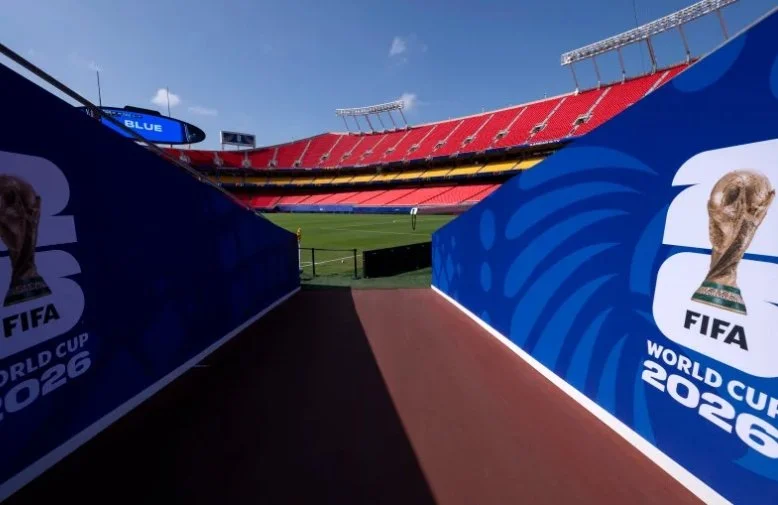
Watch the 2026 World Cup with the sound on and you'll see soccer — 48 teams, 104 matches, the usual mix of brilliance and heartbreak. Watch it the way we do at Sports Tech Atlanta, and you'll see something else entirely: the largest real-world test of artificial intelligence, sensors, and real-time computing ever run at a live event.
Two tournaments are happening at once. One is played on grass. The other runs on servers, cameras, chips, and algorithms — and it's quietly rewriting what's possible at a mass sporting event. Here's what's actually under the hood, and why it matters far beyond the pitch.
Start with the ball. Adidas' official tournament ball, the Trionda, carries a motion sensor running at 500 hertz — hundreds of measurements per second about exactly how and when it's moving through space. Pair that with the cameras (a reported 16 high-resolution units per match tracking dozens of points on every player's body) and you get something a broadcast camera never could: a precise, three-dimensional reconstruction of the exact moment a pass leaves a foot.
That's the backbone of this tournament's semi-automated offside system. A version debuted in Qatar 2022, but the 2026 build takes a real leap — in clear-cut cases, it can push an alert straight to the on-field officials rather than routing everything through a VAR booth first. Less dead time between the offside and the flag. FIFA has been careful to say it doesn't replace referees on the judgment calls; it's there to make the obvious calls faster.
The detail I find most striking: every player in the tournament was 3D-scanned — about a second each — to build a personal digital avatar based on their real body dimensions. Not a generic stick figure, but a digital twin of the actual athlete, fed into both the officiating system and the broadcast graphics. This is one of the first times a true digital twin of a person has become an official component of how a global sporting event is refereed. Soccer just borrowed a page from autonomous vehicles and robotics.
This is the development that should grab anyone in the sports-tech space by the collar.
FIFA and Lenovo are rolling out Football AI Pro, a generative AI assistant being made available to all 48 teams. It chews through FIFA's enormous trove of data and spits back insights as text, video, charts, and 3D simulations. It won't coach a match or make in-game decisions — but it absolutely reshapes how teams scout opponents and prepare.
The strategic part isn't the tool; it's the distribution. Elite analytics have always been a function of budget — the richest federations bought the best data operations and everyone else made do. By handing the same assistant to every participant, FIFA is effectively flattening the analytics playing field. That's the entire thesis a lot of us in this industry have been arguing for years: the real unlock in sports technology isn't building one more shiny capability for the teams that already have everything — it's democratizing access so a mid-tier federation can punch above its weight. Watching it happen at the sport's highest level is a signal worth paying attention to.
None of this floats in the cloud. Lenovo, FIFA's technology partner, says it's deploying servers at the International Broadcast Center in Dallas, plus more than 17,000 devices and over 200 engineers across stadiums and training sites. Its ThinkSystem servers are handling live video at volume, powering internal IPTV across roughly ten channels and a thousand-plus screens, and — critically — keeping latency under five seconds.
That five-second number is the whole story. When a security incident, a technical fault, or a refereeing decision is unfolding, a delay measured in seconds is the difference between useful and useless. So a meaningful share of the processing has to happen near the field, not in a distant data center. That makes this World Cup one of the largest live demonstrations of edge computing to date — the industry-wide shift away from cloud-only toward a hybrid model where local servers, control centers, and AI work in concert. If you want to see where enterprise computing is heading, watch the back of a World Cup stadium.
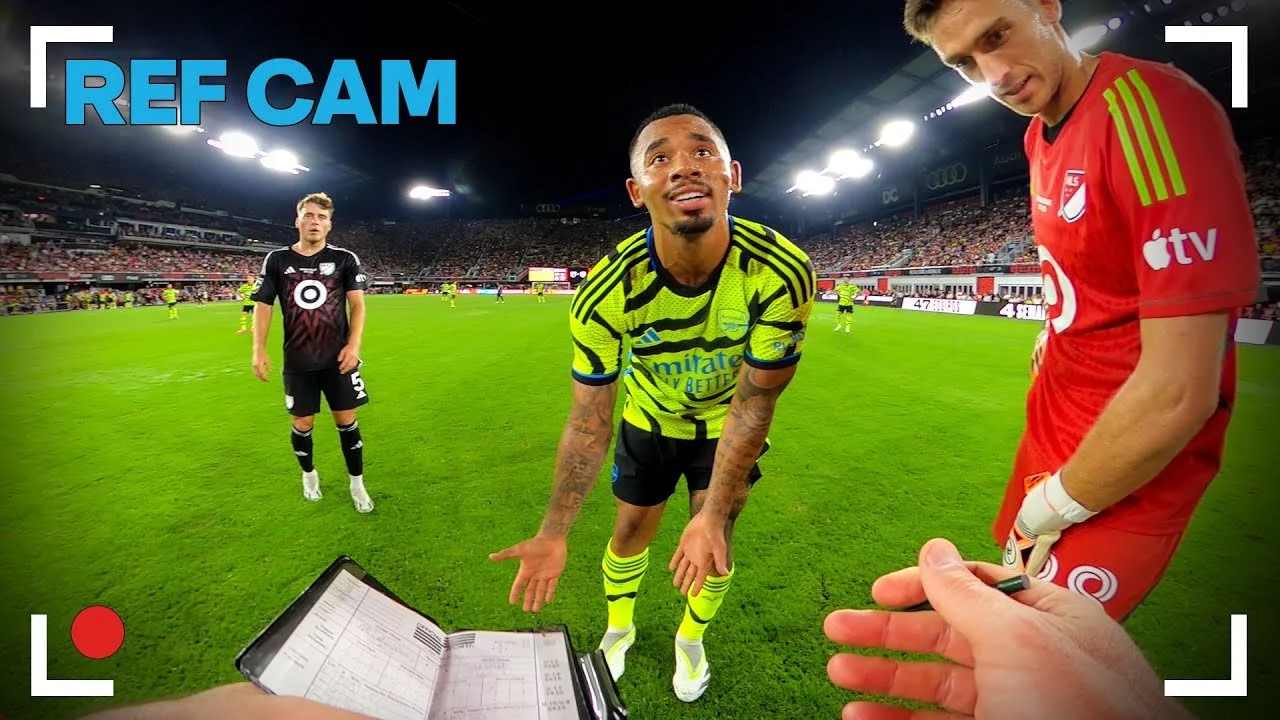
There's a referee-camera angle too: Lenovo's "Referee View" body cam gives a first-person feed from the center of the action, with AI stabilization that reportedly cuts the motion shake by up to half. For fans, a new vantage point. For engineers, a hard demonstration of real-time video stabilization in about the most chaotic environment imaginable.
The experience is now digital end to end. FIFA's app bundles schedules, live scores, real-time alerts, 3D stadium maps, and arrival planning, with a companion ticketing app that puts the ticket on your phone, lets you transfer it by email, and gets you through the gate as a digital pass. The tournament no longer starts at the turnstile — it starts at your hotel and follows you to the seat. Inside the venues, Lenovo is layering in AI-based navigation to ease congestion, alongside digital and holographic touches. Smart-stadium tooling — signage, sensors, navigation, real-time info — has quietly become the standard operating system for managing mass events, and a three-country World Cup is about the most complex stress test that toolkit will ever face.
Every new digital layer is also a new attack surface, and a modern World Cup has a lot of them.
On the protective side, FIFA is expanding AI-driven social media moderation — filtering abusive content aimed at players across TikTok, YouTube, Instagram, and Facebook, hiding the worst of it within seconds (as reported by The Guardian). The event doesn't only happen in the stadium anymore; it happens in the comment sections, where billions of reactions form around every goal and every mistake.
On security, host countries are running their own tech. Reports describe robotic patrol dogs being deployed around Monterrey, Mexico, to scout dangerous areas and stream video to authorities — though Reuters has fact-checked away the viral claim that they're doing facial recognition.
And the flip side of all this connectivity: U.S. cybersecurity agencies have warned about fake FIFA sites, ticket scams, fraudulent apps, phishing, and ransomware. Millions of fans, thousands of vendors, hundreds of temporary systems, and a flood of digital payments and mobile tickets add up to a near-perfect target. This World Cup is as much a multinational cybersecurity test as it is a sporting one.
Strip it down and the 2026 World Cup is a preview of the near future of live events: a massive physical gathering run almost entirely through digital layers. The ball reports its own movement. The players exist as avatars. The referees are wired and stabilized. Every team gets an AI analyst. Broadcasting rides on edge infrastructure, and fans move through the whole thing on apps and algorithmically filtered feeds.
For those of us building at the intersection of sports, media, and technology, that's the real headline. The fans will remember the goals. The industry should remember this as the moment sports tech stopped being a sideline novelty and became the operating system of the event itself.
Sources: The Jerusalem Post, FIFA and Lenovo announcements, Adidas, The Guardian, and Reuters. Technical figures reflect reporting from the tournament's technology partners and may be updated as the event proceeds.
adidas onto the Ladies European Tour's biggest stage. NTangible into the largest mental‑performance dataset in youth sports. TeamSportz onto the floor with the Essex Rebels. Three of our clients, three signed partnerships, one busy spring — and a look at how we help make them happen.
The Ladies European Tour has named adidas the Official Footwear Supplier of the 2026 European Solheim Cup Team, with the brand also signing on as an Event Supporter of the Solheim Cup itself. When Team Europe takes the course at Bernardus Golf in the Netherlands from September 7–13, adidas will outfit the captains, players, caddies and helpers — right down to tournament staff — and put a limited‑edition women's shoe on sale exclusively at the event.
It's a meaningful piece of business. adidas joins a partner roster that already includes PING, Skyscanner, Rolex and John Deere, and steps in on footwear while PING continues as Team Europe's apparel partner. More broadly, the deal is a marker of where women's golf is heading commercially: a record purse, a packed 29‑event calendar, and brands competing for a place inside the game's biggest team event.
As the LET's partnerships and content partner, Sports Tech Atlanta works alongside the tour to package its commercial story and keep its momentum in front of the brands and audiences that matter. Wins like this one are exactly what the work is built to produce.
NTangible — the cognitive‑performance analytics company behind the Clutch Factor score — is expanding its partnership with Alliance Fastpitch, the largest youth softball organization in America. Under the new agreement, close to 20,000 athletes aged thirteen and up will be assessed annually, with a standardized mental‑performance score built directly into Alliance's player‑development pipeline.
The significance is hard to overstate: for the first time, a full generation of fastpitch players will reach the recruiting market carrying comparable, portable, validated data on the part of the game everyone talks about and no one has been able to measure. NTangible now works across seven sports, with thousands of assessments delivered to collegiate programs, pro environments and youth organizations alike — and this expansion plants its flag firmly in the future of softball.
Sports Tech Atlanta represents NTangible's commercial growth — opening doors across leagues, teams and youth ecosystems, and helping translate a category‑defining technology into the kind of headline partnership that moves a young company forward.
TeamSportz — the club‑management and performance platform already trusted by Basketball England — is teaming up with the Essex Rebels, the only professional basketball and volleyball club in Essex. The Rebels field a men's side in British Championship Basketball and a women's side in Super League Basketball out of the Essex Sport Arena, home to one of the most decorated gameday experiences in the British game.
Through the partnership, TeamSportz puts its full toolkit to work for the club: training and game scheduling, video capture and tagging for evidence‑based feedback, performance stats, secure team communication, and live broadcast of Rebels fixtures. It's a clean example of sports technology doing the unglamorous, high‑value work — making a club run sharper on the court and reach further off it.
Sports Tech Atlanta drives TeamSportz's commercial expansion, connecting the platform with leagues, clubs and rights holders on both sides of the Atlantic — and helping turn product strength into signed, visible partnerships like this one.
Sports Tech Atlanta is a boutique sports advisory and marketing firm. We sit between leagues, teams, brands and investors and do the work that turns sports IP into signed commercial momentum — from first introduction to closed deal to the story that carries it.
We start with positioning and matchmaking. Before anyone pitches anyone, we map where a brand, league, team or investor actually creates value for the other side — so the conversations we open are the ones with a real reason to close.
Then we do the commercial work: scoping, structuring and negotiating partnerships that hold up. Retainer, commission or a blend — we shape the terms, run the process and get to signature, acting as an agency‑of‑record partner rather than a one‑off broker.
A signed deal is only half the value. We amplify every win through our owned media engine — the STA newsletter, the Seed Talk Podcast and a personal brand with real monthly reach — so our clients' partnerships land loudly and keep working long after the announcement.
If you're a league, team, brand or investor looking to make the right move in sports, let's talk.
Start a conversation