
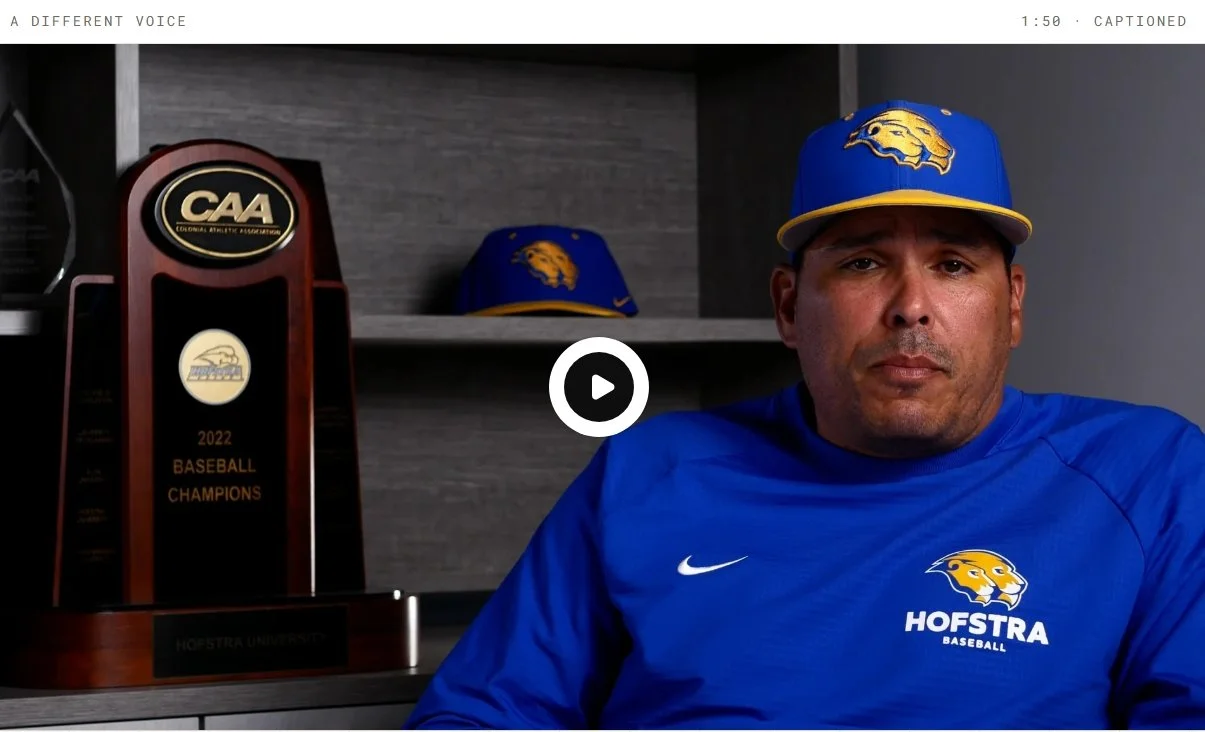
The Future of NIL May Be Local

Meet Anjay Sakuru, founder of CollegiateX, a new NIL marketplace focused on an overlooked opportunity in college sports: the other 99%.

Anjay's journey weaves together technology, business, and purpose. With a Bachelor's in Management Information Systems from Indian University and experience at PwC in digital assurance, he's no stranger to building systems that run seamlessly and deliver results.

Now pursuing a Master's in Data Science at Harvard, Anjay leads CollegiateX with a vision: to create a resourceful, data-driven platform where athletes and business form partnerships that make sense—financially, professionally, and personally.


NIL has created enormous opportunities for college athletes—but much of the attention and money continues to flow toward the biggest names and largest audiences.

CollegiateX is taking a different approach.

Collegiatex - NIL Marketplace for College Athletes

The idea is simple:

What if local businesses could partner with the athletes who actually live, study, train, and compete in their communities?

A Division II basketball player.
An NAIA soccer player.
A NJCAA baseball player.
A Division I athlete who isn't a national star.

They may not have millions of followers—but they can have something incredibly valuable:

Local influence.

CollegiateX is building a marketplace connecting NCAA, NAIA, and NJCAA athletes with local businesses to create authentic, accessible NIL opportunities.

Because you don't have to be famous everywhere to matter somewhere.

Meet the founder. Learn about CollegiateX. And rethink who NIL is really for.

#NIL #CollegeSports #SportsTech #SportsBusiness #StudentAthletes #CollegiateX
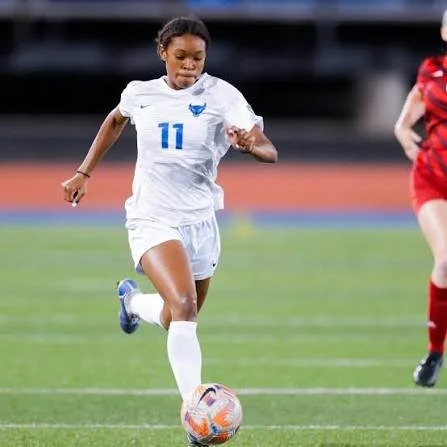
University at Buffalo Is Bringing Mental Performance Into the Performance Data Conversation

The next competitive advantage in college sports may not be found in another wearable, camera, or performance metric. It may be found in understanding how athletes respond when the pressure rises.

The University at Buffalo is taking a step in that direction.


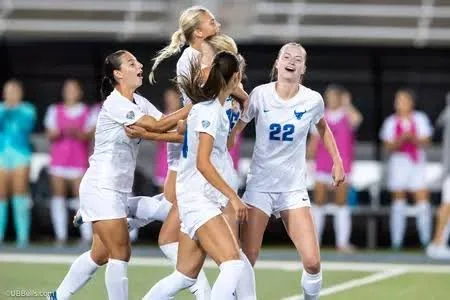
Buffalo's women's soccer and women's volleyball programs are now working with NTangible, bringing two programs within the same athletic department onto the platform together.

That matters.

Rather than treating mental performance as an individual initiative or something addressed only when an athlete is struggling, Buffalo is incorporating it into the broader performance environment.

Both programs are using NTangible assessments through Peak Flow, giving coaches another lens into how athletes respond to pressure, competition and the moments that can change the outcome of a match.

And the timing is particularly interesting.

What happens when the match gets tight?

Coaches have always had an intuitive understanding of which athletes they trust when the game is on the line.

Who wants the ball?

Who communicates?

Who stays composed after a mistake?

Who elevates their performance when the pressure increases?

And perhaps most importantly:

Who rises when the match tightens?

Historically, many of those answers have come from observation, experience and what coaches see during competition.

Technology is now creating an opportunity to make that understanding more measurable.

That's where NTangible's approach becomes interesting.

The goal isn't simply to generate another dashboard or another number for coaches to track.

It is about creating a framework for understanding the mental side of performance — and potentially giving coaches insight into characteristics that don't always show up in traditional athletic testing.

From physical performance to total performance

College athletics has become increasingly sophisticated at measuring the physical side of an athlete.

GPS tracking.

Heart-rate monitoring.

Strength testing.

Sleep.

Recovery.

Workload.

Video analysis.

Biomechanics.

All of these technologies help answer an important question:

How is the athlete performing?

But there is another question that is becoming increasingly important:

How does the athlete perform when the environment becomes difficult?

A soccer player can have the physical tools to dominate a match.

A volleyball player can have the technical ability to make the play.

But competition introduces variables that cannot always be captured by traditional performance metrics.

Pressure.

Momentum.

Mistakes.

Confidence.

Adversity.

Decision-making.

Communication.

The ability to reset.

Those factors can determine what happens when the score is tied late, when the crowd gets loud, or when an athlete has to make the next play after something goes wrong.

That is the space mental-performance technology is beginning to address.


Buffalo may be showing where this goes next

One of the most interesting aspects of Buffalo's adoption is that two programs within the same athletic department are coming onto the platform together.

That creates the potential for something bigger than a single-team experiment.

Instead of mental performance living in isolation, athletic departments can begin thinking about it as part of a broader performance infrastructure.

And Buffalo is just the beginning.

Lucinda Snyder is bringing several of her college programs onto NTangible over the next three weeks, with Buffalo serving as the first.

That creates an interesting question for college athletics:

What happens when mental performance data becomes as normal to the performance conversation as physical performance data?

We are still early in that transition.

But the direction is clear.

The next generation of sports technology won't necessarily be about replacing coaches' instincts.

It may be about giving those instincts better information.

The mental-performance operating system

The phrase NTangible uses — "The Operating System for Mental Performance" — is worth paying attention to.

Because an operating system is not just one application.

It is infrastructure.

It connects different pieces of information and creates an environment in which people can make better decisions.

That's potentially the bigger opportunity for mental-performance technology in sports.

Imagine a future where a coaching staff can look at physical workload, recovery, video, scouting and mental-performance indicators as interconnected pieces of the same performance picture.

The objective isn't to reduce an athlete to a score.

It's to better understand the athlete.

And perhaps identify the difference between an athlete who performs well when everything is going right and one who gets better when everything is on the line.

The next competitive advantage?

College sports is increasingly becoming a data business.

The programs with the best information don't necessarily have an advantage because they have more data.

They have an advantage because they know which data matters and how to use it.

Mental performance may be one of the next frontiers.

Buffalo's women's soccer and women's volleyball programs are now putting that concept into practice.

And if more athletic departments follow, mental performance could move from the margins of sports science into the center of the performance conversation.

Because ultimately, games aren't played in perfect conditions.

They are played under pressure.

And the athletes who can perform when the match tightens are often the ones who decide what happens next.

Sports Tech Atlanta will continue to track the technologies and companies changing how athletes, teams and leagues approach performance.


If you’re building in sports technology or sports business, check out Sports Tech Atlanta — the boutique advisory I run connecting innovative companies with the sports ecosystem.

We’ve also built:
🏟️ Sports Tech Matchmaker — connecting sports organizations with technology solutions
🎙️ Our Podcast — a platform for founders and companies to tell their stories and engage with the sports business community.

If you’re building, investing, or looking for opportunities in sports, let’s connect.

First Moves — STA's signal newsletter

First Moves — STA's signal newsletter

A signal-reading newsletter from Sports Tech Atlanta. Every issue reads the real commercial signals moving through sports-tech. If you'd rather not wait for a newsletter to work your actual pipeline: I keep a few one-on-one seats open each quarter. Start with a single session — one live problem, worked in 60 minutes, credited toward your first month if you take a seat.

TeamSportz Partners with Brunel University London to Revolutionize Student Life and Engagement

LONDON — TeamSportz is thrilled to announce a landmark collaboration with Brunel University London and the Union of Brunel Students. This exciting partnership brings modern digital infrastructure to over 4,000 students across more than 100 societies and sports clubs.

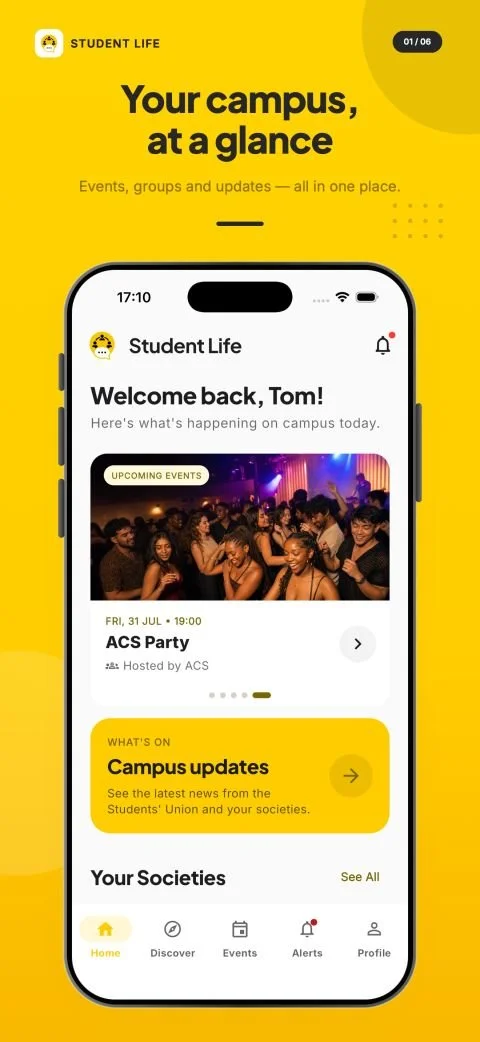
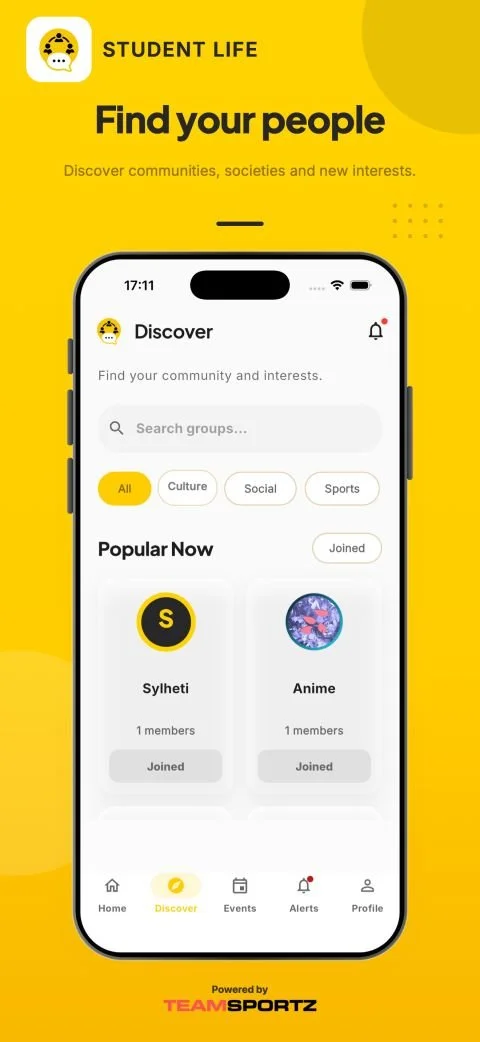
To support this vibrant student community, TeamSportz is launching the Student Life app, fully powered by the flexible TeamSportz Platform and API.

Modernizing Campus Engagement

For years, higher education institutions have struggled with fragmented, clunky, and outdated software systems to manage student life. The launch of the Student Life app highlights the power and flexibility of the TeamSportz platform in helping universities, colleges, and educational organizations smoothly transition into the modern digital age.

The Student Life app acts as a centralized digital hub, consolidating key aspects of the student experience into a single, sleek, and intuitive interface. Features include:

  • Sports & Event Management: Streamlined scheduling, tracking, and participation for university sports clubs and campus events.

  • Centralized Communication: Direct, modern messaging channels connecting students, societies, and administrative teams.

  • Campus Life Tools: Integrated access to student surveys, essential documents, announcements, and university resources.

By replacing disjointed legacy tools with an all-in-one platform, Brunel University London and the Union of Brunel Students are setting a new standard for modern student engagement—making it easier than ever for students to stay connected, active, and involved.

To learn more about the TeamSportz App click here—>TeamSportz

About Sports Tech Atlanta

This initiative and expansion were facilitated with the support of Sports Tech Atlanta, a boutique advisory and marketing firm specializing in connecting innovative sports technology platforms with key market opportunities.

Changing the Game: How Diana Flores is Pioneering Flag Football’s Global Revolution

When people think of American football, they often picture heavy padding, bone-crushing tackles, and iconic NFL stadiums. But over the past few years, a parallel movement has taken the global sports landscape by storm—and at the center of this movement is Diana Flores.

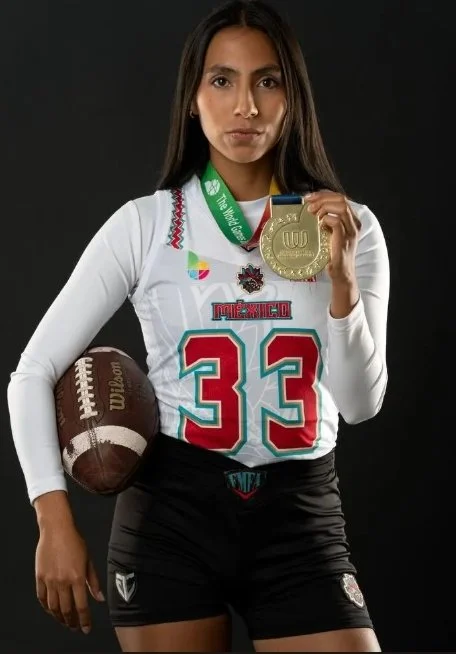
As quarterback and captain of the Mexican Women’s National Flag Football Team, Flores has transformed from a star athlete into a global icon. Her rise mirrors the meteoric growth of flag football, a sport rapidly evolving from a recreational pastime into a premier Olympic-level event.


The Catalyst: From Mexico City to Global Superstardom

Flores’ story is rooted in dedication and breaking boundaries. Starting her flag football journey at just eight years old in Mexico City, she often competed against older players and in all-male leagues due to a lack of dedicated girls' divisions. Her breakout on the international stage came when she led Mexico to a gold medal at the 2022 World Games, delivering a brilliant performance to defeat the United States in the final.

Her impact quickly expanded beyond the field:

  • NFL Super Bowl Stardom: Flores gained worldwide mainstream recognition starring in the NFL’s Emmy Award–winning 2023 Super Bowl commercial, “Run With It,” which highlighted female athletes dodging defenders across Los Angeles.

  • Pro Football Hall of Fame: She became the first flag football player to have personal artifacts displayed in the Pro Football Hall of Fame in Canton, Ohio.

  • NFL & IFAF Global Ambassador: Working alongside the NFL and the International Federation of American Football (IFAF), Flores regularly promotes youth participation and international competition.

What Diana Flores’ Leadership Means for the Future of Flag Football

Flores is not just benefiting from the growth of flag football—she is actively driving it. Her leadership signifies key trends in the sport's rapid development:

1. Breaking Gender and Regional Barriers

Historically, gridiron football was dominated by male athletes in North America. Flores’ prominence as a Mexican woman on global broadcasts proves that the future of football is both international and inclusive. Her presence inspires millions of young girls across Latin America, the U.S., and Europe to pick up a football.

2. Paving the Way for LA28 Olympic Debut

With flag football officially included in the 2028 Los Angeles Olympic Games, Flores stands as the face of this pivotal transition. The sport’s non-contact, high-speed, dynamic nature makes it an ideal fit for international Olympic audiences, offering high athletic performance with low barrier-to-entry infrastructure.

3. Exploding Collegiate and High School Pathways

Flores’ visibility has accelerated varsity recognition for high school flag football across the United States and internationally, as well as expanded collegiate scholarship opportunities through organizations like the NAIA. Girls now have direct athletic and academic pathways through flag football that did not exist a decade ago.

The Road Ahead

As flag football approaches its Olympic debut, Diana Flores continues to serve as quarterback, ambassador, and pioneer. Her journey demonstrates how passion and representation can elevate a grassroots sport into a global spectacle, reshaping how the world views football forever.

For a closer look at her historic achievements, check out this video on Diana Flores' Pro Football Hall of Fame induction.

This video highlights the historic moment when Diana Flores became the first flag football player to be enshrined with artifacts in Canton, showcasing her groundbreaking impact on the sport.